Clear Sky Science · en
Masculine depression and acute mental health burden
Why this topic matters
Depression is often pictured as quiet sadness and withdrawal. But for many people, emotional pain shows up on the outside as anger, overwork, substance use, or risky behavior. This study explores that outward-facing pattern—sometimes called “masculine depression”—and asks a crucial question: do people who show depression this way carry a heavier, and often hidden, mental health burden, regardless of whether they are men or women?
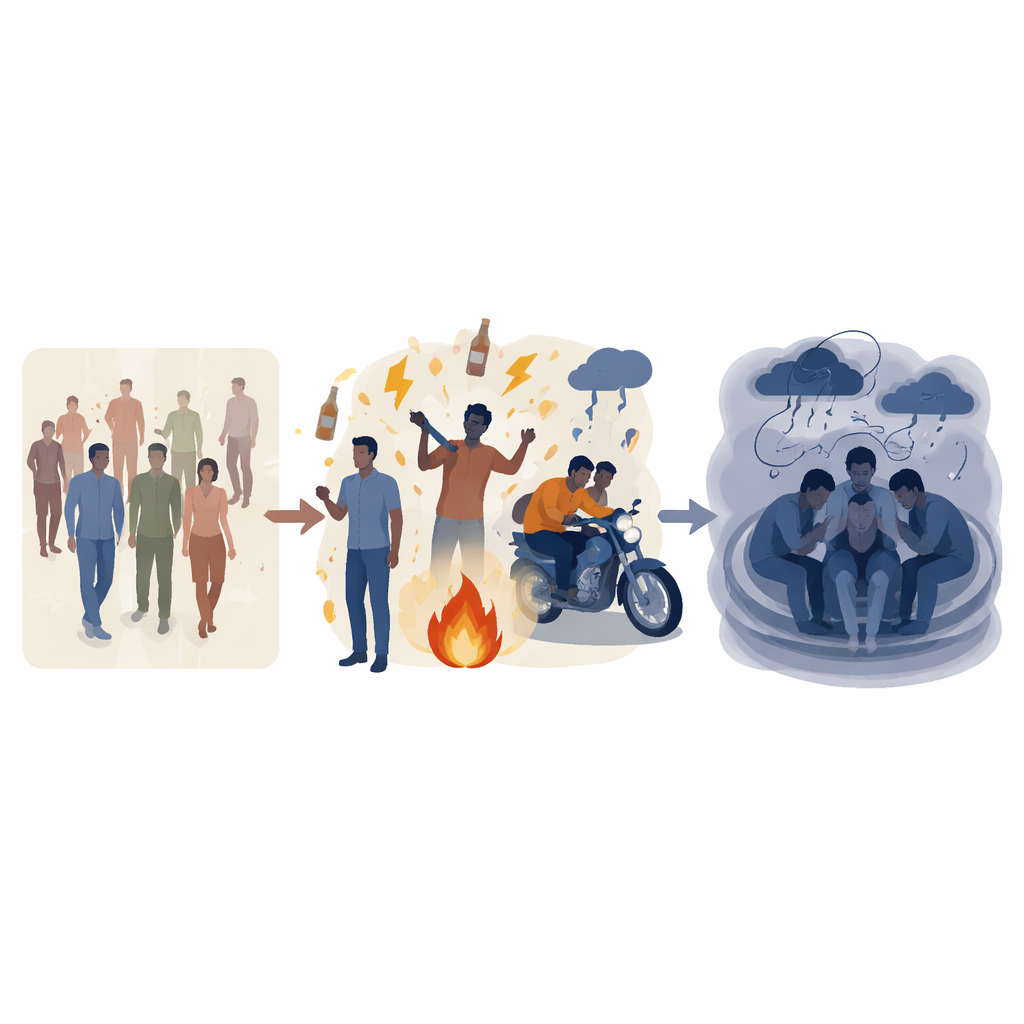
A different face of low mood
The authors describe masculine depression as a cluster of behaviors rather than a sex-linked disease. Instead of tears and visible despair, people with this pattern may feel irritable, explode in anger, drink heavily, use drugs, bury themselves in work, or seek thrills. Historically, depression has been labeled a “female” disorder because women more often report classic internal symptoms. However, newer questionnaires that capture outward reactions suggest that men and women may experience depression at similar rates—just with different expressions that medical systems do not always recognize.
How the study was carried out
The research team examined 163 psychiatric in-patients with moderate to severe depression and compared them with 176 healthy adults. Patients completed a questionnaire designed to detect masculine-style symptoms (the MDRS-22) and another broad checklist of psychological distress (the SCL-90-R), which covers everything from physical complaints to anxiety, anger, suspiciousness, and unusual perceptions. Using sex-specific cutoffs, the depressed patients were divided into two groups: those with high masculine depression scores and those with low scores. The analyses then asked whether the “high” group showed greater overall mental strain than the “low” group, even after accounting for how depressed they felt in general.
What the researchers found
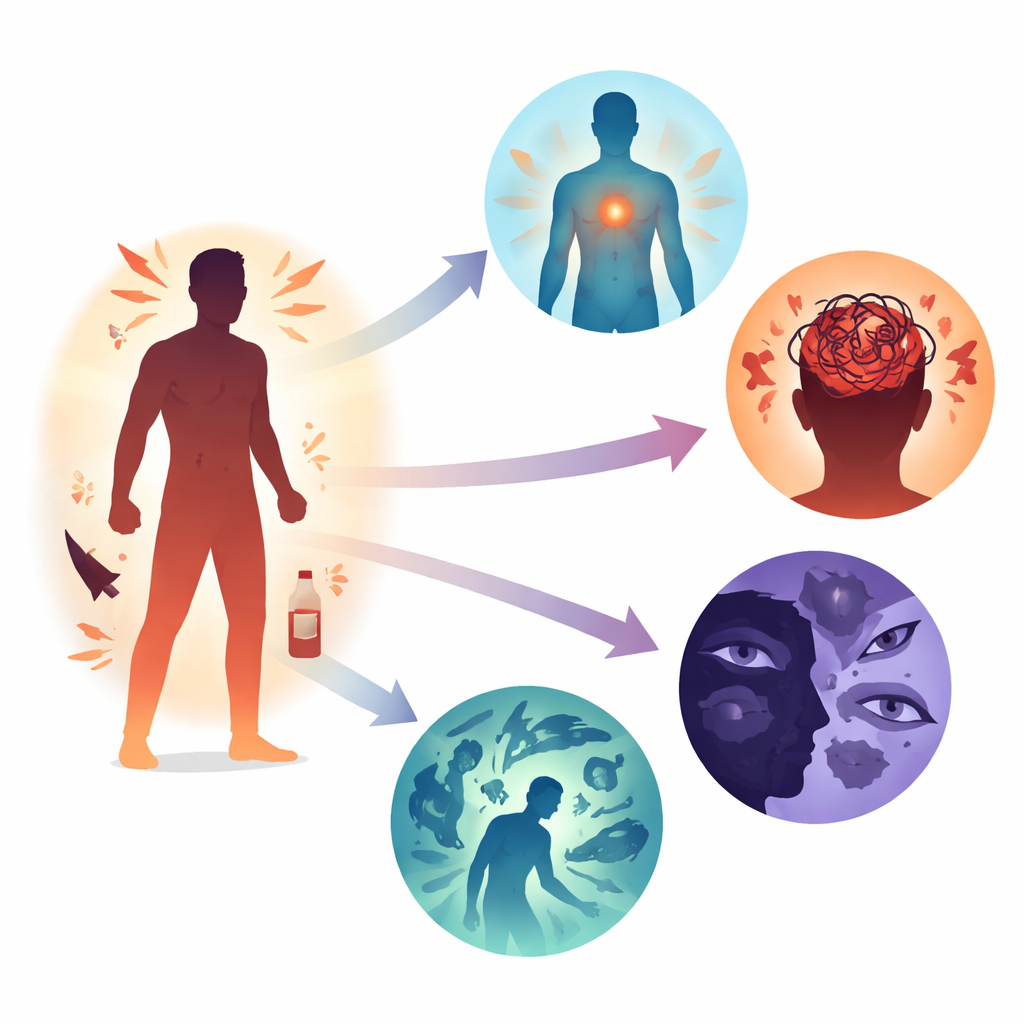
Patients with high masculine depression scores were younger and reported more severe depression than those with lower scores. Most importantly, even after adjusting for age, sex, and overall depression severity, the high-score group showed greater acute mental health burden on several fronts. On the global distress scales, they reported more symptoms and more intense suffering. When the team looked closer at specific types of problems, four stood out reliably: physical complaints without clear medical causes (somatization), intense anger and hostility, suspicious or mistrustful thoughts, and psychotic-like experiences such as distorted perceptions. These links were seen whether masculine depression was treated as a high-versus-low category or as a gradually increasing score.
Not just a male problem
One striking result was that men did not score higher on the masculine-depression questionnaire than women, and the pattern of links between masculine depression and mental health burden did not differ by sex. Prior work has also shown this outward style of depression in women, especially under stress. Together, these findings suggest that “masculine depression” is not confined to men, but instead describes a stress- and behavior-related style of suffering that can emerge in anyone. At the same time, people with this profile may be less likely to seek help, more likely to work long hours, and more prone to relying on alcohol or drugs instead of professional care, meaning that the most severely affected individuals might never reach hospital-based studies like this one.
What this means for care and understanding
The study concludes that people who show depression through anger, overwork, substance use, and risk-taking often carry a substantial and complex mental health burden that goes beyond standard measures of low mood. Because these outward behaviors can mask distress—and are sometimes dismissed as mere “personality” or “bad habits”—such individuals may be underdiagnosed and undertreated. The authors argue that clinicians and society should view masculine depression as a useful shorthand for a specific symptom pattern, not as a male-only condition. Recognizing this profile earlier, across all genders, could help tailor low-threshold, stigma-sensitive support to people who might otherwise slip through the cracks.
Citation: von Zimmermann, C., Weinland, C., Kornhuber, J. et al. Masculine depression and acute mental health burden. Sci Rep 16, 11606 (2026). https://doi.org/10.1038/s41598-026-44727-7
Keywords: externalizing depression, anger and depression, mental health burden, substance use and mood, help-seeking behavior