Clear Sky Science · en
Prognostic impact of acute kidney injury on one-year survival in patients undergoing high-risk PCI with Impella support
Why this matters for the heart and kidneys
People who need complex procedures to open blocked heart arteries often already have fragile health. One silent but serious danger after such procedures is sudden kidney damage, which can raise the risk of death long after the hospital stay. This study asks a practical question: when doctors use a small heart pump called Impella to support blood circulation during these risky procedures, does it change how often kidney injury occurs and how it affects survival over the following year?
A closer look at a high-risk heart procedure
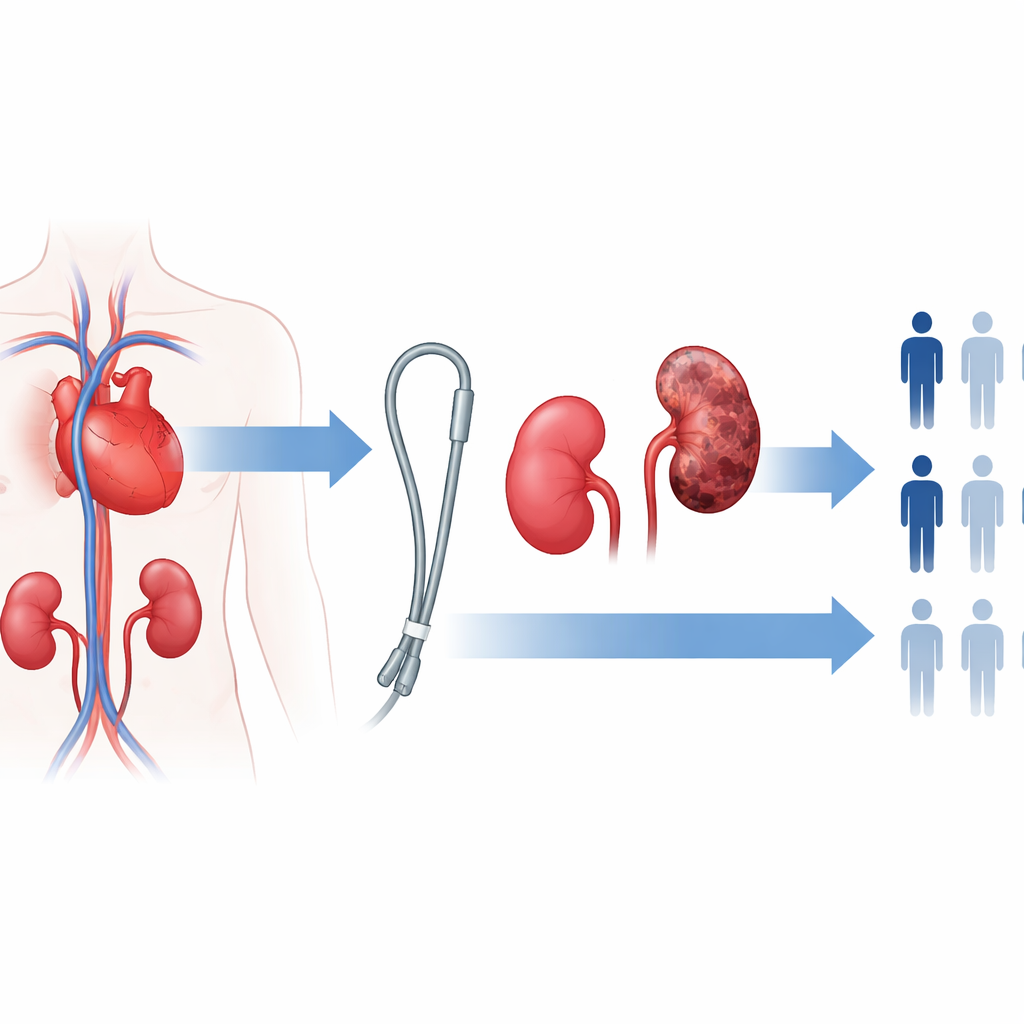
The researchers focused on patients undergoing high-risk percutaneous coronary intervention, a procedure in which catheters and stents are threaded through blood vessels to reopen severely narrowed heart arteries. These patients had weak hearts and very complex blockages, but they did not have full-blown heart collapse known as cardiogenic shock. All of them received temporary support with an Impella pump, a pencil-thin device placed inside the heart that helps move blood forward during the procedure. Using data from two large hospital groups, one in Poland and one in Germany, the team analyzed 470 patients and followed them for a full year after their intervention.
Kidney injury as a warning sign
The team defined acute kidney injury as a noticeable jump in a standard blood marker of kidney function during the first three days after the procedure. About one in seven patients in each group developed this complication. Those who did had a much higher chance of dying within a year than those whose kidneys remained stable, even after accounting for age, heart function, and other medical problems. In both hospital groups, kidney injury roughly doubled the risk of death, showing that even short-term kidney damage sends a strong warning signal about long-term health.
Does the heart pump help protect the kidneys?
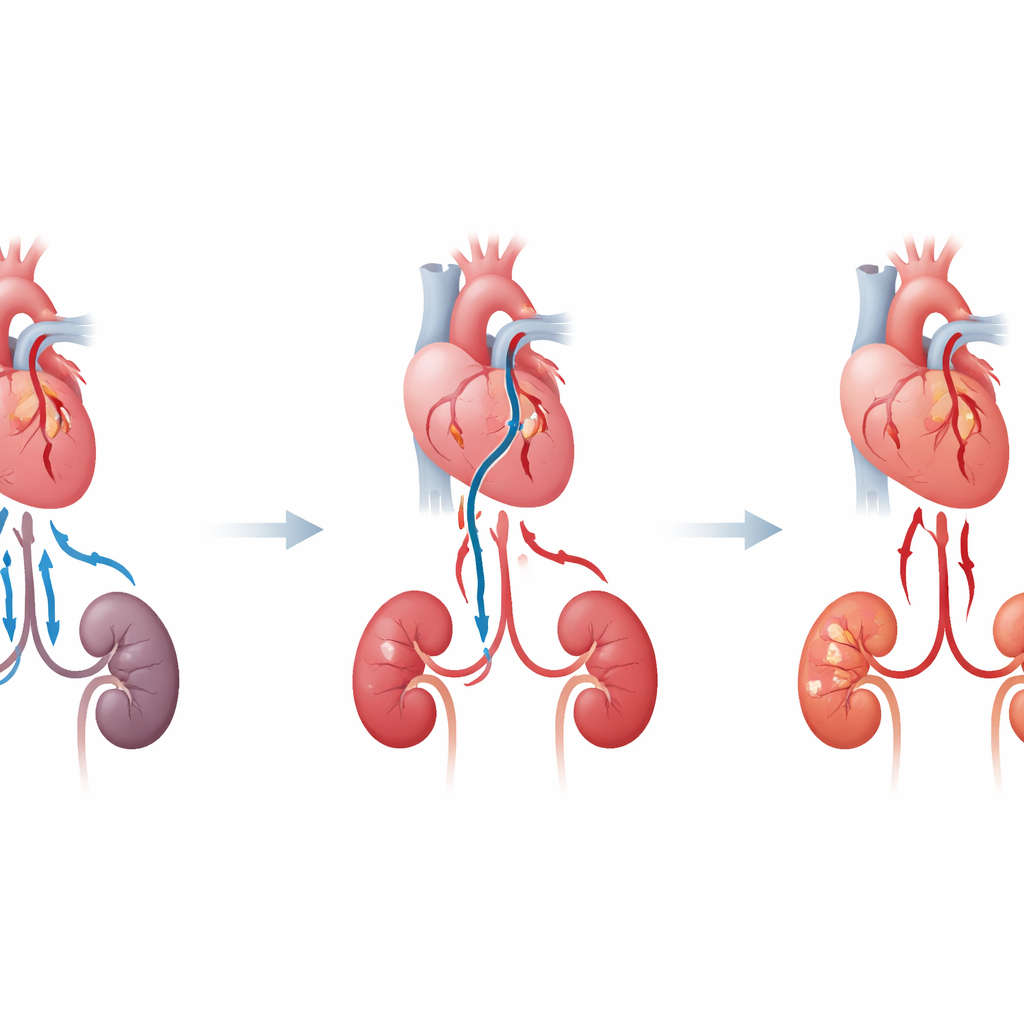
To test whether Impella support might actually shield the kidneys, the researchers compared how often kidney injury occurred in their patients to what would have been expected using a widely used risk calculator. That calculator predicted kidney damage in about one quarter of patients. In reality, only about half as many developed it. The benefit seemed strongest in patients who had better kidney function going into the procedure and in those whose Impella pump was started before any major blood pressure problems occurred, rather than being rushed in later as a rescue measure.
Different impact in men and women
The study also explored whether men and women were affected in the same way. Men and women developed kidney injury at similar rates, but the long-term consequences looked different. In men, kidney injury clearly tracked with a higher risk of death over the next year, even after adjusting for many other factors. In women, the data did not show a clear link, but the number of women and adverse events was small, so the authors caution that this difference may reflect limited data rather than true protection.
What this means for patients and doctors
For patients facing a very complex heart stenting procedure, this work highlights two key points. First, even temporary kidney trouble after the procedure is not a minor side issue; it marks a group at much higher risk in the year ahead and signals the need for close follow-up. Second, using an Impella pump early during high-risk procedures may cut the chance of serious kidney damage, especially in people whose kidneys still work reasonably well. While the study cannot prove cause and effect, it suggests that carefully timed mechanical support could help the heart and kidneys weather an otherwise dangerous intervention.
Citation: Sacha, J., Woitek, F.J., Pietrasik, A. et al. Prognostic impact of acute kidney injury on one-year survival in patients undergoing high-risk PCI with Impella support. Sci Rep 16, 10625 (2026). https://doi.org/10.1038/s41598-026-44724-w
Keywords: acute kidney injury, Impella, high-risk PCI, renal protection, cardiovascular outcomes