Clear Sky Science · en
Multi-analytical and biological insights into Malcolmia grandiflora Kuntze
Desert Flower with Hidden Power
Many people know the cabbage and broccoli family for its place on the dinner table, but fewer realize that some of its wild cousins may hold the seeds of future medicines. This study turns the spotlight on Malcolmia grandiflora, a small desert plant from the mustard family, to ask a simple question with big implications: could this hardy flower help us fight cancer and inflammation?
From Harsh Sand to Helpful Extracts
Malcolmia grandiflora grows in dry, stressful environments, conditions that often push plants to produce protective chemicals. The researchers collected the plant’s above-ground parts and prepared two main extracts. One was an oily, non-polar fraction made with the solvent n-hexane; the other was a more watery, “defatted” fraction rich in polar compounds. They then applied a suite of modern analytical tools to map out the plant’s chemistry, alongside lab tests that probed antioxidant, anti-inflammatory, and anticancer effects. 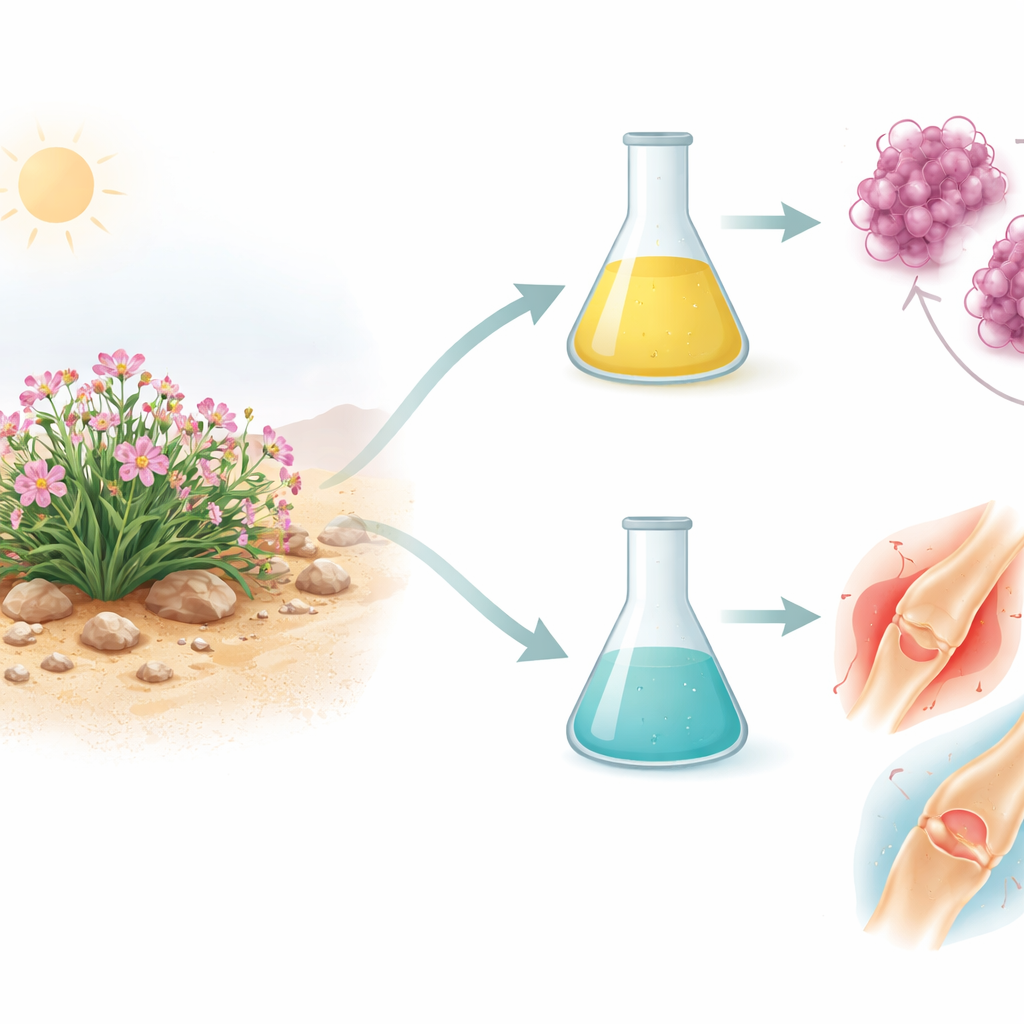
What’s Inside the Plant
Using gas chromatography–mass spectrometry, the team identified 20 compounds in the oily extract, mostly fatty acid derivatives, esters, and long-chain alcohols. Some of these, such as linolenic acid derivatives and specific amide and nitrile compounds, have been linked in earlier work to heart and anticancer benefits. In contrast, high-resolution liquid chromatography of the defatted extract revealed a far richer chemical world: 60 compounds drawn from many families. These included numerous flavonoids (plant pigments also found in fruits and tea), phenolic acids, sesquiterpenoids (a type of aromatic compound), sulfur-containing isothiocyanates typical of the mustard family, and other specialized molecules.
How the Extracts Behave in the Lab
The two extracts showed different strengths when tested in cell-based and test-tube assays. The n-hexane (oily) extract proved strongly toxic to breast (MCF-7) and colon (Caco-2) cancer cell lines, outperforming a standard anticancer control in some cases. The defatted extract was less broadly toxic but stood out for its ability to selectively block COX-2, an enzyme linked to pain and inflammation, while sparing COX-1, which protects the stomach lining. Both extracts showed only modest activity in a common antioxidant test called DPPH, yet the defatted fraction performed better in other antioxidant assays (ABTS and FRAP), suggesting it can neutralize certain types of reactive molecules and reduce metal ions that drive oxidative damage.
Clues from Computer-Aided Docking
To understand how individual plant compounds might act at the molecular level, the authors used computer docking to model how each identified molecule fits into key enzymes called cyclin-dependent kinases (CDKs). These enzymes act as “traffic lights” for cell division and are often overactive in cancers. The mostly oily molecules from the n-hexane extract showed only moderate binding to CDK2, CDK4, and CDK6, hinting that their strong cancer-cell killing effects may arise through other pathways. In contrast, many flavonoids and related polar compounds from the defatted extract bound very tightly to CDKs, in some cases as well as or better than known experimental CDK-blocking drugs. Particularly promising were flavonoids such as isoorientin, vitexin and isovitexin derivatives, and certain sesquiterpenoids, which showed both strong binding and selectivity for specific CDK forms. 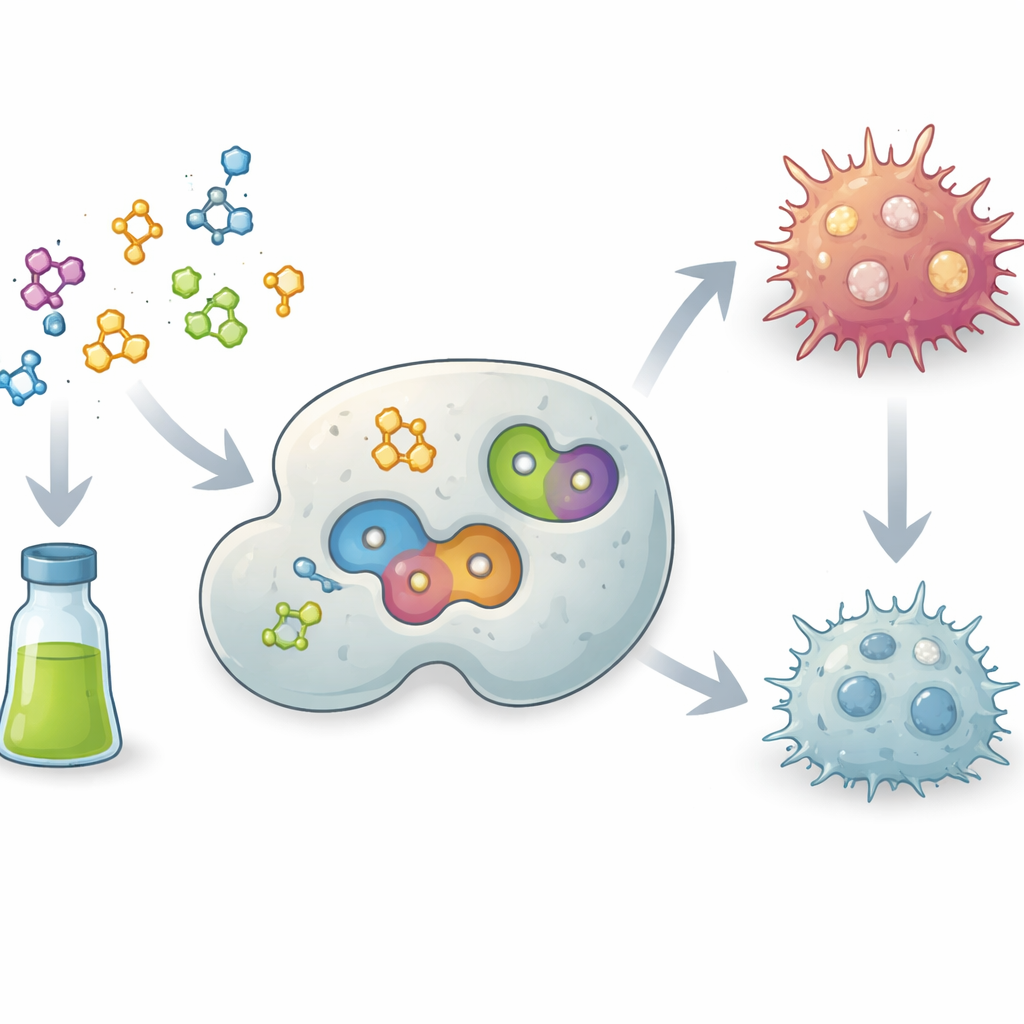
Why This Matters for Future Medicine
Taken together, the findings portray Malcolmia grandiflora as an underappreciated desert plant with a split personality: its oily fraction harbors broad-acting substances that hit cancer cells hard, while its polar fraction holds more targeted candidates that may quietly disarm overactive cell-cycle enzymes and calm inflammation. For non-specialists, the key takeaway is that wild relatives of everyday vegetables can be rich pharmacies in their own right. By cataloging the plant’s chemical inventory and linking it to specific biological effects, this work lays the groundwork for isolating individual molecules that might one day support new anticancer or anti-inflammatory medicines.
Citation: Elwekeel, A.H., Mohamed, E.I.A., Amin, E. et al. Multi-analytical and biological insights into Malcolmia grandiflora Kuntze. Sci Rep 16, 13022 (2026). https://doi.org/10.1038/s41598-026-44715-x
Keywords: Malcolmia grandiflora, medicinal plants, natural anticancer agents, cyclin dependent kinases, Brassicaceae chemistry