Clear Sky Science · en
In vitro adventitious root culture of Withania somnifera L.: a strategy for enhanced secondary metabolite production with therapeutic antioxidant and anti-inflammatory potential
New Ways to Grow a Healing Root
Ancient herbal remedies are usually harvested from fields, but what if we could grow their healing parts in glass jars instead of soil? This study explores exactly that for Withania somnifera, better known as Ashwagandha or “Indian ginseng,” a staple of traditional medicine. The researchers show how carefully grown roots in the lab can produce rich stores of natural compounds with antioxidant, anti-inflammatory, and anticancer potential—while easing pressure on farmland and wild plant populations. 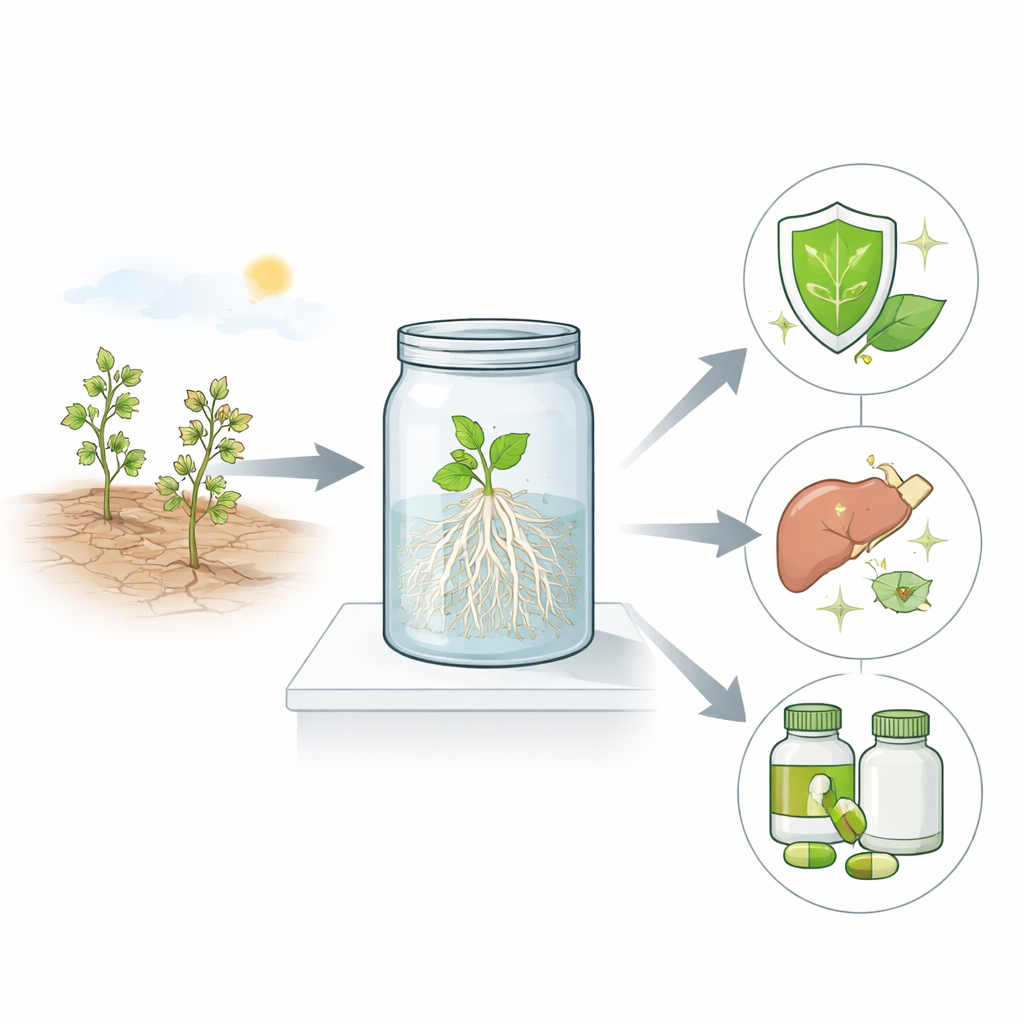
Why This Herb Matters
Ashwagandha roots are prized for helping the body cope with stress, calming inflammation, and supporting the immune system. These benefits are linked to a cocktail of plant chemicals, including phenolics, flavonoids, and withanolides. However, rising demand and shrinking cultivation land threaten the steady, sustainable supply of high-quality roots. Overharvesting can damage fragile ecosystems, and growing plants in fields exposes them to weather, pests, and soil differences that change their chemical makeup. Finding a way to produce the useful root material indoors, in a controlled and soil-free setting, could offer a cleaner and more reliable source of these bioactive compounds.
Growing Roots Without Soil
The team focused on “adventitious roots” – roots that sprout from leaves rather than from the plant’s main root system. In the lab, they sterilized Ashwagandha seeds, grew small plantlets, and then placed leaf pieces onto a nutrient gel containing a plant hormone called IBA at different doses. At 1.0 mg/L IBA, leaf pieces produced roots quickly and reliably, reaching 100% success. These newly formed roots were then repeatedly “subcultured,” or transferred to fresh medium, allowing the root mass to expand more than fivefold over several cycles. Because the process does not involve genetic modification, it offers an appealing option for industries and consumers who prefer non-transgenic, “natural” production systems.
What Is Inside These Lab-Grown Roots
Once enough root material was produced, the researchers measured its basic nutritional and chemical makeup. Compared with roots taken from field-grown plants, the cultured roots contained higher levels of vitamin C, carbohydrates, and key mineral nutrients such as nitrogen, potassium, calcium, iron, and zinc. Using high-performance liquid chromatography, they mapped out the profile of phenolic compounds. Two stood out in particular: catechin and gallic acid, both known for strong antioxidant and anti-inflammatory actions, were present at notably high concentrations. Overall, the cultured roots showed greater total phenolic and flavonoid content, and stronger performance in standard antioxidant tests, than natural roots. 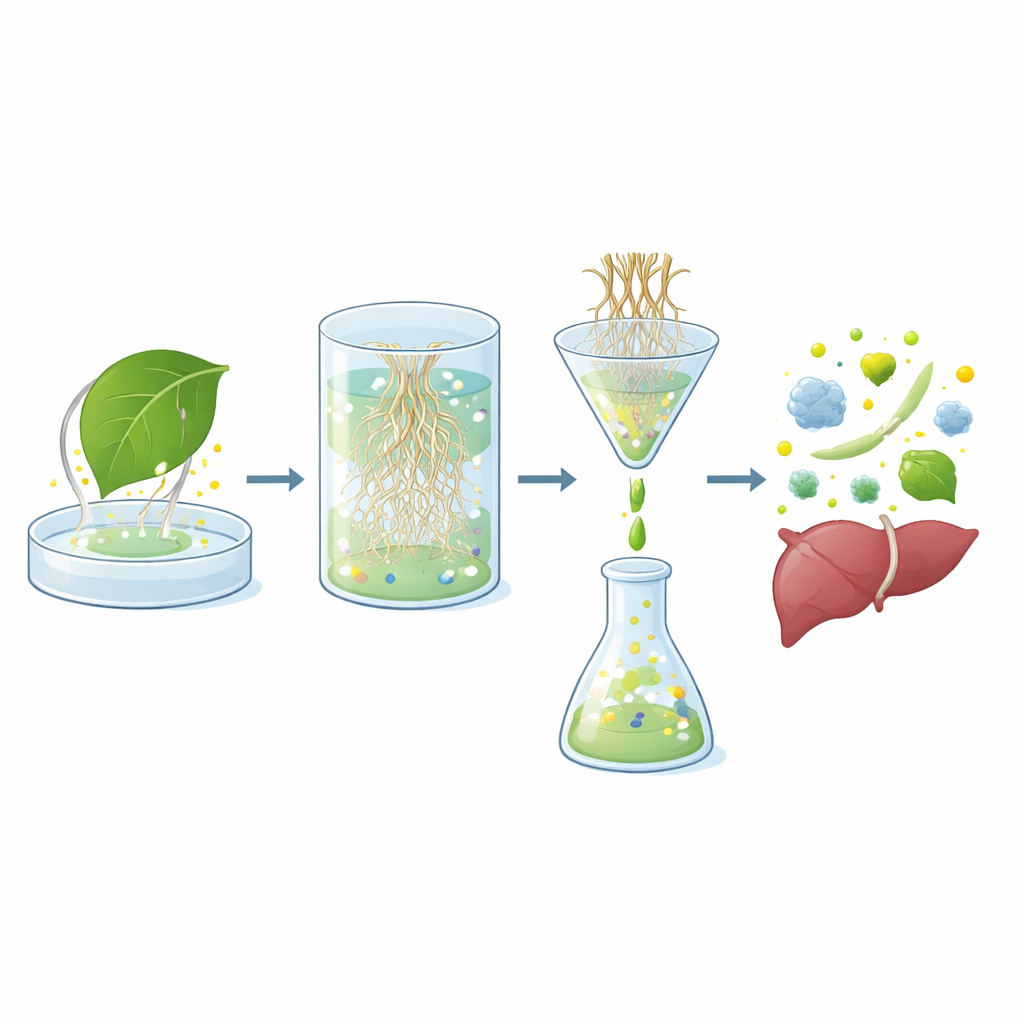
Putting the Extracts to the Test
To see whether these chemical advantages translated into useful biological effects, the team tested the root extracts against human liver cancer cells grown in dishes and in several lab models of inflammation. The extracts reduced the survival of HepG2 liver cancer cells, with half-maximal inhibition at a concentration in the low microgram-per-milliliter range, indicating meaningful cytotoxic activity in vitro. They also protected proteins from heat-induced damage and blocked enzymes involved in inflammatory pathways, including proteinases and lipoxygenase, at levels comparable to or approaching those of well-known anti-inflammatory drugs. Statistical analyses showed that higher levels of phenolics and flavonoids in the extracts were tightly linked to stronger antioxidant behavior.
What It Means for Future Medicines
For non-specialists, the main takeaway is that it is now possible to grow Ashwagandha roots in clean, controlled lab cultures and still obtain, or even enhance, the plant’s valued healing compounds. These adventitious roots are richer in antioxidants and minerals than ordinary roots and show promising anti-inflammatory and anticancer activity in cell-based tests. While the work is still at an early, in vitro stage and more studies—especially in animals and humans—are needed, this approach points toward a future where important herbal medicines can be produced sustainably in bioreactors, with consistent quality and less strain on agricultural land and wild plant resources.
Citation: Mohammed, D.M., Abdelazeez, W.M.A., Suliman, A.A. et al. In vitro adventitious root culture of Withania somnifera L.: a strategy for enhanced secondary metabolite production with therapeutic antioxidant and anti-inflammatory potential. Sci Rep 16, 12192 (2026). https://doi.org/10.1038/s41598-026-44714-y
Keywords: Ashwagandha, adventitious root culture, antioxidant activity, anti-inflammatory, hepatocellular carcinoma