Clear Sky Science · en
Integrating Artificial intelligence within sustainable smart analytical chemistry for analyzing the divisor impact on UV-spectrophotometric efficiency of solifenacin and mirabegron combination
Why this matters for everyday medicines
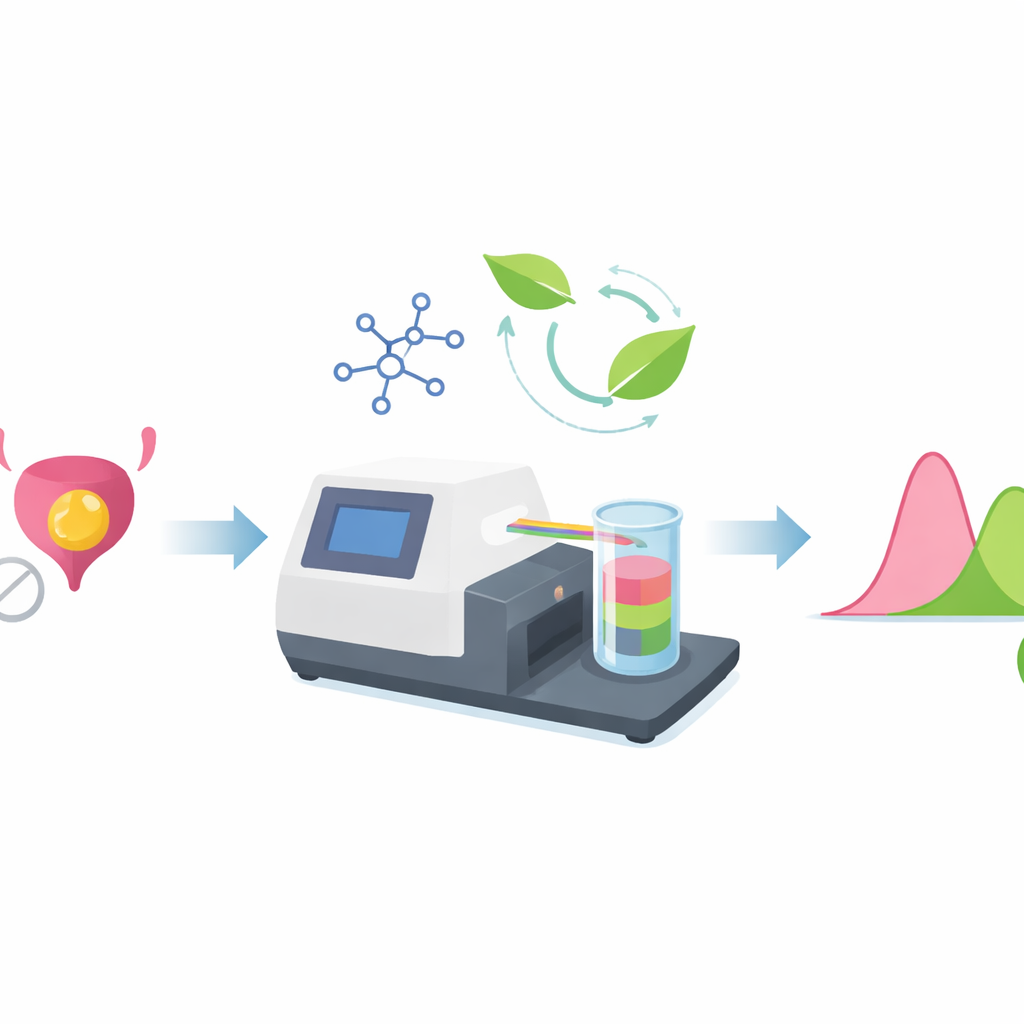
People with overactive bladder often rely on a daily pill that combines two drugs, solifenacin and mirabegron, to reduce urgency and accidents. Making sure every tablet contains the right amount of each drug is critical for safety, but checking this in the lab can be slow, expensive, and wasteful. This study shows how a simple light-based test, boosted by artificial intelligence and sustainability thinking, can accurately measure both medicines at once while using less solvent, less energy, and more transparent quality criteria.
Seeing drugs with light instead of complex machines
Pharmaceutical chemists often use spectrophotometry, a technique that shines ultraviolet light through a solution and measures how much is absorbed, to identify and quantify drugs. It is cheap, fast, and needs only small sample amounts. For the solifenacin–mirabegron pair, however, the light signals overlap strongly: mirabegron gives a broad, intense curve across the useful region, while solifenacin produces only a weak bump close to the limit of the solvent. This overlap makes it hard to tell how much of each drug is present using standard approaches, especially in resource-limited labs that cannot afford complex chromatographic equipment.
Using smart math and AI to untangle mixed signals
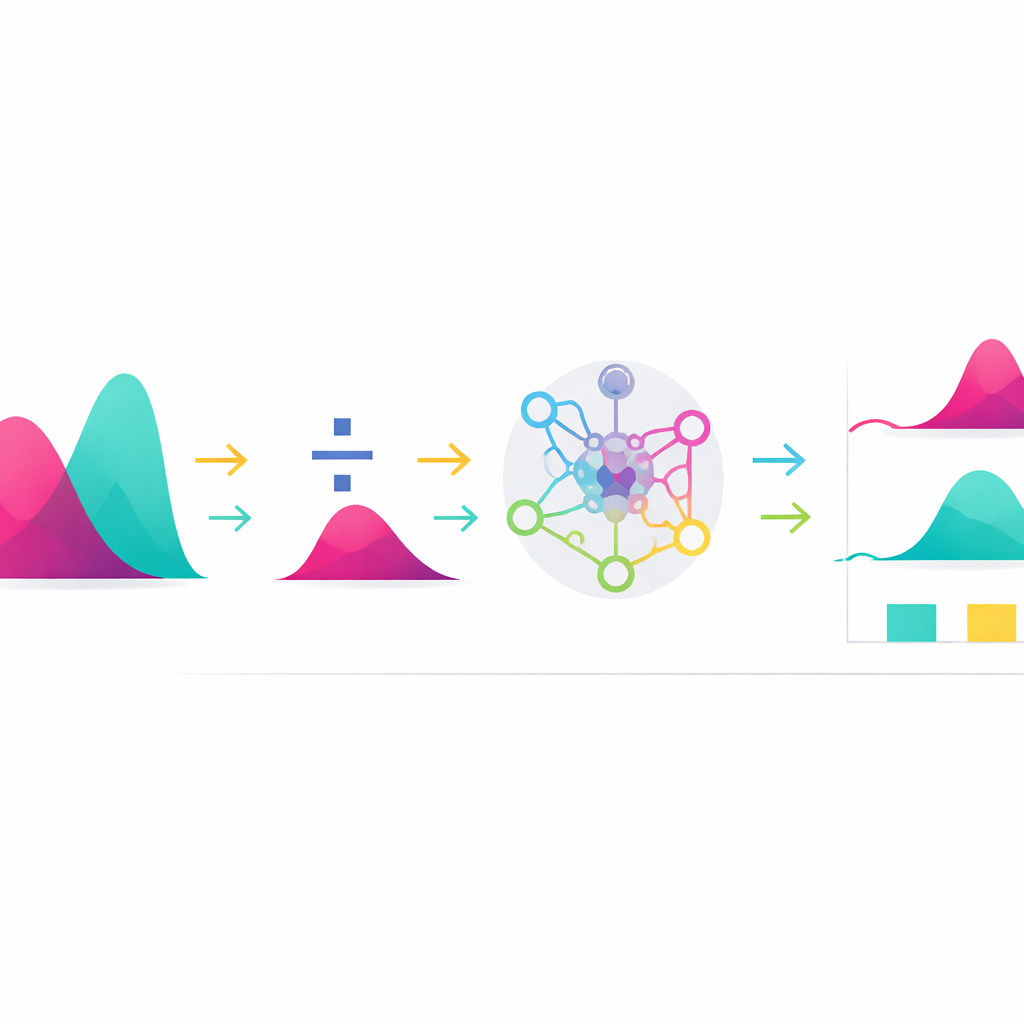
The authors focus on a key mathematical trick called a “divisor” that helps separate the signals of two drugs. In practice, the mixed spectrum of both drugs is divided by a reference spectrum of one component, which reshapes the curves so that hidden details become clearer. The study systematically compares three ways to choose this reference: a normalized version of mirabegron’s spectrum (independent of concentration), fixed mirabegron solutions at several concentrations, and an “extracted” clean spectrum of mirabegron recovered from the mixture itself using a method called absorbance resolution. They combine these divisor strategies with two signal-processing schemes—constant-center and unified constant subtraction—that reconstruct the original spectra of each drug from the manipulated data.
Letting AI judge which strategy works best
Rather than relying on a researcher’s intuition, the team uses an AI assistant (Microsoft Copilot) to evaluate which divisor choice gives the most trustworthy results. The AI processes tables of recovery percentages, variability, and a composite risk number called the cumulative validation score, which combines bias, repeatability, and sensitivity to small wavelength shifts. It then ranks each divisor scenario against international guidelines. The clearest winner is the extracted mirabegron spectrum, which delivers recoveries very close to 100%, very low scatter, and the lowest risk rating. Using a high-concentration mirabegron solution as divisor (14 micrograms per milliliter) is a strong runner-up: the higher signal smooths out noise, improving accuracy at the cost of a slight loss in sensitivity.
Making quality control greener and more balanced
Beyond technical performance, the authors ask how “good” their method is for people and the planet. They introduce a broader idea they call Sustainable & Smart Analytical Chemistry, which unites green chemistry (reducing waste and hazards), “white” analytical chemistry (balancing practicality, performance, and ethics), and AI. Using two structured scoring tools—the Multi-Color Assessment Tool and the Sustainability of Analytical Methods Index—they compare their new UV method with a previously published one. Both score as sustainable overall, thanks to low solvent use (ethanol), modest energy needs, and low cost. The AI-optimized method, however, stands out for better sensitivity, lower detection limits, and stronger innovation scores. The sustainability analysis also highlights a social blind spot: unbalanced gender representation among the researchers, tying the lab method to the broader discussion of equity in science.
What this means for patients and laboratories
In practical terms, the study shows that with the right mathematical tools and AI support, an ordinary UV–visible spectrophotometer can accurately monitor a challenging two-drug tablet without expensive new hardware or complicated software. By carefully choosing the divisor—preferably a clean, extracted spectrum of mirabegron, or otherwise its highest tested concentration—laboratories can obtain precise, robust measurements using simple, greener conditions. For patients, this helps ensure that combination pills for overactive bladder are reliably dosed. For the wider community, it offers a model of how future drug testing can be both scientifically rigorous and aligned with global sustainability goals.
Citation: Lotfy, H.M., Obaydo, R.H., Tantawy, M.A. et al. Integrating Artificial intelligence within sustainable smart analytical chemistry for analyzing the divisor impact on UV-spectrophotometric efficiency of solifenacin and mirabegron combination. Sci Rep 16, 14022 (2026). https://doi.org/10.1038/s41598-026-44688-x
Keywords: overactive bladder drugs, spectrophotometric analysis, artificial intelligence in chemistry, green analytical methods, solifenacin mirabegron combination