Clear Sky Science · en
A performance-optimized V2V task offloading framework for real-time vehicular communication
Smarter cars helping each other
Modern cars are turning into rolling computers, running apps that predict traffic jams, avoid collisions, and even assist with driving. But all this digital brainpower can overwhelm the hardware inside a single vehicle, especially in busy city traffic where decisions must be made in fractions of a second. This paper explores a way for cars to cooperate by wirelessly lending each other computing power so that time‑critical tasks finish quickly and reliably, even when roads are crowded and vehicles move fast.
Why today’s connected cars still struggle
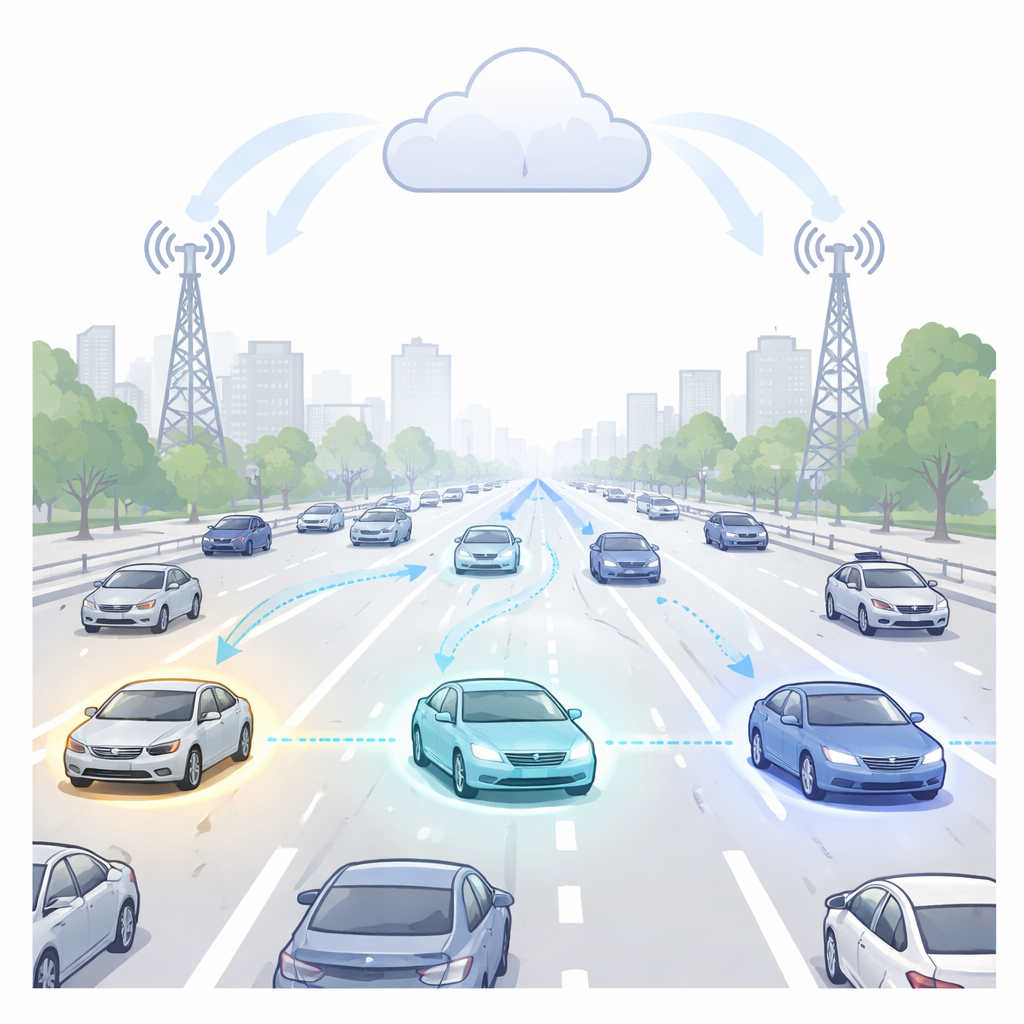
Connected vehicles already share information with roadside units and distant cloud servers, but this model has a weakness: distance. Sending data to the cloud and waiting for a reply can take too long for safety‑critical tasks such as detecting a dangerous driver or choosing a safer route through a traffic knot. Roadside units help by bringing computing closer, yet they are fixed in place while cars zip past. When vehicles move quickly, they may leave the coverage area before their results return, wasting time and computing effort. At the same time, different cars have very different processing power, and many underused on‑board computers sit idle while nearby vehicles struggle to keep up with heavy workloads.
Cars as rolling mini data centers
The authors propose treating powerful cars as roaming “edge nodes” that other vehicles can tap into. In this setup, every car regularly broadcasts short beacons describing its speed, direction, position, and available computing capacity. Less powerful “user” cars listen to these announcements and maintain a fresh snapshot of which helpers are nearby. When a car needs extra processing—for example, to analyze sensor data or run a prediction model—it looks at this live neighborhood map and chooses the most suitable helper car, favoring those that are close, moving in a similar direction, and likely to stay in range long enough to finish the job.
Picking the right helper at the right moment
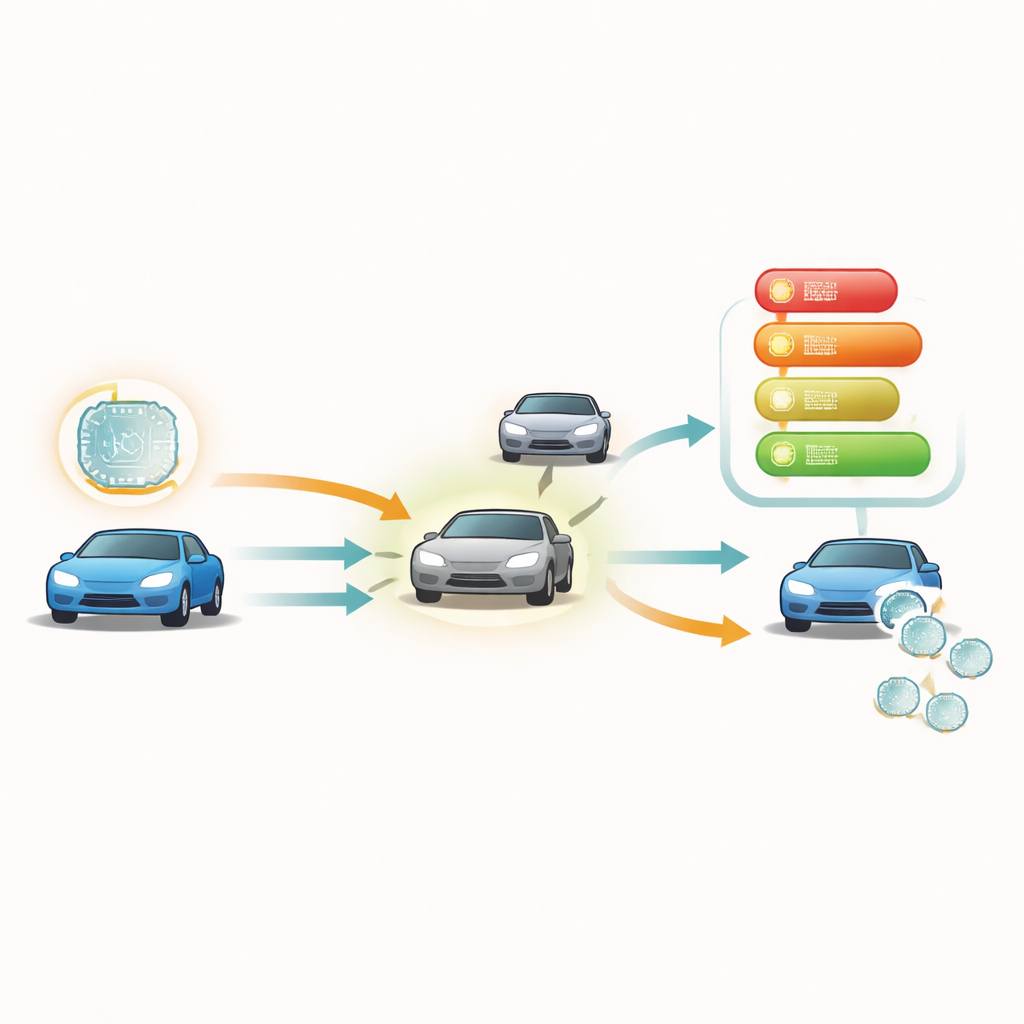
Choosing a helper is only half the challenge; managing the flood of incoming jobs at that helper is the other. The framework therefore uses a two‑stage design. First, a requesting car selects a helper based on the current road layout and motion of nearby vehicles, estimating how long each connection is likely to last. Second, once the task reaches the chosen helper, it enters a smart queue. Each task receives a score based on four factors: how quickly the two cars are moving relative to each other, how far apart they are, how urgent the task is, and how large it is. These scores are combined into a single priority value, and the helper processes tasks in order of importance, making sure that time‑critical jobs do not get stuck behind bulky but less urgent ones. The balance between these factors can be tuned to suit different applications, such as highway safety alerts versus in‑car entertainment.
Testing the idea in a virtual city
To see how well this cooperative scheme works, the researchers built detailed simulations of an urban road network, vehicle movements, and wireless links. They compared their method against several common strategies: assigning jobs to random neighbors, always choosing the closest car, always favoring the car with the strongest computer, or picking the car that is expected to remain in contact for the shortest time. Across a range of traffic densities and speeds, the new framework consistently reduced the time it takes to send a job, process it, and return the result. It also improved the fraction of data packets that arrived successfully and increased the share of tasks that finished before their deadlines, while lowering the rate of failures caused by broken connections or overloaded helpers.
What this means for everyday driving
In plain terms, the study shows that cars can make better use of each other’s computing resources if they cooperate in a structured way instead of relying solely on distant cloud servers or simple neighbor‑selection rules. By paying attention to how fast vehicles are moving, how long they will stay in touch, how big each job is, and how urgent it is, the proposed system keeps delays low and reliability high even in crowded, fast‑changing traffic. If adopted in real vehicles, this approach could make future driver‑assistance and safety features more responsive and robust, paving the way for smoother, safer, and more efficient journeys.
Citation: Qayyum, T., Tariq, A., Taleb, I. et al. A performance-optimized V2V task offloading framework for real-time vehicular communication. Sci Rep 16, 14587 (2026). https://doi.org/10.1038/s41598-026-44686-z
Keywords: vehicular edge computing, vehicle-to-vehicle communication, task offloading, intelligent transportation systems, connected cars