Clear Sky Science · en
Morphological and molecular characterisation of Hirschmanniella paramucronata n. sp. associated with rice from India
Hidden worms that threaten a staple food
Rice feeds billions of people, but its roots are under constant attack from microscopic worms called nematodes. Farmers usually cannot see these pests until rice plants are already stunted and yellowing. This study reveals that a major rice-root nematode in India, long thought to be a familiar species, is in fact a previously unknown one. Correctly naming and recognizing this hidden pest is a vital first step toward tracking its spread and developing better ways to protect rice harvests.
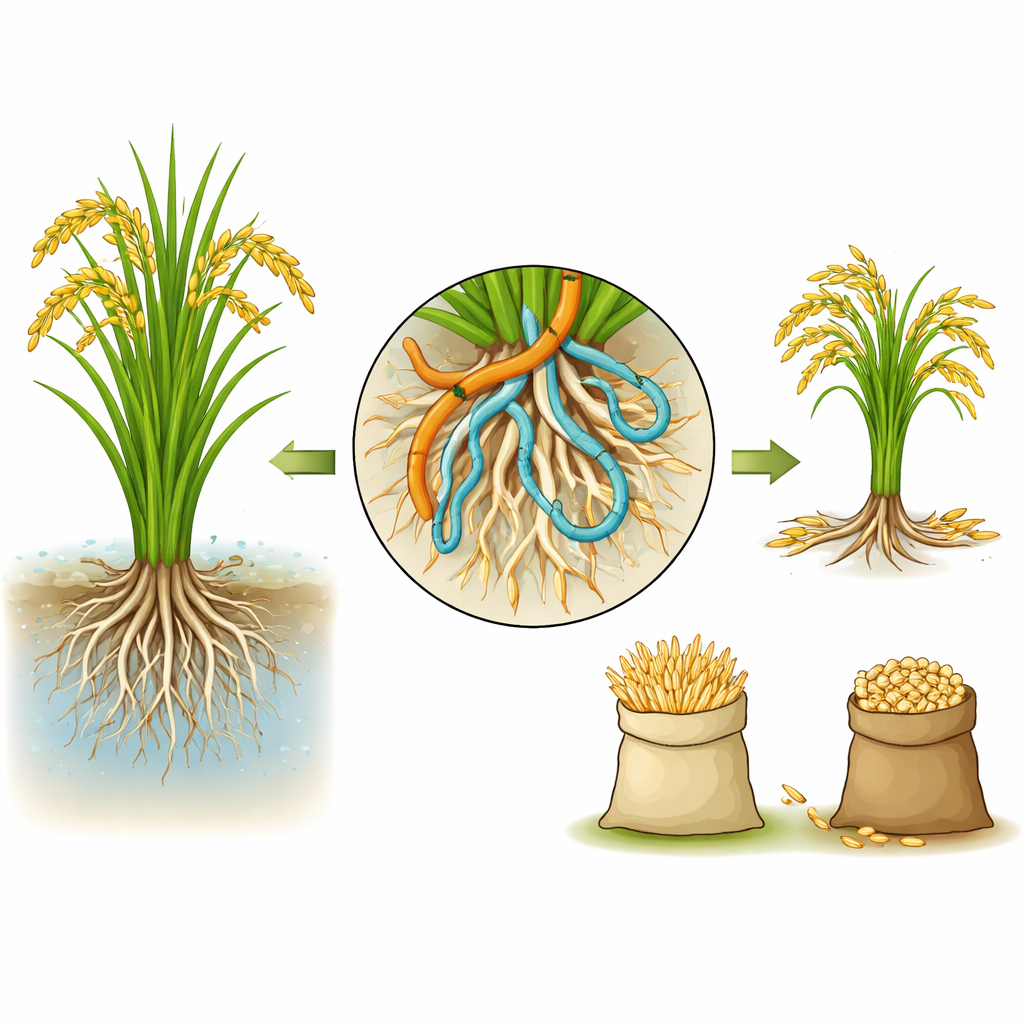
A quiet pest in wet rice fields
The worms examined in this work belong to a group known as rice‑root nematodes, which live and move inside flooded rice roots. As they tunnel through the soft inner tissue, they leave behind brown dead streaks and open the door for invading microbes. In Asia and elsewhere, these nematodes can trim rice yields by around a quarter. They also infect other crops such as taro, sugarcane, maize, and various aquatic plants, making them a concern not only for food security but also for trade, where some species are listed as quarantine pests.
A look at rice roots across India
The research team collected soil and roots from paddy fields in four Indian states—Haryana, Karnataka, Jharkhand, and Uttar Pradesh. From these samples they carefully extracted the slender, thread‑like nematodes and prepared them for detailed study under light and scanning electron microscopes. At first glance, the worms resembled Hirschmanniella mucronata, a well‑known rice pest. But close inspection of their body shape, head rings, feeding spear, and tail tips revealed consistent, if subtle, differences from that species across all sampled locations.
Reading the worm’s genetic ID
To move beyond appearances, the scientists also read stretches of the worms’ DNA that are commonly used as identification barcodes. They amplified and sequenced three regions of the genetic material from individual nematodes and compared these sequences with those of related species stored in public databases. The new worms were similar, but not identical, to H. mucronata: the match ranged from about 90% to 99%, depending on the DNA region examined. When the team built evolutionary family trees from these sequences, the Indian worms consistently formed their own well‑supported branch sitting next to, but clearly separate from, H. mucronata.
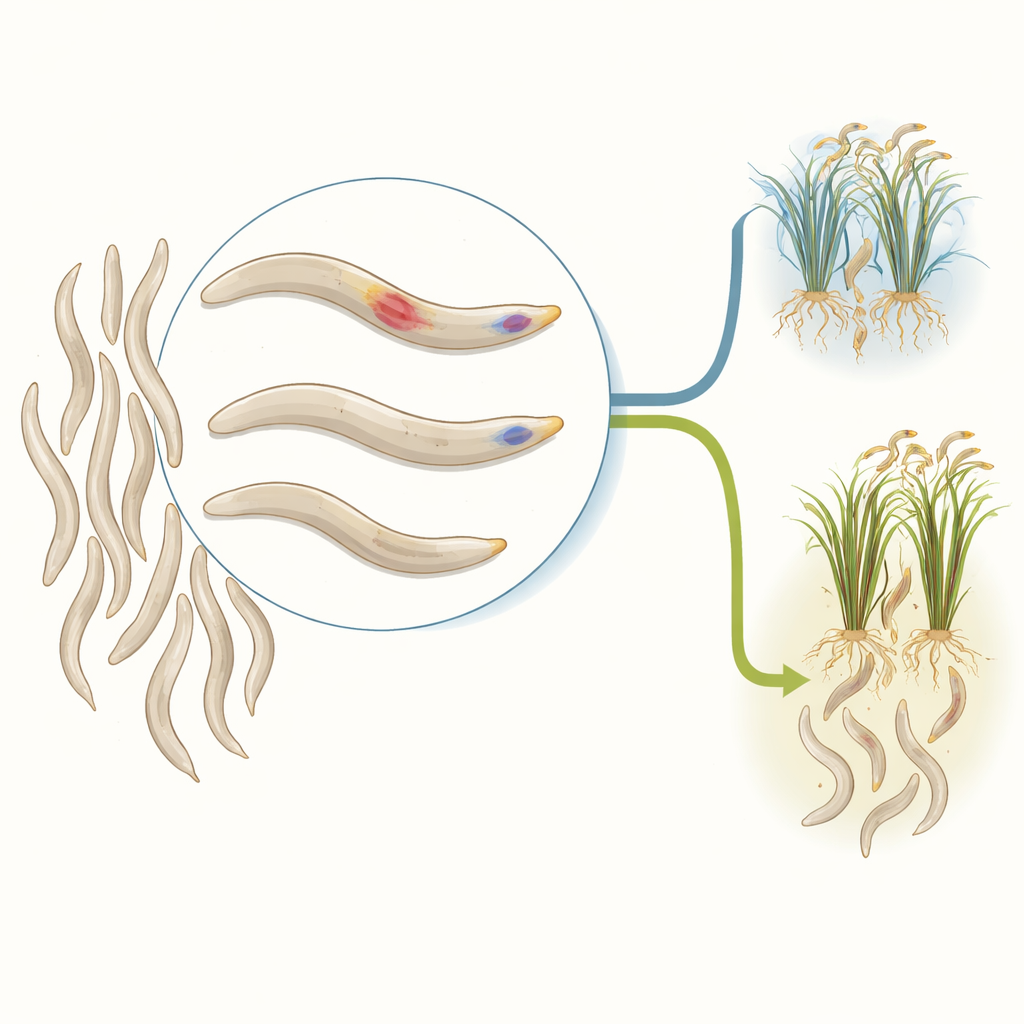
Measuring tiny bodies to separate look‑alikes
Because many rice‑root nematode species look confusingly alike, the authors also used statistical tools to test whether body measurements could reliably distinguish the Indian populations from true H. mucronata. They recorded features such as body length, width, feeding spear dimensions, and distances between key organs in both males and females. Using a technique called linear discriminant analysis, they showed that combinations of these measurements group the new Indian worms apart from H. mucronata from Vietnam and Cambodia. Traits such as the number of rings around the head, the length of part of the feeding spear, and details of the tail region were especially helpful in telling the species apart.
A new name and what it means for rice
Bringing together the microscopic anatomy, precise measurements, and genetic data, the researchers concluded that the Indian worms represent a distinct species, which they name Hirschmanniella paramucronata. They also show that at least one earlier Indian sample, previously reported as H. mucronata, actually belongs to this new species. For farmers and plant‑health officials, this updated identity card matters: it improves pest surveys, helps interpret older records, and lays groundwork for future studies on how damaging this species is to rice and how best to manage it. While the actual disease‑causing power of H. paramucronata is still unknown, recognizing it as a separate species is an essential step toward safeguarding rice crops in India and beyond.
Citation: Venkadesh, G., Islam, M.N., Mondal, S. et al. Morphological and molecular characterisation of Hirschmanniella paramucronata n. sp. associated with rice from India. Sci Rep 16, 13764 (2026). https://doi.org/10.1038/s41598-026-44673-4
Keywords: rice nematode, plant parasites, integrative taxonomy, molecular identification, rice root diseases