Clear Sky Science · en
A case-control study identifying critical exposure windows in the association between ambient air pollution and spontaneous abortion
Why the Air We Breathe Matters in Early Pregnancy
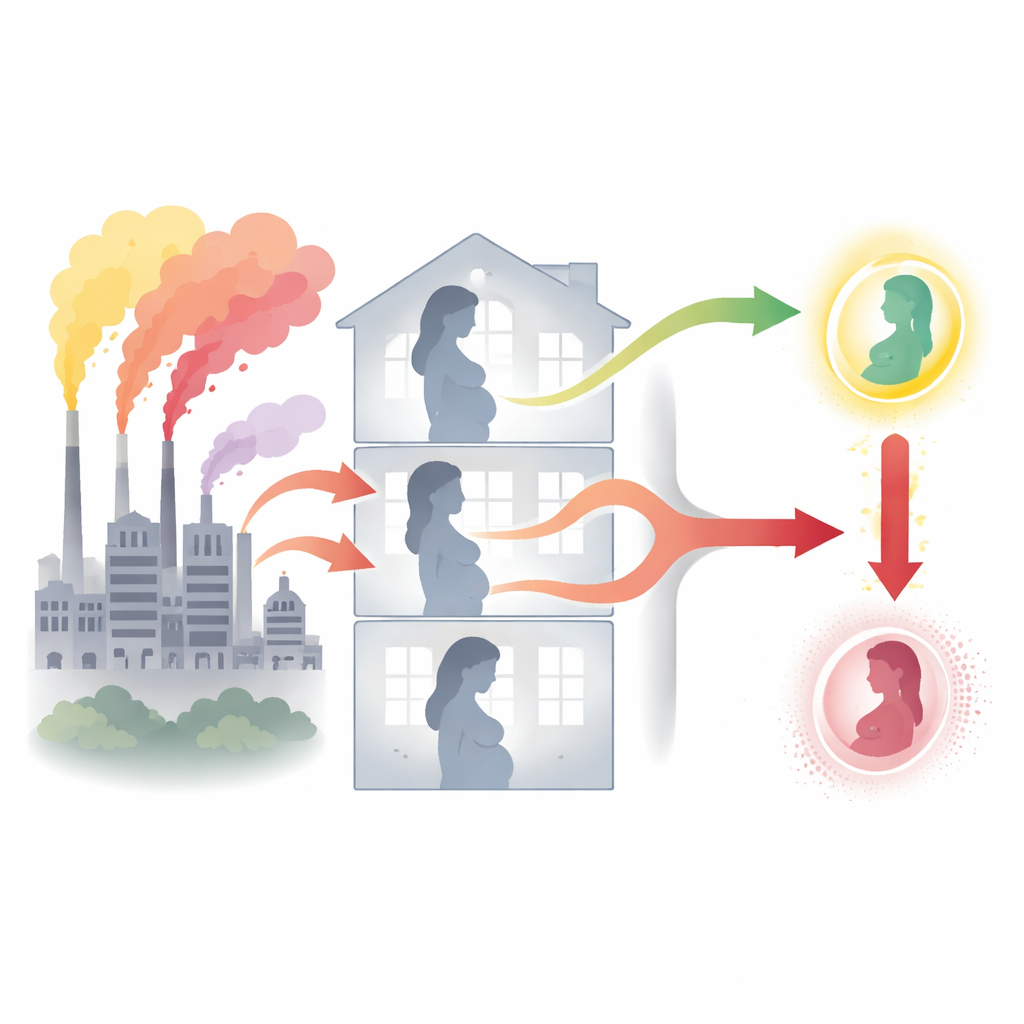
Miscarriage in early pregnancy is far more common than many people realize, and in roughly half of cases doctors cannot pinpoint a clear medical cause. This study asks a question that matters to anyone living in a polluted city or industrial region: can everyday air pollution in the first weeks after conception quietly raise the risk of losing a pregnancy, and if so, during which specific weeks is the developing embryo most vulnerable?
A Closer Look at Pregnancy Loss
Spontaneous abortion, often called miscarriage, is the natural loss of a pregnancy before about 20 weeks. Many of these losses occur so early that they can be mistaken for a late or heavy period. Beyond the emotional toll, early pregnancy loss is linked to greater risk of problems in later pregnancies. While genetic and hormonal causes are well known, a large fraction of cases remain unexplained, prompting researchers to examine the role of the environment. With industrialization and traffic pushing up pollution levels worldwide, scientists are increasingly asking whether the air a woman breathes in the first few weeks after conception can tip the balance between a healthy and a failing pregnancy.
Tracking Women, Polluted Skies, and Timing
The researchers carried out a case-control study in Changzhi, an industrial city in northern China. They enrolled 476 women who came to a maternal and child health hospital between June 2022 and March 2024: 203 had experienced an early pregnancy loss, and 273 had ongoing pregnancies. For each woman, the team carefully reconstructed daily exposure to six common outdoor pollutants—sulfur dioxide, nitrogen dioxide, ozone, carbon monoxide, and fine and coarse particles—during the 28 days before her hospital visit. Instead of relying on simple citywide averages, they used a mapping technique that weighs data from nearby monitoring stations more heavily than distant ones, giving a finer-grained picture of what each woman likely breathed at home.
Finding the Risky Pollutants and the Critical Weeks
When the team compared exposure levels between women who lost pregnancies and those who did not, one pollutant stood out: sulfur dioxide, a gas largely produced by burning coal and other fuels. Women with higher sulfur dioxide exposure in early pregnancy had substantially higher odds of miscarriage, even after accounting for age, body weight, and reproductive history. The researchers then applied a time-sensitive statistical method that can separate the effect of exposure day by day. They discovered that the influence of sulfur dioxide was not immediate but built up over time, peaking about four weeks after exposure and showing the clearest signal in the 22 to 28 days before the pregnancy outcome. Ozone showed an apparent link in the opposite direction, but its pattern over time was weak and inconsistent, leading the authors to caution that this may reflect complex interactions with other pollutants rather than any true benefit.
What May Be Happening Inside the Body
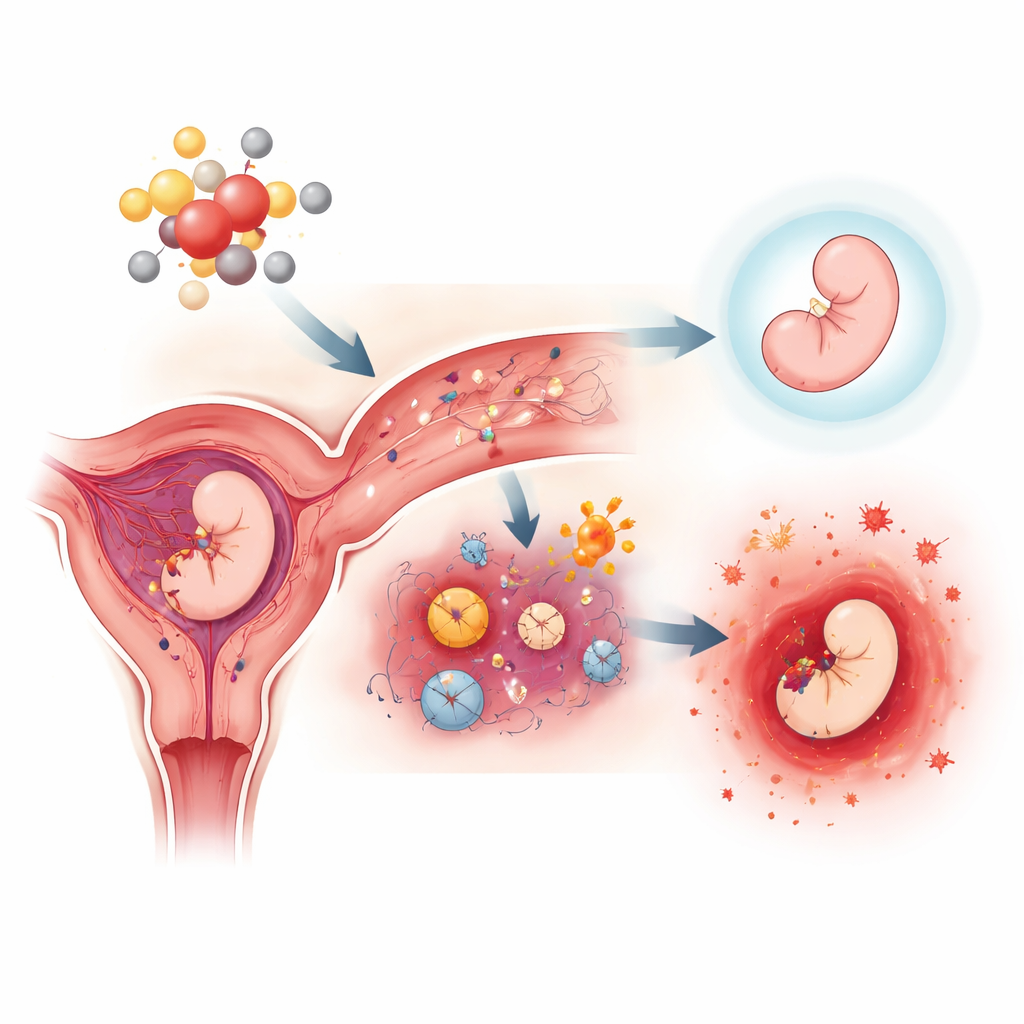
To understand how a gas in city air could affect an embryo, the team turned to existing databases that connect chemicals, genes, and diseases. They identified human genes that are both influenced by sulfur dioxide and associated with pregnancy loss, then mapped how the proteins made from these genes interact. Many of the central players were involved in inflammation, immune responses, and programmed cell death. Further analysis highlighted signaling pathways that help control how the immune system responds to threats. Overactivation of these pathways near the developing placenta could disturb the delicate balance the body must strike: defending against infection while tolerating the embryo. The findings support a picture in which breathing sulfur dioxide may amplify inflammatory and immune signals, potentially damaging placental cells and raising the chance of early loss.
What This Means for Families and Cities
This study suggests that even relatively short-term exposure to sulfur dioxide in the first weeks after conception can measurably increase the risk of early pregnancy loss, especially when exposure occurs three to four weeks before the outcome. While the work was done in one Chinese city and cannot prove cause and effect on its own, it adds to growing evidence that cleaner air is not only a heart and lung issue but also a reproductive health concern. For individuals, it underscores the value of reducing exposure to traffic and industrial fumes when planning or entering early pregnancy. For policymakers, it reinforces the importance of limiting sulfur dioxide emissions in industrial regions as part of protecting maternal and child health.
Citation: Zhang, Y., Zou, Z., Dai, H. et al. A case-control study identifying critical exposure windows in the association between ambient air pollution and spontaneous abortion. Sci Rep 16, 14328 (2026). https://doi.org/10.1038/s41598-026-44655-6
Keywords: air pollution, sulfur dioxide, early miscarriage, pregnancy health, environmental exposure