Clear Sky Science · en
Effects of different types of microplastics in soil on nitrogen absorption and metabolism of quinoa
Why tiny plastics in soil matter for our food
Most people now know that oceans are filling with tiny plastic fragments, but far less attention has been paid to the plastics building up in farm soils. This study looks at what happens when these "microplastics" mix with soil where quinoa—a nutritious grain increasingly eaten worldwide—grows. The researchers focused on how different kinds of microplastics affect the way quinoa takes up nitrogen, a key nutrient that underpins both plant growth and food quality.
Small plastics, big presence in farm fields
Microplastics, defined here as pieces smaller than 5 millimeters, reach fields through leftover plastic mulch, sewage irrigation and composted sludge. Once in the ground, they can change soil structure, water behavior and the living microbial community, with knock-on effects for crops. Earlier work suggested that long‑lasting plastics are more dangerous because they remain in the environment for decades. New evidence, however, hints that so‑called biodegradable plastics may also cause serious harm as they break down and interact with soil life. The authors set out to compare these two broad groups head‑to‑head in the same soil–plant system.
Testing different plastics in real soil
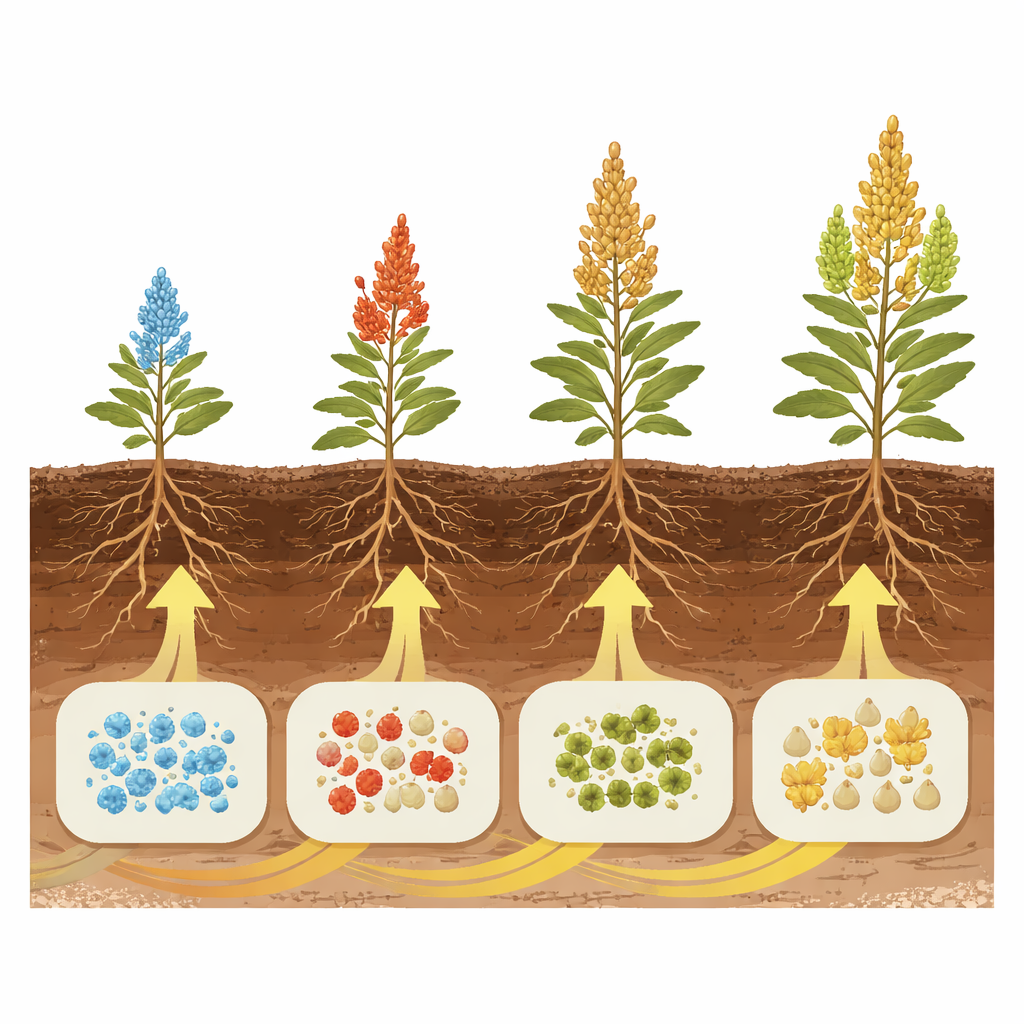
To do this, the team ran a greenhouse pot experiment using farmland soil from northern China that had no known history of plastic contamination. They mixed the soil with three types of plastic particles smaller than half a millimeter: two biodegradable materials, polylactic acid (PLA) and PBAT, and one common, long‑lasting plastic, polyethylene (PE). Each plastic was added at three levels—0.5, 1 and 3 percent of soil mass—alongside a plastic‑free control. Quinoa seedlings were transplanted into these soils and grown for 75 days under well‑watered conditions with standard fertilizer. The researchers then measured soil chemistry, plant growth, nitrogen content in leaves and seeds, and the activity of key enzymes that manage both stress and nitrogen use.
How plastics reshaped soil and plant health
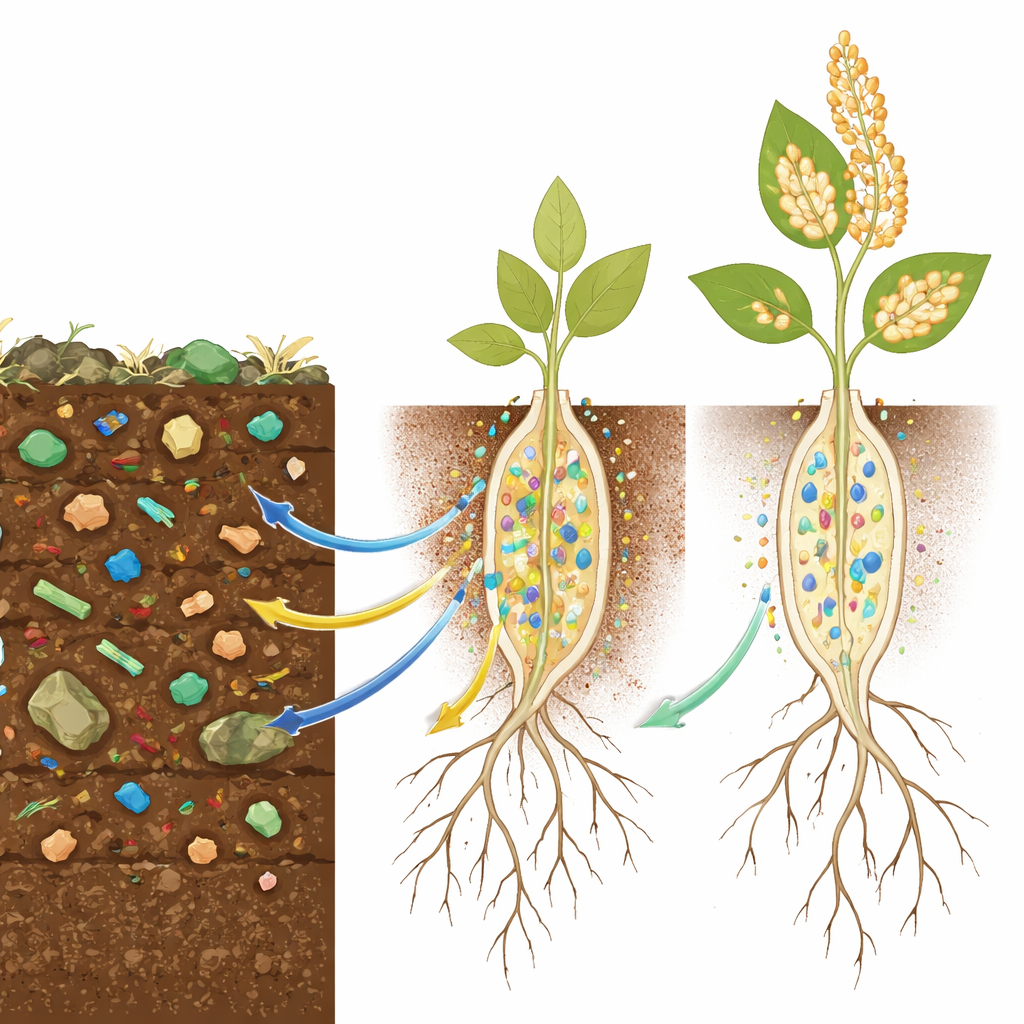
All three plastics altered the soil’s carbon and nitrogen balance. In every case, microplastics slowed the breakdown of soil organic carbon and raised the soil carbon‑to‑nitrogen ratio, a shift that tends to make nitrogen harder for plants to access. PE‑treated soils showed slightly lower total nitrogen than soils with the biodegradable plastics. Microplastics also raised levels of ammonium nitrogen and, at low to moderate doses, briefly increased nitrate; at the highest dose, nitrate dropped again, suggesting that heavy pollution can cut off this vital nitrogen source. These soil changes translated into clear impacts on quinoa. Biodegradable PBAT sharply reduced plant dry weight—by roughly half in some treatments—while PLA modestly boosted biomass and PE had little effect overall. Root activity declined under all plastics, most strongly with PE, indicating that the underground “feeding organs” of the plants were under strain.
Stress inside the plant and disrupted nitrogen use
Inside the quinoa plants, microplastics triggered biochemical signs of stress. The activity of protective antioxidant enzymes dipped, while levels of malondialdehyde, a marker of damage to cell membranes, rose and peaked at the 1 percent plastic level. At the same time, the total nitrogen and nitrate stored in the plants fell, and their cumulative nitrogen uptake was lower than in plastic‑free soil. PBAT was the most harmful, producing the smallest nitrogen gains. Enzymes directly involved in processing nitrate—especially nitrate reductase—became less active, again most strongly at moderate plastic levels. Plants experiencing greater oxidative damage also showed weaker nitrogen‑processing activity, linking stress to poorer nutrient use.
What this means for future harvests
Viewed together, the results paint a troubling picture: microplastics in soil, even those marketed as biodegradable, can undermine both the chemical environment around roots and the internal machinery plants use to acquire and process nitrogen. In this experiment, a 1 percent plastic level caused the strongest disruption of quinoa’s nitrogen metabolism, and biodegradable PBAT was more damaging than PLA and PE. For farmers and consumers, this suggests that plastic fragments lingering in fields could quietly reduce yields and crop resilience long before they are visible on the surface. The study argues that biodegradable plastics should not automatically be treated as benign and that managing microplastic pollution will be essential to protect soil health and the reliability of our food supply.
Citation: Hao, X., Zhang, M. Effects of different types of microplastics in soil on nitrogen absorption and metabolism of quinoa. Sci Rep 16, 14243 (2026). https://doi.org/10.1038/s41598-026-44650-x
Keywords: microplastics, soil health, quinoa, nitrogen uptake, biodegradable plastics