Clear Sky Science · en
In silico evaluation of FDA-approved antivirals and corticosteroids against SARS-CoV-2
Why this study matters for COVID-19 treatment
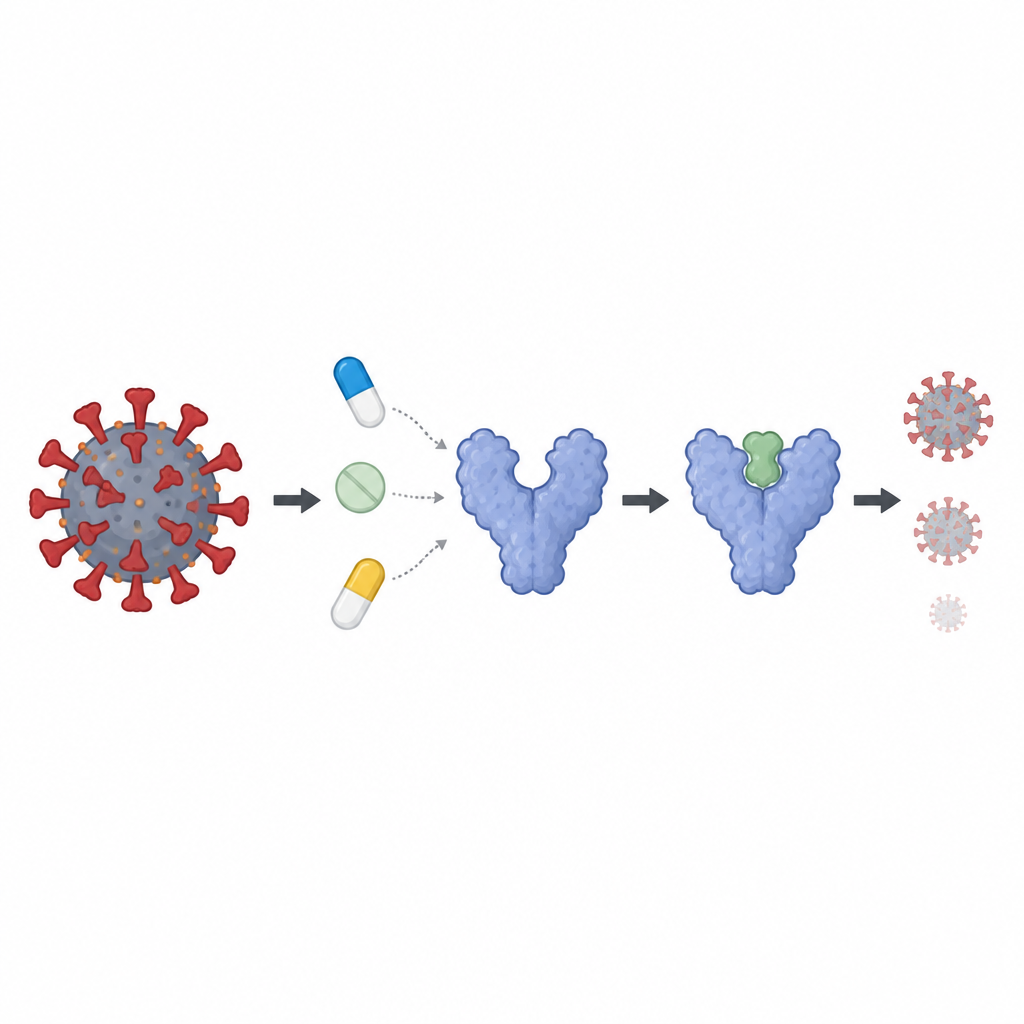
The COVID-19 pandemic has shown how hard it is to find safe and effective medicines fast enough to keep up with a new virus. Instead of starting from scratch, scientists can look again at drugs that are already approved for other illnesses and test whether they might also work against SARS-CoV-2. This study uses advanced computer tools to examine how three such drugs interact with a key protein the virus needs to copy itself, offering clues about which medicines are most worth testing further in the lab and clinic.
Looking for new uses for known medicines
The researchers focused on three drugs that have already been used in patients for other conditions. Baloxavir marboxil is an antiviral used against flu, remdesivir is an antiviral that has been authorized for emergency use in COVID-19, and dexamethasone is a corticosteroid commonly used to reduce inflammation. Because these medicines have known safety records, repurposing them could shorten the time needed to deliver better treatments. The team asked a simple question: when these drugs meet crucial SARS-CoV-2 proteins, especially the main protease that helps the virus process its own proteins, which ones latch on most strongly and most stably?
How computers can see inside molecules
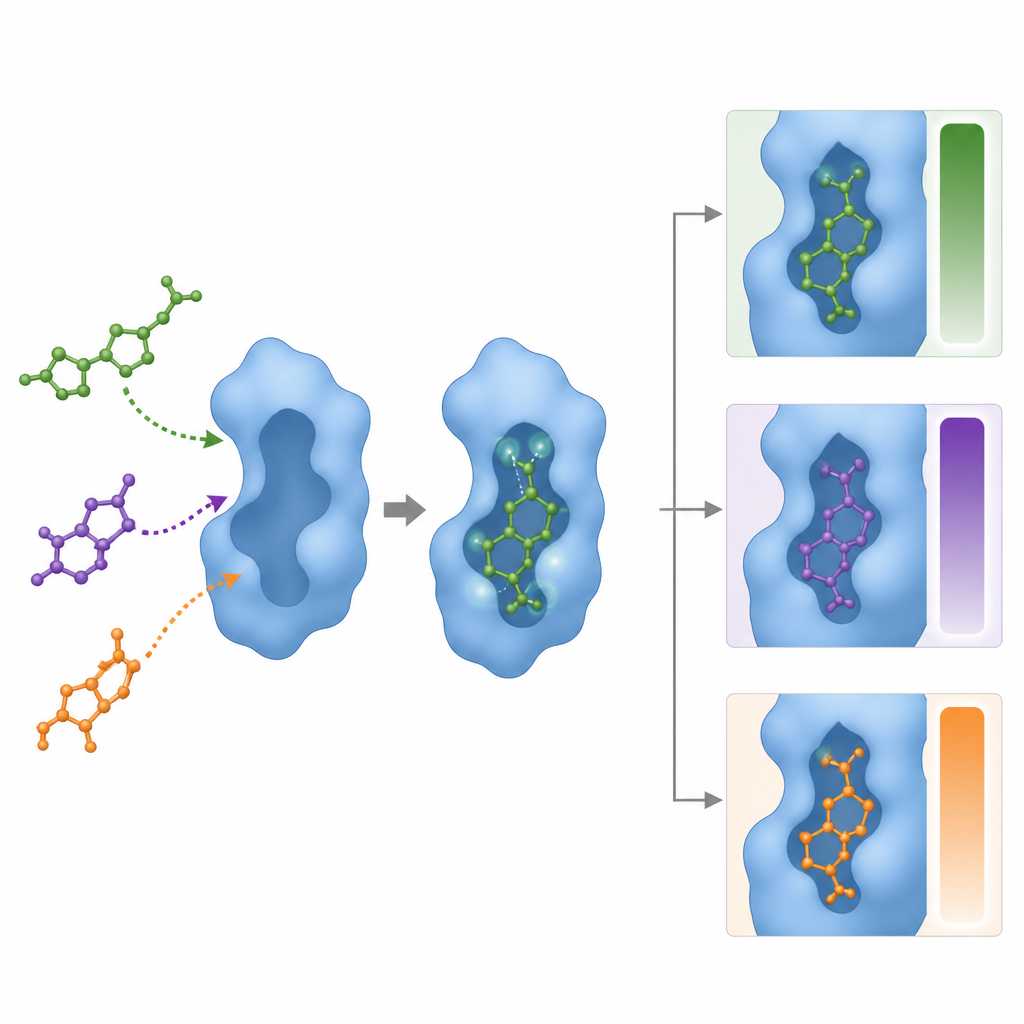
To answer that question, the study combined several types of computer simulations. First, molecular docking estimated how tightly each drug fits into the virus protein, much like trying keys in a lock. Next, the team used long molecular dynamics simulations to see how those drug protein pairs behave over time in a watery, near body like environment, checking whether the drugs stay put or drift away. They also performed electronic structure calculations to understand how easily each drug can exchange electrons, a factor linked to how readily it can form non permanent interactions. Finally, they predicted how each compound might be absorbed, spread, broken down, and cleared by the body, and whether it might cause side effects such as liver damage.
Which drug grips the virus protein best
The tests showed that baloxavir marboxil tends to form the strongest initial grip on the viral proteins, scoring the best in docking and electronic reactivity. It makes many stabilizing contacts inside the main protease, helped by both hydrogen bonding and snug hydrophobic fit. However, when the researchers let the systems run in time based simulations that mimic real motion, dexamethasone emerged as the steadiest partner. It stayed in a very stable position in the protease, with small structural shifts and a high number of persistent contacts. Remdesivir also bound well and behaved stably, but with slightly less favorable measures than dexamethasone in several of the long term tests.
Balancing strength of action and safety
Binding to the virus is only half the story; a drug also needs acceptable behavior in the human body. The absorption and toxicity predictions suggested that dexamethasone has the most balanced profile, with good absorption, relatively fast clearance, and fewer red flags for organ damage. Baloxavir marboxil and remdesivir both showed signs of possible liver strain and some risk of unwanted effects on the heart. Calculations of overall binding free energy, which combine several energetic contributions, again placed dexamethasone and remdesivir ahead of baloxavir marboxil, supporting the idea that their grip on the viral protease is not only strong but also energetically favorable in watery surroundings.
What this means for future COVID-19 therapies
Putting all of the computer evidence together, the study suggests that dexamethasone, already used to calm harmful inflammation in severe COVID-19, may also directly block a key virus enzyme in a way that is both stable and compatible with its predicted safety profile. Remdesivir remains a solid antiviral candidate, while baloxavir marboxil looks promising but may need chemical tweaks to lessen its predicted toxicity. These results do not by themselves prove that any of the drugs will work better in patients, but they help narrow down the list of options for laboratory and clinical testing, saving time and resources in the ongoing search for improved COVID-19 treatments.
Citation: Chhetri, K.B., Poudel, R. & Sunar, A. In silico evaluation of FDA-approved antivirals and corticosteroids against SARS-CoV-2. Sci Rep 16, 14827 (2026). https://doi.org/10.1038/s41598-026-44640-z
Keywords: COVID-19 drugs, SARS-CoV-2 protease, drug repurposing, molecular docking, dexamethasone