Clear Sky Science · en
Triplet versus doublet therapy in patients with metastatic hormone-sensitive prostate cancer
Why this matters for patients and families
For men whose prostate cancer has already spread through the body but still responds to hormone-blocking drugs, doctors now have several powerful treatment options. This study asks a very practical question: is it worth adding chemotherapy on top of modern hormone tablets, given the extra side effects, and for which patients does this more intensive approach really pay off? The answers help patients and clinicians choose a first-line treatment strategy that balances longer life with quality of life.
Two main treatment paths
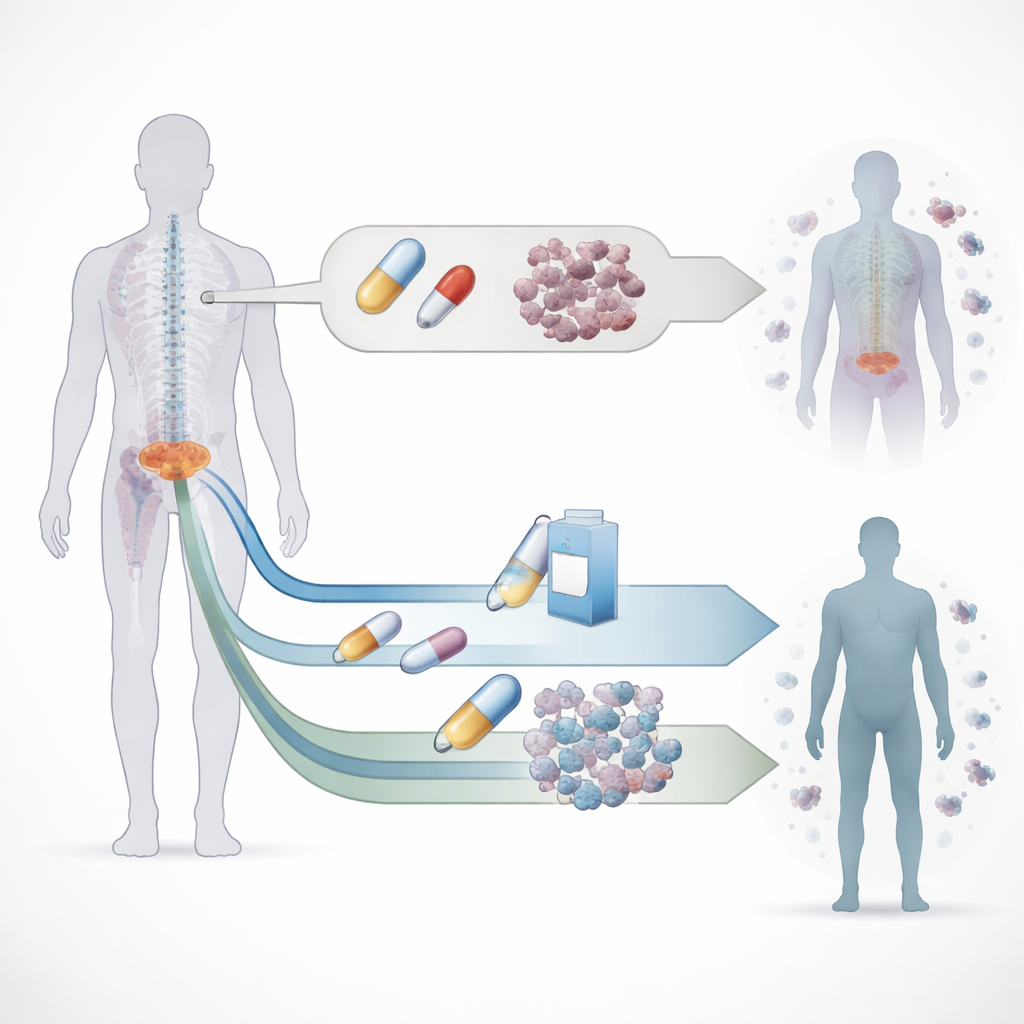
Today, standard care for metastatic hormone-sensitive prostate cancer usually starts with medicines that lower or block male hormones, which fuel the cancer’s growth. One common approach, called doublet therapy, pairs traditional hormone injections with a newer hormone-blocking pill such as abiraterone, enzalutamide, or apalutamide. A newer option, triplet therapy, adds a course of chemotherapy with docetaxel plus another pill, darolutamide, to the basic hormone shots. On paper, more drugs might mean better cancer control, but also more side effects. Until now, there had been no direct, real-world comparison of how these two paths stack up.
How the study was done
Researchers in Japan looked back at the medical records of 500 men treated for metastatic hormone-sensitive prostate cancer between 2013 and 2025 at one university hospital and many partner centers. Most patients received doublet therapy with one of three hormone pills alongside standard hormone injections, while a smaller group received triplet therapy combining darolutamide, hormone injections, and six cycles of docetaxel chemotherapy. To make a fair comparison, the team matched patients from both groups so they were similar in age, disease extent, and other key factors, then tracked how long their disease stayed under control and how long they lived.
Who benefited most from more intensive treatment
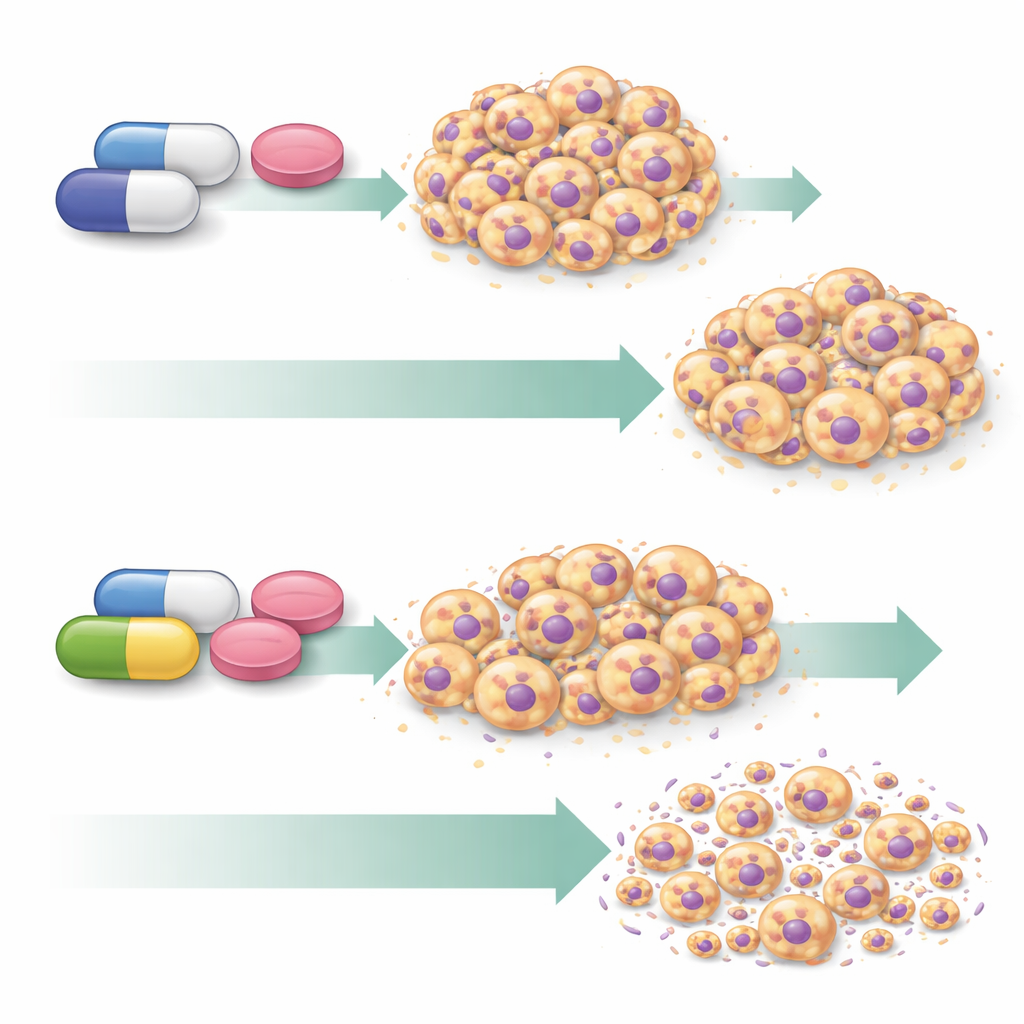
In men with higher-risk disease—defined by aggressive tumor features or many metastases—triplet therapy clearly kept the cancer in check for longer and was linked to better overall survival than doublet therapy. The time until the first sign that prostate-specific antigen (PSA) was rising again, the time until a second disease worsening after later treatments, and overall survival all favored the triplet approach in this matched high-risk group. When the researchers focused only on the stronger hormone pills enzalutamide and apalutamide, leaving out abiraterone, triplet therapy still delayed the first PSA rise, although overall survival differences were less certain, partly because the follow-up period for triplet-treated patients was shorter.
Clues from blood tests and tumor patterns
The team also searched for simple clinical features that might predict who gains the most from adding chemotherapy. One signal came from levels of lactate dehydrogenase (LDH), a blood enzyme often linked to more aggressive cancers. Patients starting treatment with high LDH levels had clearly better cancer control and survival with triplet therapy than with doublet therapy. Similarly, men whose biopsy samples showed a very aggressive pattern of cells known as Gleason pattern 5 benefited more from the triplet approach. In contrast, men with low LDH levels or without this aggressive pattern saw little difference between triplet and doublet therapy in this study, suggesting that they may not need the added burden of chemotherapy up front.
Balancing benefits against side effects
These gains did not come without cost. Nearly nine out of ten men receiving triplet therapy experienced some form of treatment-related side effect, and serious problems such as severe drops in white blood cells and fever were much more common than with doublet therapy. Only a little over half of the triplet patients completed all planned chemotherapy cycles. Older men in particular may take longer to recover from such intensive treatment. The findings highlight that choosing therapy is not only about which option works best on average, but also about a patient’s age, general health, and willingness to accept risks for potential extra months or years of cancer control.
What this means in everyday terms
For men with metastatic hormone-sensitive prostate cancer, this study suggests that adding chemotherapy to modern hormone tablets can offer a meaningful survival edge, especially when the cancer looks aggressive in blood tests or under the microscope. At the same time, the higher rate of serious side effects means that triplet therapy will not be the right choice for everyone. Men who are older, frailer, or whose blood tests and tissue samples point to less aggressive disease may reasonably choose doublet therapy instead. Overall, the work supports a more tailored approach in which simple clinical markers like LDH level and tumor pattern help guide whether to fight harder up front with three drugs or take a safer, two-drug route.
Citation: Hayakawa, K., Ueda, T., Iehara, M. et al. Triplet versus doublet therapy in patients with metastatic hormone-sensitive prostate cancer. Sci Rep 16, 13707 (2026). https://doi.org/10.1038/s41598-026-44627-w
Keywords: metastatic hormone-sensitive prostate cancer, triplet therapy, androgen receptor signaling inhibitors, docetaxel, treatment selection