Clear Sky Science · en
Dynamic channel allocation for secondary users in cognitive radio network
Smarter Sharing of the Invisible Airwaves
Every wireless gadget you own—from your phone to your smart doorbell—relies on the same invisible resource: radio waves. As more devices crowd into this limited space, connections can slow, calls can drop, and battery life can suffer. This paper explores a new way for radios to "think" for themselves about which frequencies to use, helping today’s and tomorrow’s Internet of Things devices share crowded airwaves more fairly and efficiently.
The Problem of Crowded Signals
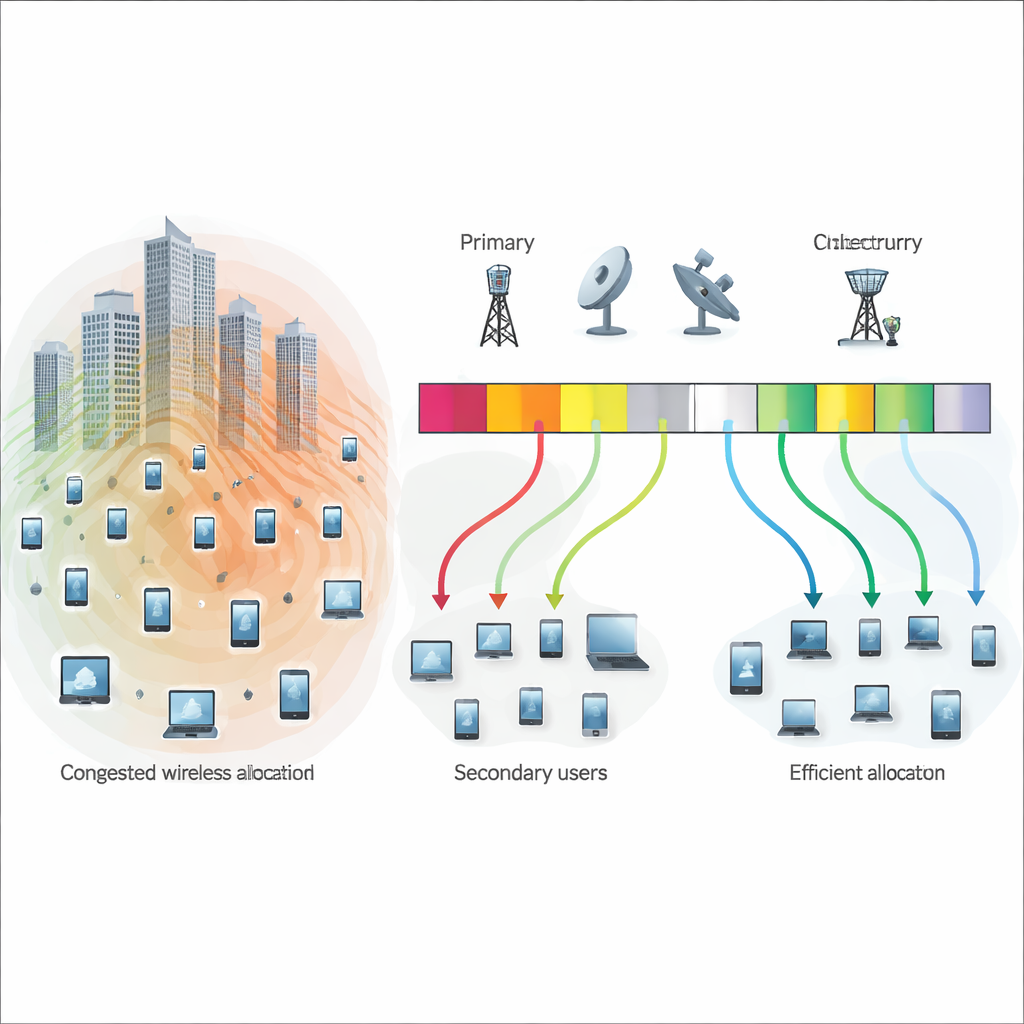
Traditional rules treat radio frequencies like permanently leased real estate. Licensed "primary" users, such as mobile operators, own specific bands, while everyone else must squeeze into small unlicensed corners. Yet, much of that licensed spectrum sits idle at any given time, even as unlicensed bands become jammed. Existing sharing methods are often slow, centralized, and rigid: they struggle when signals are weak, when usage patterns swing rapidly, or when thousands of tiny devices with very different needs compete at once. The result is wasted spectrum, higher delays, and frequent interruptions for "secondary" users who are trying not to disturb the owners of the bands.
Radios That Decide Locally and On the Fly
The authors propose a different approach in which each secondary device makes its own decisions in real time, instead of waiting for instructions from a central controller. Their system, called CR-ANM, relies on cognitive radios—radios that can sense their surroundings and adapt. Each device watches the quality of the signals it receives, how much data it needs to send, and how much power it can safely use without disturbing primary users. From this information, it estimates which channels are idle, which are busy, and how stable each option is over time. Rather than treating all devices the same, the system classifies them into higher- and lower-priority groups based on these conditions and the urgency of their traffic.
Fuzzy Logic for Graded Priorities
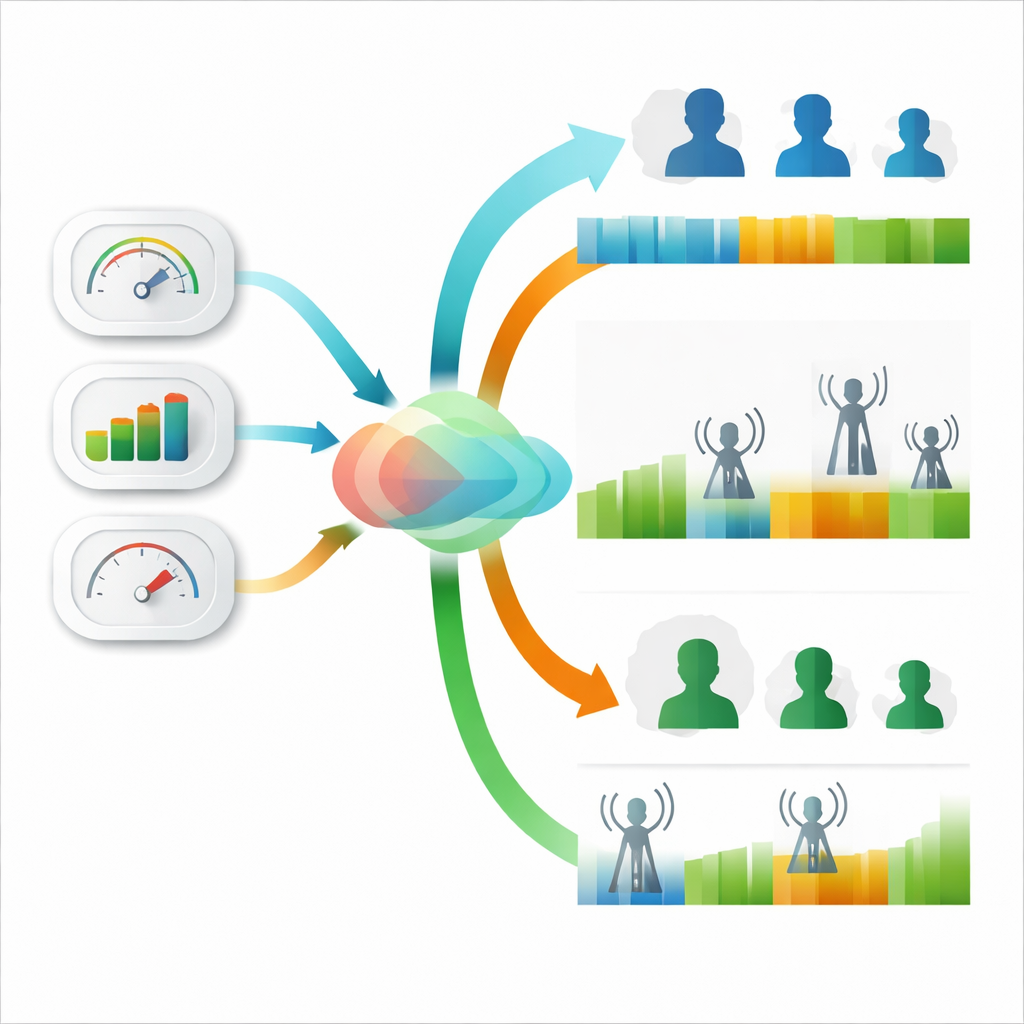
To translate messy, real-world measurements into clear decisions, the system uses a fuzzy logic engine with 27 decision rules. Fuzzy logic is well suited to situations where inputs are imprecise—signal quality may be "low", "medium", or "high" rather than a single crisp number. The engine considers three main factors: the strength and cleanliness of the signal, the data rate the device needs, and the transmit power it can safely use. From these, it assigns each secondary user a priority index. Devices judged to have high priority are matched with the most stable, interference-free idle channels. Lower-priority devices can still transmit but may be asked to reduce their power or use less ideal channels, especially when primary users become active again.
Two Ways to Sneak In Without Disturbing
The system combines two styles of spectrum access. In "interweave" mode, a secondary user only transmits on channels that appear idle, staying completely out of the way of primary users. In a "hybrid interweave–underlay" mode, lower-priority secondary users are allowed to keep communicating even when a primary user returns, but only at sharply reduced power so they remain almost invisible to the licensed transmission. A ranking mechanism scores each channel based on how often it is idle, how long those idle periods last, and how frequently primary users show up. This helps match high-priority users to the best channels and funnels others into safer but more constrained options, all without human intervention.
Better Use of Spectrum Under Realistic Loads
The authors tested their design using computer simulations across many traffic patterns, numbers of users, and channel conditions. Compared with a more conventional cognitive radio setup, their autonomous scheme increased overall data throughput, reduced how often services had to be dropped when primary users reclaimed their channels, and cut the time devices waited before they could start sending data. Channel availability for both priority groups stayed higher, even as more primary and secondary users entered the network. At the same time, the system kept delays and transmission times in check, which is crucial for time-sensitive applications such as sensors, cameras, and control systems in large IoT deployments.
What This Means for Everyday Connectivity
For non-specialists, the key takeaway is that the airwaves do not need to be expanded to feel roomier; they need to be used more intelligently. By letting each device sense its surroundings, estimate how important its own traffic is, and pick channels on the fly using graded, fuzzy rules, the proposed method turns a rigid spectrum into a flexible, self-managing resource. In practical terms, this could mean fewer dropped connections, smoother video, longer battery life, and more reliable smart-home and city-scale IoT services—all while respecting the rights of licensed users who paid for their slice of the spectrum.
Citation: Gowthaman, S., Bhuvaneswari, P.T., Ramesh, P. et al. Dynamic channel allocation for secondary users in cognitive radio network. Sci Rep 16, 14349 (2026). https://doi.org/10.1038/s41598-026-44620-3
Keywords: cognitive radio, dynamic spectrum sharing, Internet of Things, fuzzy logic, wireless networks