Clear Sky Science · en
Integrated cortical-cognitive signatures identified by machine learning enable early detection of MCI in type 2 diabetes
Why this matters for people with diabetes
Type 2 diabetes is usually talked about in terms of blood sugar, eyes, kidneys, or feet. But it can also quietly affect the brain, leading to memory slips and slower thinking years before dementia appears. This study shows that by looking closely at both brain scans and thinking tests, doctors may be able to spot early warning signs of memory trouble in people with diabetes, long before everyday life is seriously affected.
Following three paths of brain health
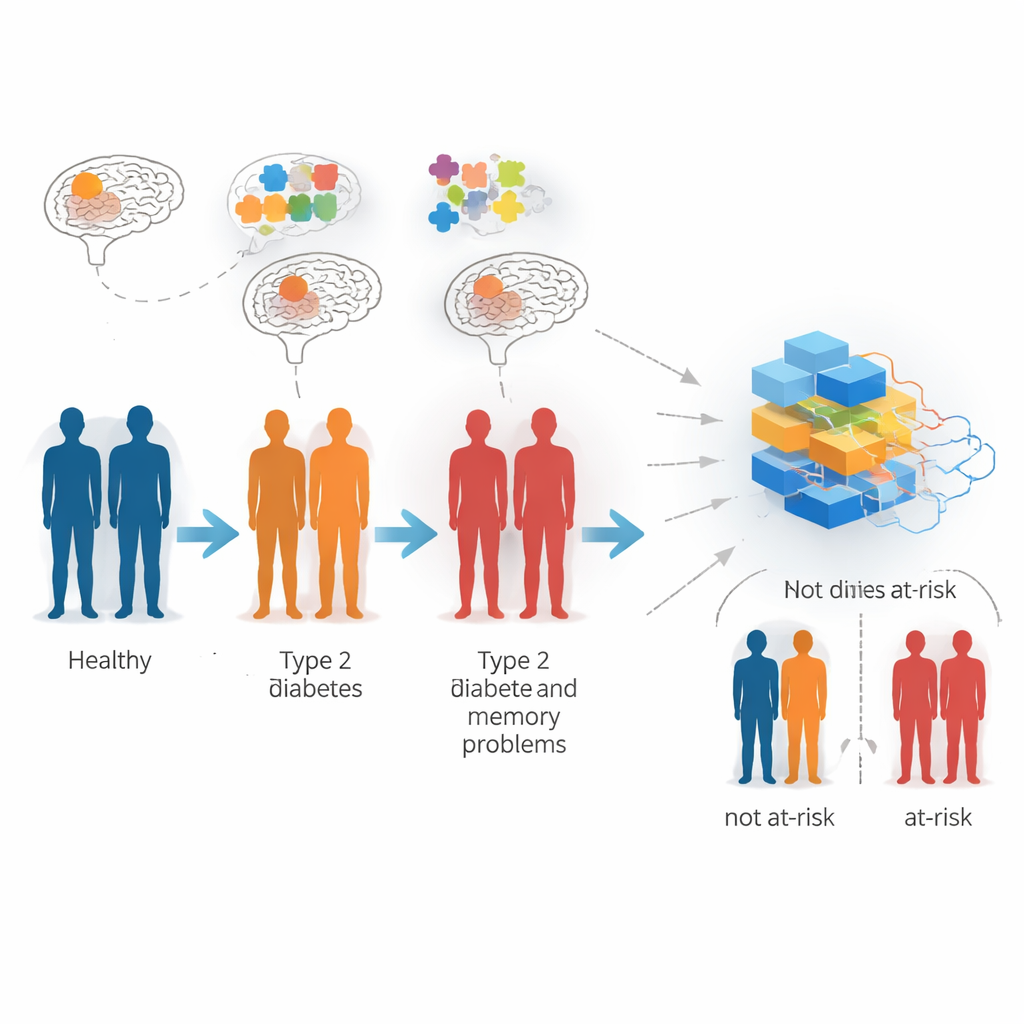
The researchers studied 150 adults between 45 and 65 years old, divided into three carefully matched groups: people without diabetes, people with type 2 diabetes but normal thinking, and people with type 2 diabetes plus mild cognitive impairment (MCI) – a noticeable but still early stage of memory and thinking problems. Everyone completed a detailed set of pencil-and-paper thinking tests and had high-resolution MRI brain scans. By comparing these three groups side by side, the team could separate changes caused by aging, diabetes itself, and those tied specifically to early cognitive decline.
A small but important brain region stands out
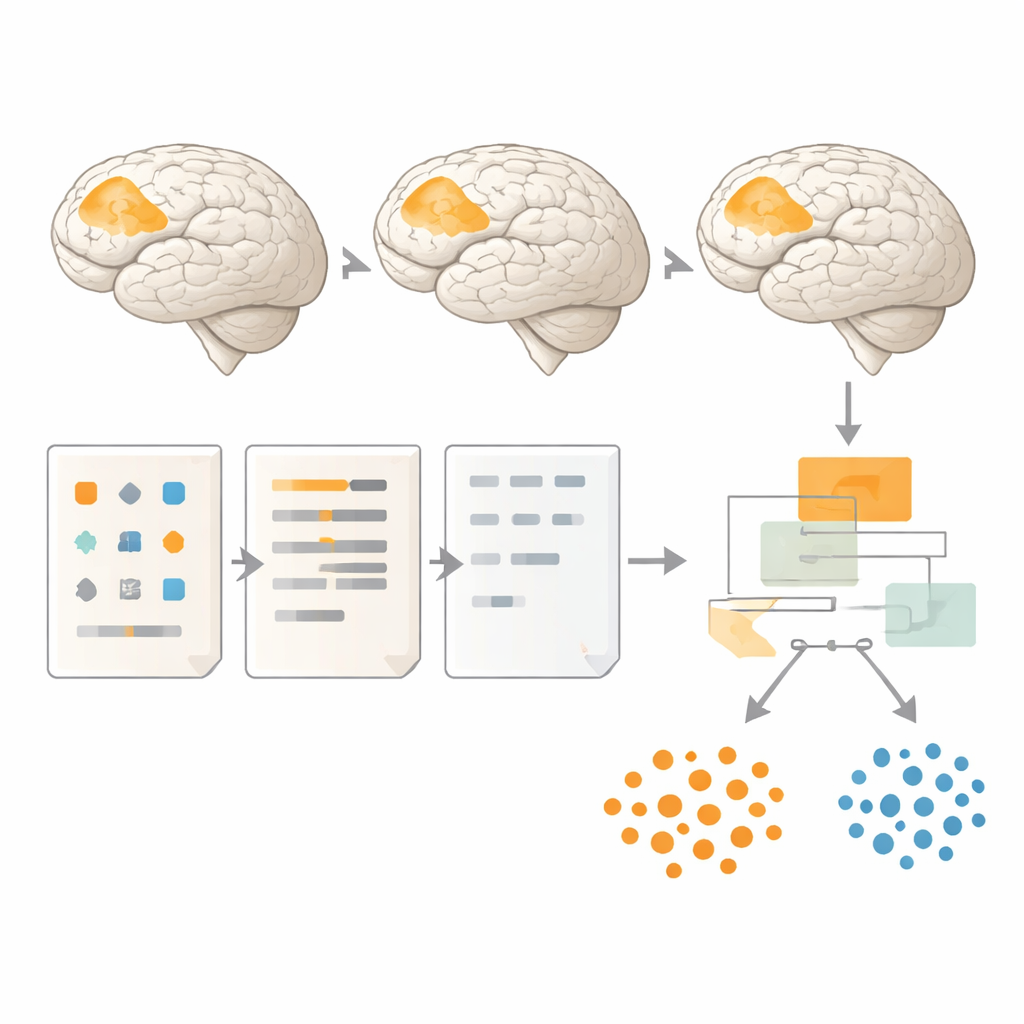
The MRI scans were used to measure the thickness of the brain's outer layer, where most thinking takes place. Across many brain regions, people with diabetes showed thinning compared with healthy volunteers, and those with both diabetes and MCI often showed even more changes. One spot in particular, a region on the left side of the frontal lobe called the pars opercularis, showed a clear stepwise pattern: it was thickest in healthy individuals, thinner in those with diabetes, and thinnest in those with diabetes plus MCI. This smooth progression suggests that this small area may serve as an early structural marker of diabetes-related cognitive decline.
Thinking tests that reveal subtle changes
The team also examined which thinking tests best separated the three groups. Tasks that measured how quickly and flexibly people could connect items on a page (Trail Making Tests A and B) and how well they could learn and remember spoken word lists (Rey Auditory Verbal Learning Test and its delayed recall version) showed the strongest and most consistent differences. In general, people with diabetes performed worse than healthy individuals, and those with diabetes plus MCI performed worst of all. In contrast, familiar quick screening tools like the Mini-Mental State Examination and Montreal Cognitive Assessment often failed to distinguish between people with diabetes who did and did not have MCI, suggesting that more targeted tests are needed for this population.
Linking brain structure, thinking skills, and machine learning
To find the most informative combination of measurements, the researchers used a machine learning method known as a Random Forest classifier. They trained three versions of this model: one using only brain measurements from key regions, one using only the most informative thinking test scores, and one combining both. The combined model performed best, correctly separating people with diabetes who had MCI from those who did not with very high accuracy. An explanation tool called SHAP was then used to show which features the model relied on most. It highlighted two main players: the thickness of the left pars opercularis and performance on the more demanding trail-making test that taps executive function and processing speed.
What this means for early warning and care
For people living with type 2 diabetes, the key takeaway is that subtle brain and thinking changes can be detected well before dementia sets in, and that a small frontal brain region together with focused thinking tests may provide a practical early warning system. If confirmed in larger and longer-term studies, this integrated approach could help clinicians identify those at highest risk of future memory problems and target them for closer monitoring, tighter control of blood sugar and blood pressure, and lifestyle changes such as exercise and cognitive training aimed at preserving brain health.
Citation: Saluja, K.V., Balachandran, P., Pillai, D. et al. Integrated cortical-cognitive signatures identified by machine learning enable early detection of MCI in type 2 diabetes. Sci Rep 16, 13533 (2026). https://doi.org/10.1038/s41598-026-44608-z
Keywords: type 2 diabetes, mild cognitive impairment, brain MRI, cognitive testing, machine learning