Clear Sky Science · en
A novel sustainable hybrid intuitionistic fuzzy decision-making model for machinability ranking of Al–Cu–Mg–SiC–graphite–peanut shell hybrid composites
Turning Waste into Useful Metal Parts
Modern cars, planes, and machines all rely on metals that are strong, light, and easy to shape. At the same time, industry is under pressure to cut waste and energy use. This study explores how leftovers from peanut shells, combined with well-known industrial powders, can be blended into aluminum to create new metal materials that are both high performing and more sustainable.
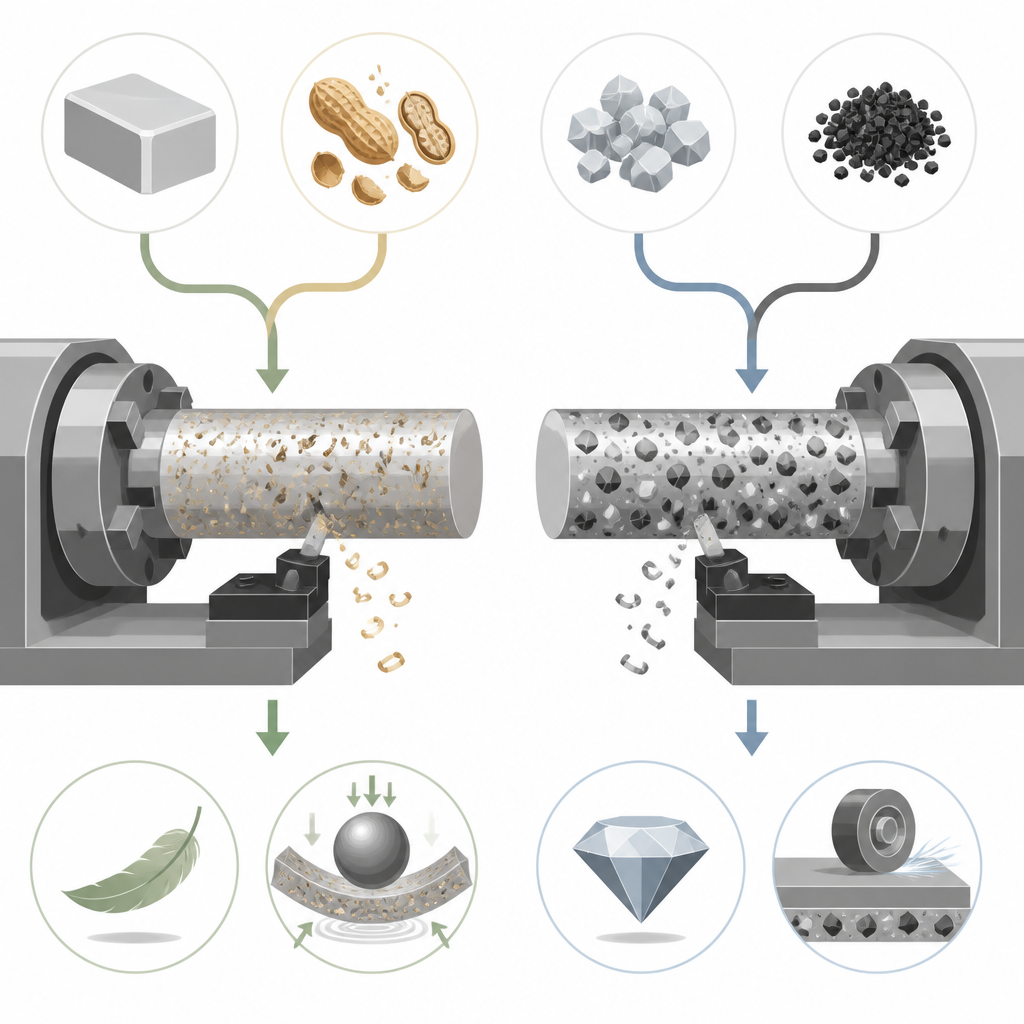
Mixing Metal with Shells and Powders
The researchers started with nearly pure aluminum and added three kinds of solid particles: a hard ceramic called silicon carbide, soft lubricating graphite, and ash made from burned peanut shells. Small amounts of copper and magnesium were also mixed in to boost strength and help the particles bind to the metal. Two versions of this hybrid material were cast into bars. Sample A contained more peanut shell ash and slightly less of the hard ceramic and metals, while Sample B contained more silicon carbide and copper but less shell ash. This careful balancing of ingredients was meant to produce one material that is lighter and more flexible and another that is harder and more wear resistant.
What the Inside of the Metal Reveals
To understand how these mixtures behaved, the team examined the internal structure of both samples with microscopes and several standard lab tests. Images showed that the tiny particles were spread fairly evenly through the aluminum in both cases, which is important for reliable performance. Sample A, rich in peanut shell ash, showed more organic, carbon-like phases that help stop cracks from spreading and allow the metal to bend and absorb energy. Sample B, with extra silicon carbide and copper, showed a denser network of hard particles and clearer crystalline features, which are linked to higher strength and better heat flow but lower flexibility. Tests that track how heat moves through a material and how its atoms are arranged backed up this picture of a softer, tougher Sample A and a stiffer, stronger Sample B.
How the New Metals Behave Under Cutting
Because real components must be shaped by cutting and turning, the team focused on how these materials respond during machining. They mounted the cast bars on a lathe and varied three key settings: cutting speed, how fast the tool is fed into the metal, and how deep it cuts. Some trials used a conventional setup, while others added high frequency vibration to the cutting tool, a method known as ultrasonic assisted turning. This vibration helps break chips and reduce cutting resistance. For every run, the researchers measured how rough the surface became, how quickly the tool wore out, how much metal was removed per minute, and how much power the machine used.
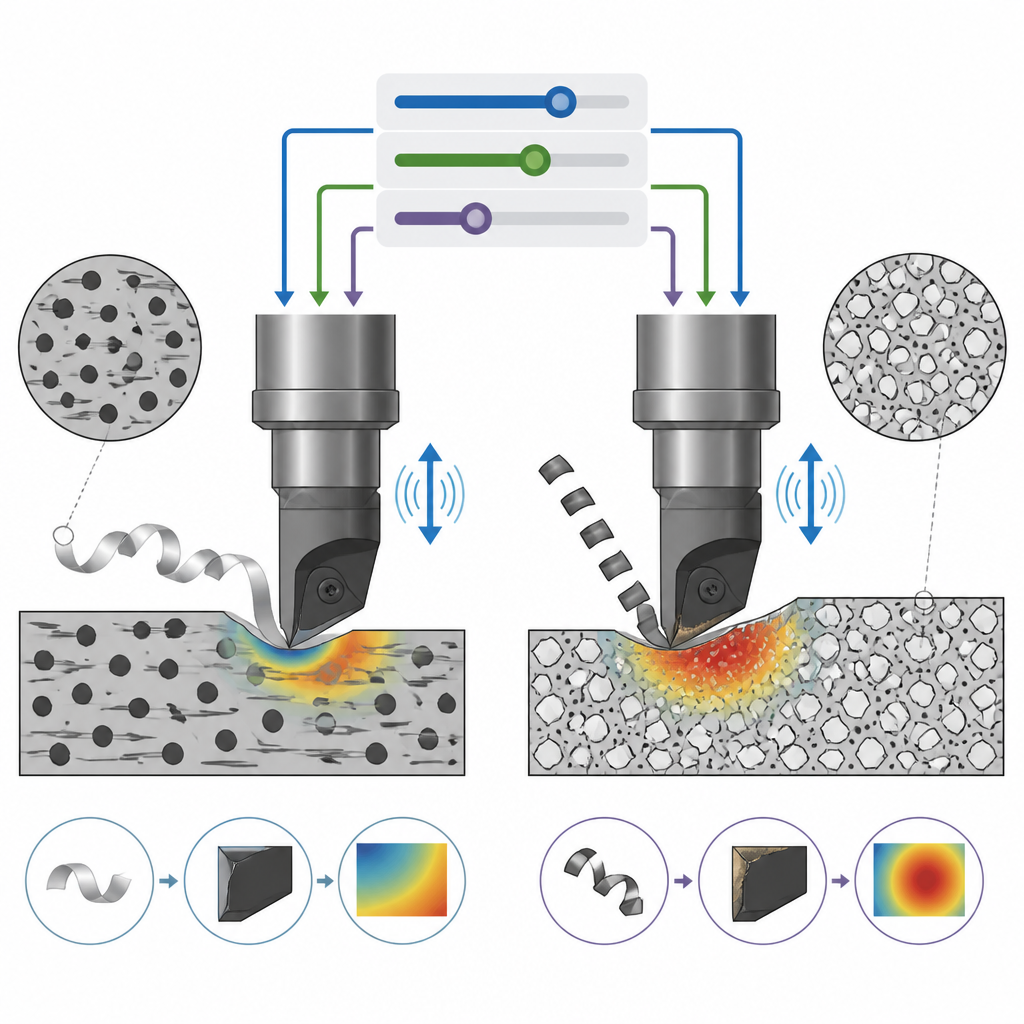
Smart Ranking of the Best Cutting Conditions
Choosing the best cutting recipe is not simple, because factories care about smooth surfaces, long tool life, high throughput, and low energy use all at once. To handle these trade offs, the study used a layered decision approach that blends statistical modeling with fuzzy logic, a way of working with expert judgments that are not purely yes or no. First, response surface methods built mathematical links between the cutting settings and the measured outcomes. Then fuzzy weighting and an intuitionistic fuzzy ranking method were applied to judge which combinations of speed, feed, cut depth, and material gave the most balanced performance. This hybrid strategy allowed the team to rate many possible setups while keeping uncertainty and expert opinion in view.
Which Material Wins for Which Job
The ranking process showed that the best overall machining performance came from Sample B at the highest tested cutting speed, the lowest feed rate, and a moderately deep cut, especially when ultrasonic vibration was used. Under those conditions the turned surface was relatively smooth, tool wear was low, the amount of metal removed per minute was high, and power draw stayed at a practical level. Sample A did not match these cutting results but shined in different ways: it was lighter, more ductile, and better at soaking up energy and heat, thanks to the higher share of peanut shell ash.
What This Means for Real Products
In simple terms, the study suggests that plant waste can help tailor aluminum for different types of parts. The shell rich Sample A is a good candidate for lightweight panels and components that must flex a little and handle impacts, such as certain automotive or aerospace skins. The ceramic rich Sample B is better suited to hard working, wear resistant pieces like sliding or rotating parts that see high contact forces. By combining careful material design with smart decision tools, the work points toward metal components that are easier to machine, last longer in service, and make better use of agricultural waste that might otherwise be thrown away.
Citation: Sivam, S.P.S.S., Umasekar, V.G., Kesavan, S. et al. A novel sustainable hybrid intuitionistic fuzzy decision-making model for machinability ranking of Al–Cu–Mg–SiC–graphite–peanut shell hybrid composites. Sci Rep 16, 15001 (2026). https://doi.org/10.1038/s41598-026-44600-7
Keywords: aluminum composites, peanut shell ash, sustainable machining, ultrasonic turning, fuzzy decision methods