Clear Sky Science · en
Network toxicology and bioinformatic investigation of the association between Bisphenol A and endometrial cancer
Everyday Plastics and Women’s Health
Plastic food containers, bottles, and can linings make life convenient, but they can also release tiny amounts of a chemical called bisphenol A (BPA). Because BPA can imitate natural hormones, scientists worry it might nudge certain cancers along, including endometrial cancer, a common cancer of the lining of the uterus. This study uses modern data-crunching tools to ask a critical question: do the molecular footprints of BPA overlap with the biological changes seen in endometrial cancer?
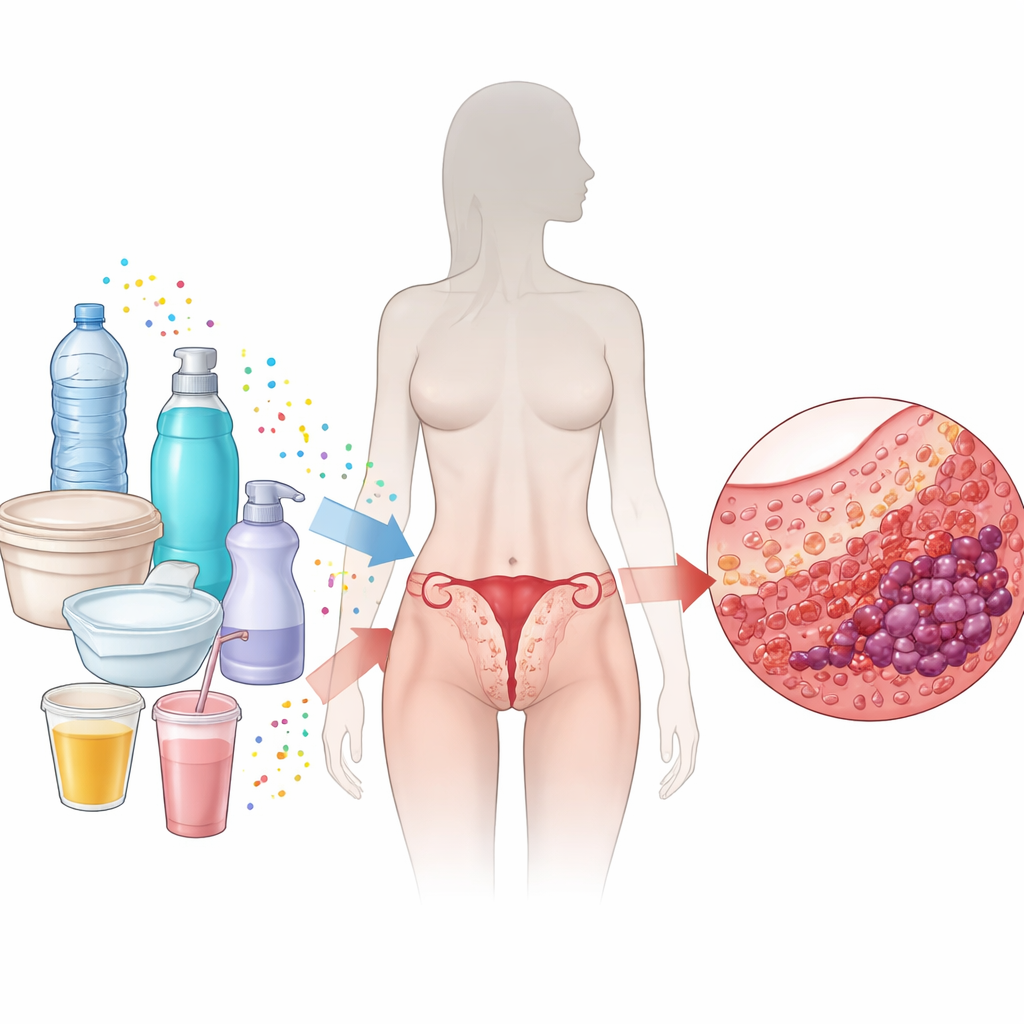
Connecting a Common Chemical to Uterine Cancer
The researchers began by gathering what is already known about BPA and endometrial cancer from large online databases. They compiled hundreds of human proteins that BPA is predicted or known to interact with, and thousands of genes that have been tied to endometrial cancer. By overlapping these lists, they found 129 genes that sit at the crossroads between BPA exposure and this cancer. Many of these genes cluster in networks that control blood vessel growth, cell communication, and how cells respond to signals telling them to grow or stop.
Signals That Drive Cell Growth and Survival
When the team examined what these shared genes actually do, several well-known growth and stress pathways popped out. These included systems often hijacked in tumors, such as those guided by the epidermal growth factor receptor and the MAPK and FoxO signaling routes. Computer-based toxicity tools suggested that BPA can strongly bind to estrogen receptors, disturb mitochondria (the cell’s power plants), and affect enzymes that process hormones. Together, these hints suggest BPA could influence hormone-sensitive tissues like the uterine lining by nudging multiple control circuits in the same pro-growth direction.
Gene Patterns Linked to Patient Outcomes
To move beyond theory, the scientists turned to large collections of tumor samples and patient records. Using data from The Cancer Genome Atlas, they focused on which of the 129 overlapping genes are actually switched up or down in endometrial tumors compared with normal tissue. They identified 48 such genes and then asked which of these are tied to how long patients live after diagnosis. Five genes stood out: ESR1, NOTCH1, GABARAP, B4GALT1, and PAN3. Higher levels of GABARAP and NOTCH1 were linked to worse survival, while higher levels of ESR1 and B4GALT1 were linked to better outcomes. PAN3 showed a more complex, time-dependent pattern, becoming more strongly tied to poor survival later in the course of disease.
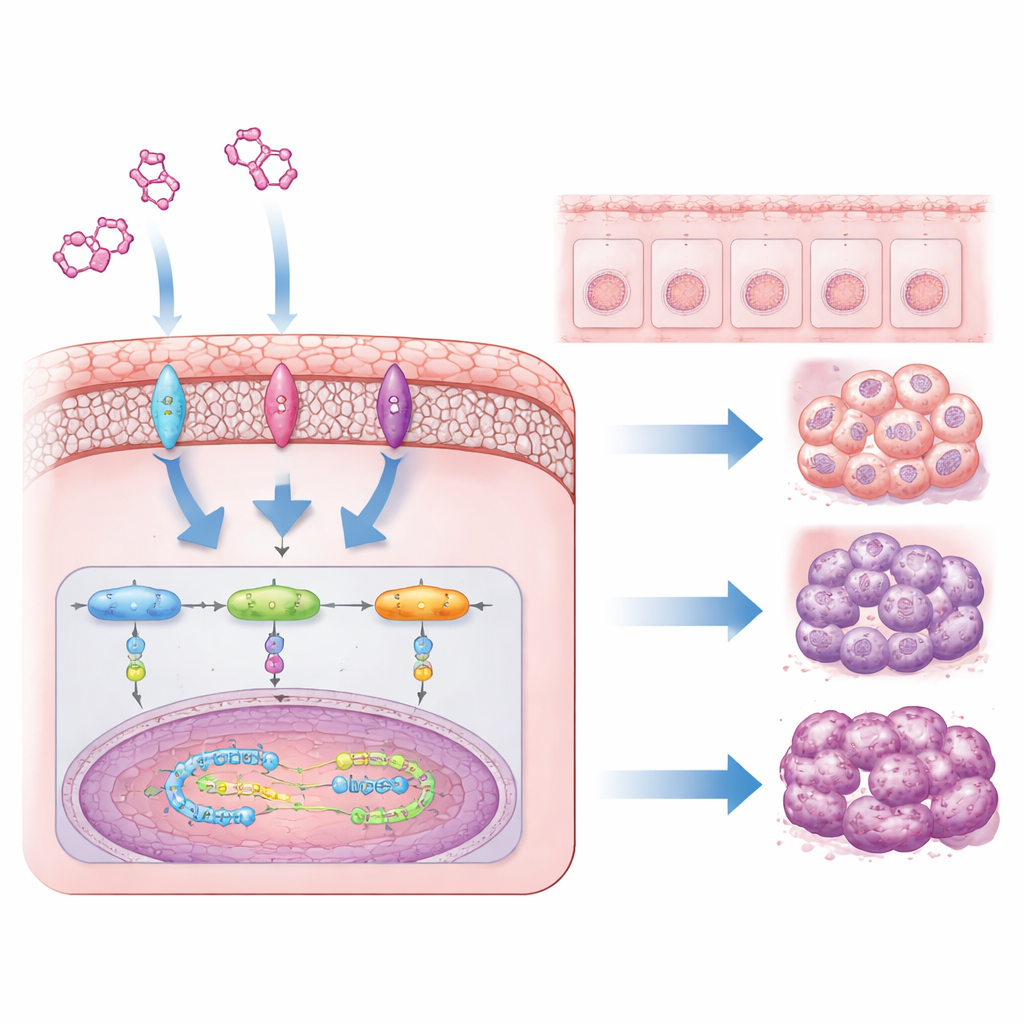
Looking Deeper into Key Molecular Players
The study then checked these key genes in independent patient datasets to see if the patterns held up, and evaluated how well they might help distinguish tumor tissue from healthy uterine lining. Several genes, including ESR1, PAN3, and B4GALT1, showed promising diagnostic performance. Their activity also tended to be higher in earlier disease stages and lower in more advanced cancers, hinting that they might serve as warning markers for progression. Finally, computer simulations of molecular docking showed that BPA can fit snugly into structural pockets of four of these proteins, suggesting it could bind to them directly, although whether this truly alters their function in living cells remains to be proven.
What This Means for Everyday Exposure
For non-specialists, the main takeaway is not that BPA has been definitively shown to cause endometrial cancer, but that its chemical “handshake” with the body aligns with several gene networks and proteins already known to shape this disease. The work strengthens the case that everyday environmental exposures, even at low levels, may interact with our hormone and growth-control systems in ways that influence cancer risk and outcome. While the results are based on computer and statistical analyses and require laboratory confirmation, they highlight specific genes and pathways that future experiments can target, and they support broader efforts to understand and possibly limit harmful chemical influences on women’s reproductive health.
Citation: Yang, Y., Zhang, X., Xue, M. et al. Network toxicology and bioinformatic investigation of the association between Bisphenol A and endometrial cancer. Sci Rep 16, 13997 (2026). https://doi.org/10.1038/s41598-026-44589-z
Keywords: bisphenol A, endometrial cancer, hormone disruptors, cancer genomics, environmental exposure