Clear Sky Science · en
Investigation on the mechanical behavior of coconut leaf sheath and midrib of coconut leaf reinforced epoxy composites
Turning Coconut Waste into Useful Materials
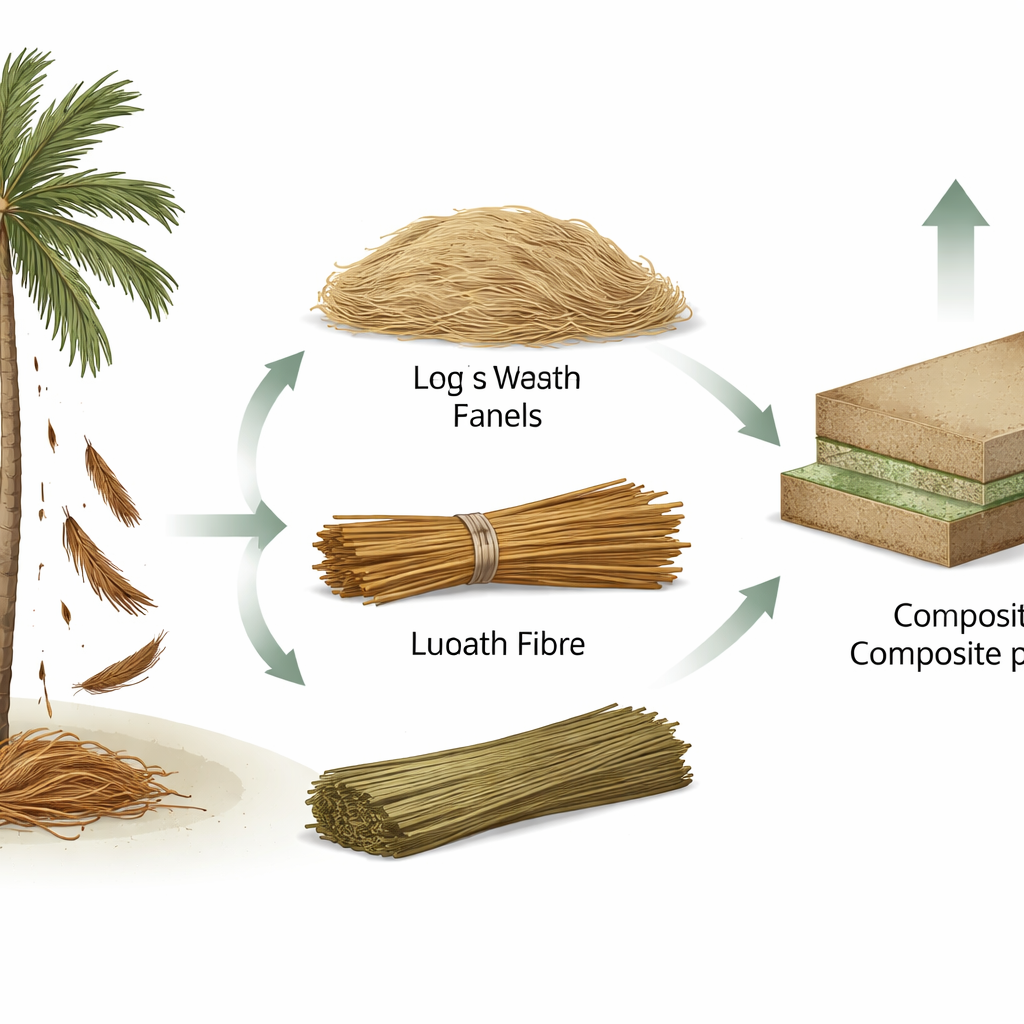
Coconut trees produce huge amounts of leafy waste that is usually burned or left to rot. This study asks a simple question with big impact: can parts of those discarded leaves be turned into strong, lightweight panels for buildings, vehicles, or other products? By mixing coconut leaf fibers with a common plastic resin, the researchers explore a greener path toward materials that are both tough and environmentally friendly.
From Farm Field to Test Lab
The team focused on two little-known parts of the coconut leaf. One is the leaf sheath, the fibrous “wrap” that holds the leaf base together. The other is the midrib, the stiff central spine that runs down each leaflet. Both are usually treated as agricultural waste. The researchers collected these fibers from farms in southern India and combined them with an epoxy resin, a widely used plastic in industry, to make flat composite sheets. In all the samples, the amount of sheath fiber was kept the same, while the amount of midrib fiber was varied in three steps—low, medium, and high—to see how this changed the material’s behavior.
How the New Panels Were Put to the Test
To understand what these coconut-based panels could really do, the researchers subjected them to a series of standard mechanical tests. They pulled on narrow strips to measure how much force they could withstand before breaking (tensile strength). They bent them to see how well they resisted flexing and sagging (flexural strength). They struck them with a swinging hammer to gauge how much sudden energy they could absorb without shattering (impact resistance). They also tested how strongly the layers stuck together under sliding forces (interlaminar shear strength), how much water the materials soaked up when submerged, and what the internal structure looked like under a powerful microscope. Finally, they used infrared light to probe the chemical bonds that hold the fibers and resin together.
Stronger with More Coconut Fiber
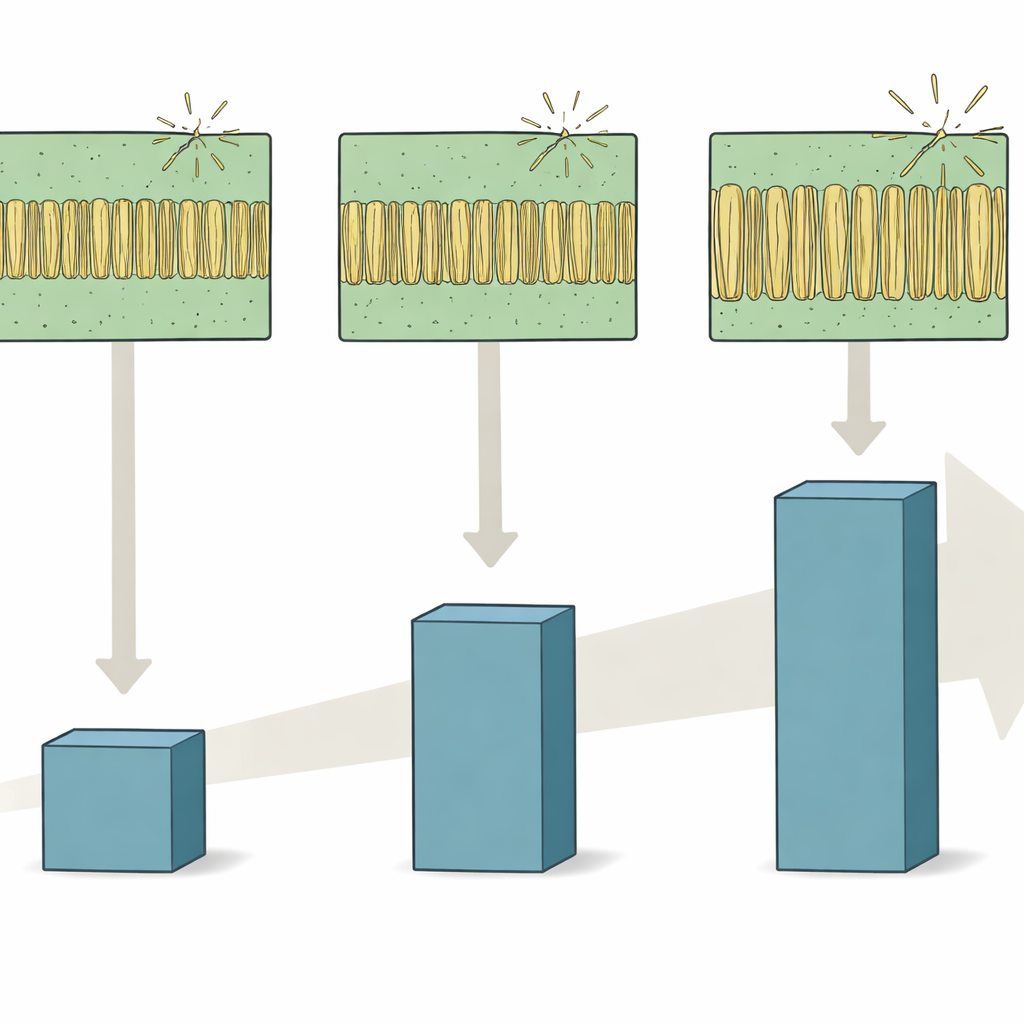
The most encouraging finding was that adding more midrib fiber generally made the panels stronger and tougher. The highest fiber level showed the greatest resistance to pulling, bending, and sudden impact, and the layers inside the material slid past each other less easily, indicating better bonding between fibers and resin. Microscopic images of broken samples revealed that, at these higher fiber levels, cracks were forced to travel a more winding path. Fibers pulled out, broke, and deflected cracks, all of which helped the material absorb more energy before failing. While the absolute strengths were lower than some highly engineered or chemically treated composites, they matched or exceeded many other natural-fiber materials that do not undergo special surface treatments.
The Trade-Off with Water and Weather
There was, however, a notable downside. Because coconut fibers naturally attract water, panels with more fiber absorbed more moisture when soaked. This extra water can seep into tiny gaps between fibers and resin, causing swelling, softening of the plastic, and gradual weakening of the bond between the two. The researchers confirmed this by measuring water uptake over time and calculating how quickly moisture moved into the material. Their calculations showed that water traveled faster as fiber content increased, suggesting that longer-term outdoor exposure could lead to changes in size and strength unless the fibers or the resin are further protected.
What This Means for Real-World Use
Overall, the study shows that panels reinforced with coconut leaf sheath and midrib—especially at the highest midrib level tested—offer a promising balance of light weight, strength, and impact resistance, using a resource that is abundant and renewable. For designers of products such as interior panels, low-load structures, or eco-friendly components where biodegradability and low cost matter, these coconut-based composites could be an attractive option. While greater fiber content does bring challenges with moisture and processing, the work provides a solid starting point for future improvements, such as simple fiber treatments or protective coatings, to turn coconut leaf waste into durable, everyday materials.
Citation: Palaniappan, M., Raj, M.K.A., Kumar, P.M. et al. Investigation on the mechanical behavior of coconut leaf sheath and midrib of coconut leaf reinforced epoxy composites. Sci Rep 16, 13836 (2026). https://doi.org/10.1038/s41598-026-44575-5
Keywords: natural fiber composites, coconut leaf fibers, epoxy composite panels, sustainable materials, mechanical testing