Clear Sky Science · en
UniTriRob: a robust machine learning regression model for predicting lettuce yields in aeroponic vertical farming
Why smarter lettuce farms matter
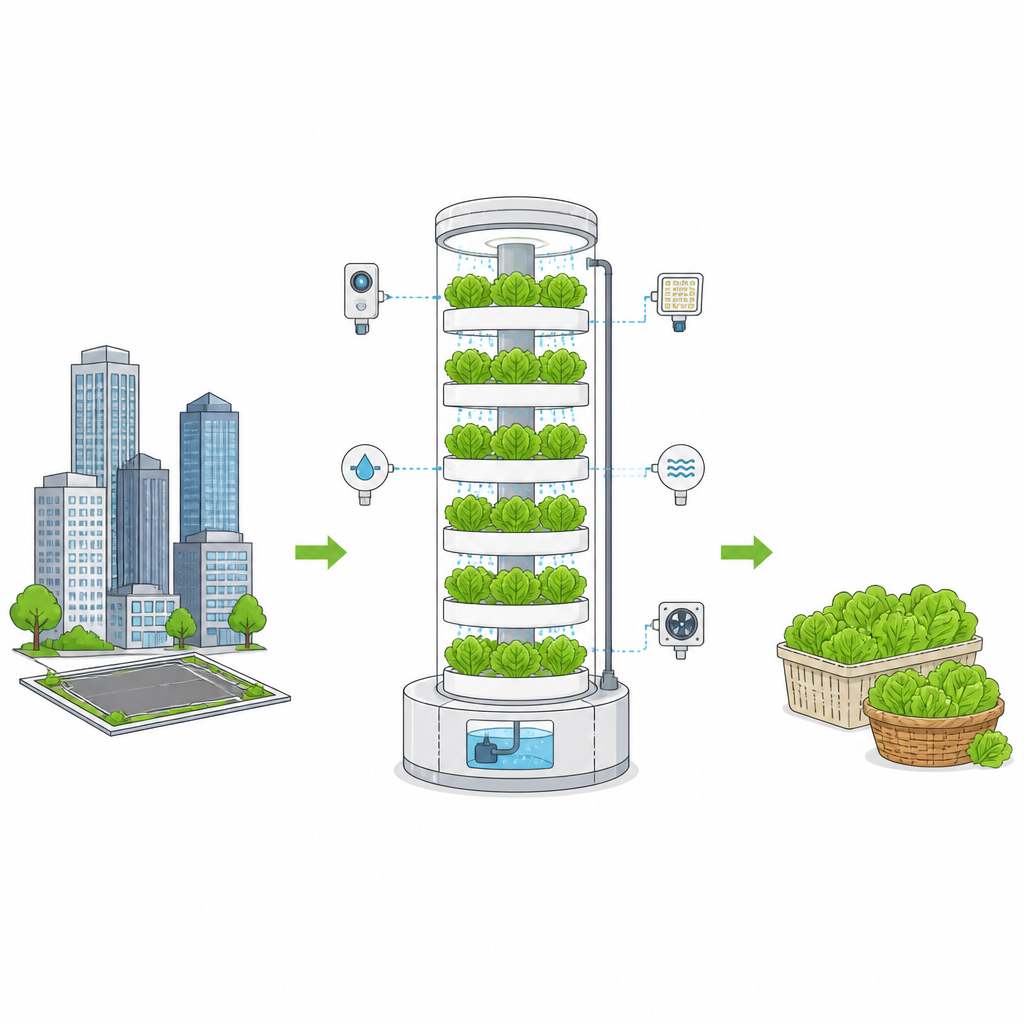
Feeding cities with fresh greens all year is hard when land, water and weather are all under pressure. Aeroponic vertical farms grow lettuce in tall indoor towers using mist instead of soil, saving space and water. But getting reliable harvests from these high tech farms means knowing in advance how much lettuce they will produce. This study introduces a new way to forecast lettuce yields more accurately, helping farmers plan better while using fewer resources.
Growing salad in the air
In aeroponic vertical farming, lettuce plants sit in stacked columns and their roots hang in the air, regularly sprayed with a nutrient rich mist. Because everything from temperature and humidity to light, pH and nutrient strength can be finely tuned, farmers can grow lettuce quickly with less water than in soil based fields. The downside is that such tightly controlled systems are surprisingly sensitive. Small glitches in sensors or short swings in conditions can skew measurements, making it hard to trust simple prediction tools that assume clean, steady data.
Why usual math falls short
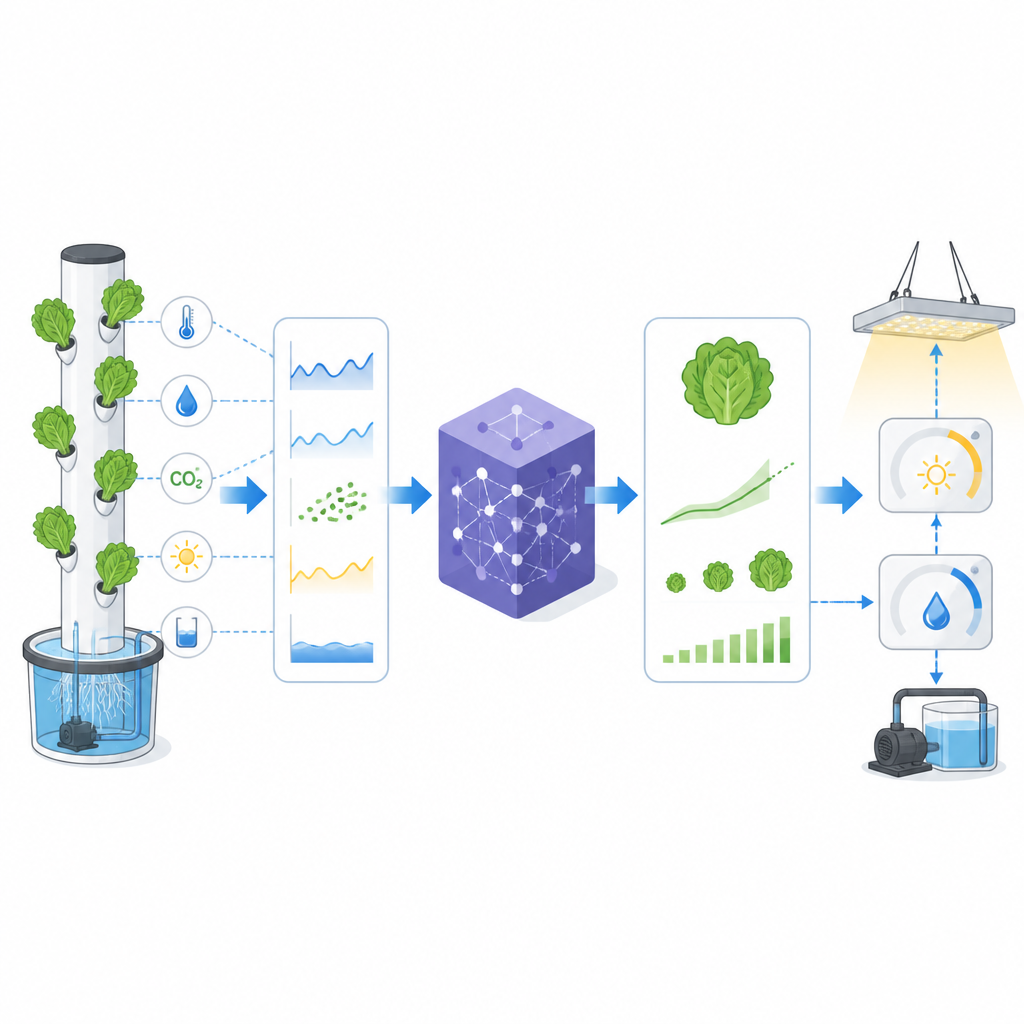
Many existing yield forecasts rely on standard regression or popular machine learning methods, which work best when the data behave neatly. In real aeroponic farms, readings from sensors that track pH, total dissolved solids, electrical conductivity, turbidity, temperature, humidity, light and growth often include outliers and uneven noise. A clogged nozzle, a brief power dip, or a drifting sensor can create extreme values that pull ordinary models off target. As a result, earlier approaches could not fully cope with the messy reality of long term indoor farming trials.
A three part model built to ignore bad data
The authors designed a new regression framework called UniTriRob that blends three robust techniques into a single model. One part gently reduces the influence of small oddities; another repeatedly fits lines while discarding clear outliers; a third relies on medians rather than averages to resist extreme points. Together they down weight suspicious readings instead of letting them dominate the result. The model was trained on more than 50,000 time stamped records collected every 15 minutes over several lettuce growth cycles in an aeroponic tower, capturing how key conditions changed over time and how those shifts affected final yield.
Testing the model in a working farm
After careful data cleaning and visualization, the researchers split their records into training and test sets. They then compared UniTriRob to a range of common alternatives, including linear and polynomial regression, support vector regression and several robust methods used on their own. Using measures such as mean squared error, mean absolute error and percentage error, UniTriRob consistently made the closest predictions to the actual harvested weight of the lettuce. It explained about 98 percent of the variation in yield, cut error rates by roughly a fifth to a quarter compared with standard models, and did so with reasonable computing time, making it practical for real farm control systems.
What this means for future city farms
More accurate yield forecasts let indoor farmers fine tune watering, nutrients and lighting instead of relying on guesswork. In this study, the robust model helped expose which factors mattered most, and suggested ways to trim resource use, such as lowering water consumption by up to 40 percent in pilot trials. The authors stress that their results apply to lettuce grown in a specific aeroponic setup, and that further work is needed to test other crops and systems. Still, UniTriRob shows that treating noisy sensor data with care can make high tech vertical farms more predictable, efficient and better suited to supplying fresh food to crowded cities.
Citation: Rajendiran, G., Rethnaraj, J., Zade, S. et al. UniTriRob: a robust machine learning regression model for predicting lettuce yields in aeroponic vertical farming. Sci Rep 16, 15791 (2026). https://doi.org/10.1038/s41598-026-44564-8
Keywords: aeroponic lettuce, vertical farming, yield prediction, robust regression, smart agriculture