Clear Sky Science · en
Reading the climate room through unsupervised analysis of unfiltered climate perspectives
Why climate talk matters
When people argue about climate change online, they are not just trading facts; they are telling stories that shape what the public fears, trusts, and is willing to support. This study asks what those stories actually look like when you listen at scale. By combing through tens of thousands of climate articles from supporters of climate action and from skeptics, the authors use modern language tools to map how each side talks, which feelings they stir, and how they frame problems and solutions. The results help explain why climate debates feel so polarized and offer new ways for researchers to study other heated public issues.
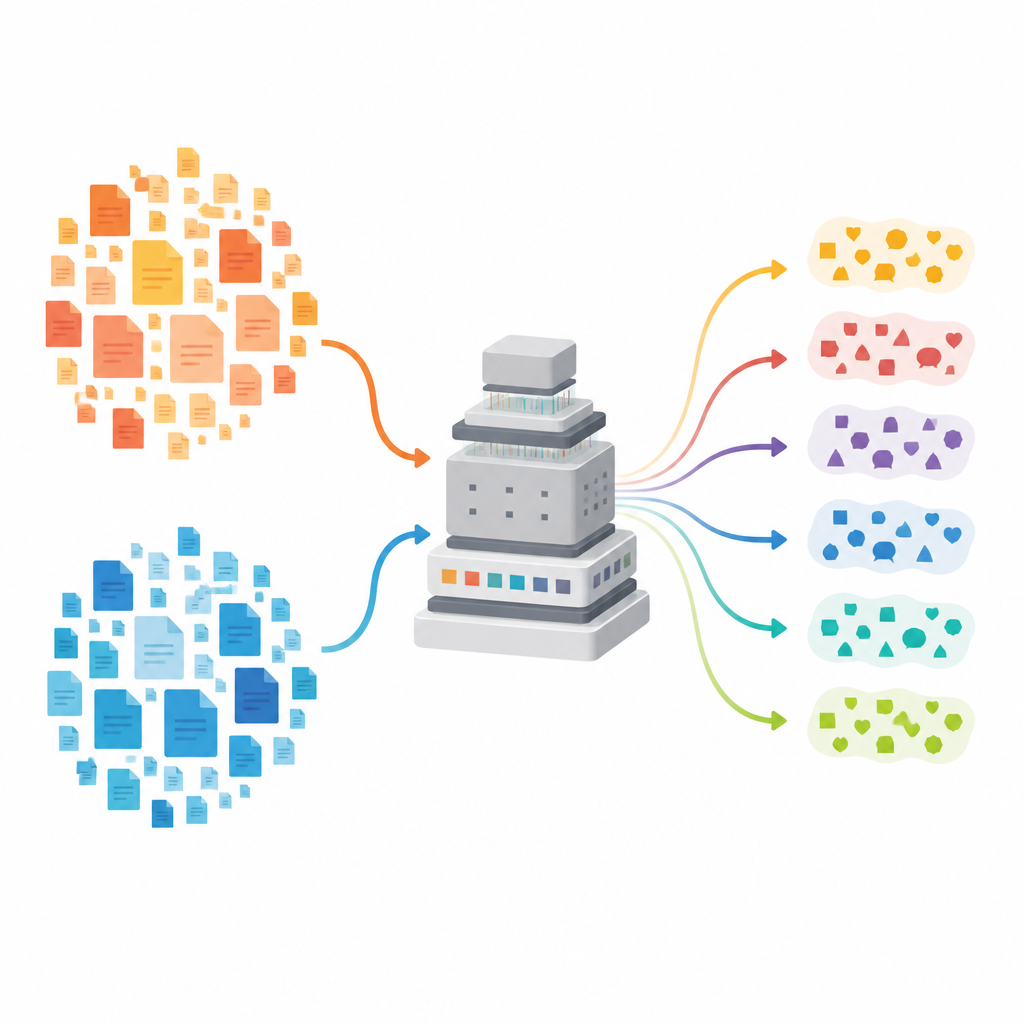
Building a big window into climate debate
The researchers first assembled what they describe as the largest public collection of written climate commentary from two clear camps. One corpus contains more than twenty thousand articles from climate advocacy sites that promote action on global warming. The other holds nearly twenty seven thousand articles from websites known for climate doubt or opposition. All texts were scraped, cleaned, and filtered so that only substantial English language articles remained, with boilerplate notices, adverts, and repeated disclaimers stripped away. Instead of simplifying the language into word counts, the team kept stylistic choices intact so that tone, emphasis, and emotional flavor would survive in the analysis.
Breaking articles into meaningful pieces
Looking at whole articles can blur the twists and turns of an argument, so the team invented a new way to cut texts into smaller, coherent chunks. They used advanced language models to turn each sentence into a mathematical representation based on its meaning. Neighboring sentences that were very similar were grouped into short segments, while sudden changes in topic triggered a split. The authors fine tuned this process with a search method that balanced how tightly sentences within a segment hung together against how clearly neighboring segments differed. The result is a set of bite sized units that each reflect one stable part of the argument, ready to be compared across thousands of documents.
What advocates and skeptics tend to say
With these chunks in hand, the researchers examined several features of the language: appeals to emotion, signs of populist rhetoric, whether a passage focused on problems or solutions, and how it framed climate issues. Across the full dataset, advocates more often framed climate change as an urgent crisis and pointed toward concrete policy or technological fixes. Their messages leaned on fear and sadness to convey risk and harm, but also showed more positive emotions such as approval and optimism. Skeptic texts, in contrast, were more likely to attack elites and institutions, describing climate policies as unfair burdens imposed from above. These writings drew heavily on anger and disgust, and they spent more time talking about obstacles, costs, and reasons why proposed solutions might not work.
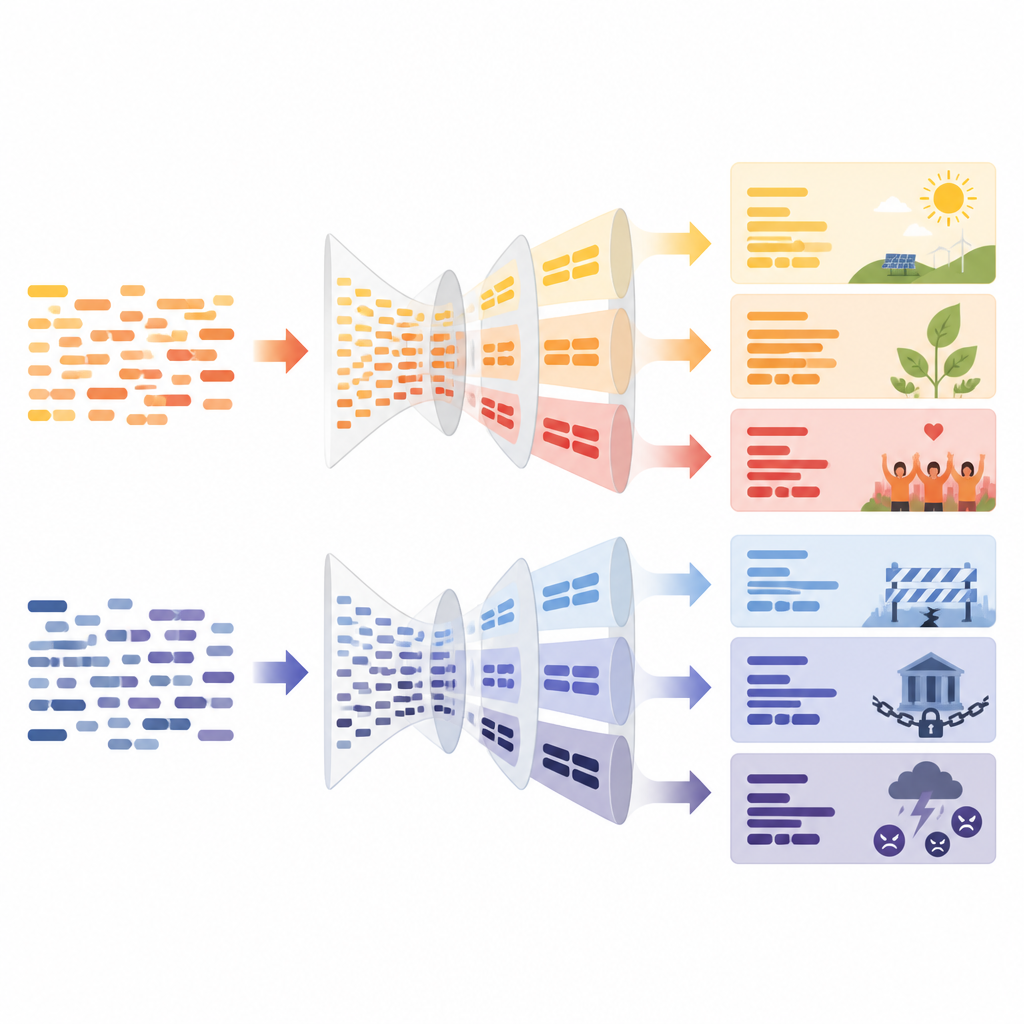
Zooming in on specific climate topics
The analysis also compared how the two camps spoke when they wrote about the same kinds of stories, such as coral reef decline, wildfires, or electric vehicles. In topics tied to ecological damage, skeptics frequently used strong anti elite language, suggesting that scientists or global bodies were overstating threats. Advocates writing about extreme weather or climate refugees were especially likely to use crisis language and fear appeals. In debates over new technologies and policies, such as negative emission methods or clean transport, advocates leaned into practical, cost focused frames and detailed solutions. Skeptics in these areas tended to stress problems and to present simple fixes that sidestep deeper change. Even when both sides used scientific talk, skeptics often did so to bolster minority positions and create the impression of a split among experts.
Why this toolkit goes beyond climate
Beyond the climate findings themselves, the study showcases a fully unsupervised way to study public debate without forcing texts into pre chosen categories. By using language models to segment, cluster, and describe arguments, the method uncovers patterns of feeling, framing, and problem solving that earlier manual or topic based approaches could miss. Because both the cleaned climate datasets and the code are openly shared, other researchers can now apply the same pipeline to questions about vaccine hesitancy, political polarization, or misinformation. In simple terms, the work offers a new microscope for examining how groups talk past each other, which could ultimately help design communication and policy responses that speak more clearly across divides.
Citation: Sweeney, L., Mehrotra, R., Saintraint, F. et al. Reading the climate room through unsupervised analysis of unfiltered climate perspectives. Sci Rep 16, 14828 (2026). https://doi.org/10.1038/s41598-026-44553-x
Keywords: climate discourse, climate skepticism, science communication, emotional appeals, natural language processing