Clear Sky Science · en
Cerium as corrosion inhibitor for Sn–3Ag–0.5Cu solder alloy in 3.5% NaCl solution
Why protecting tiny metal joints matters
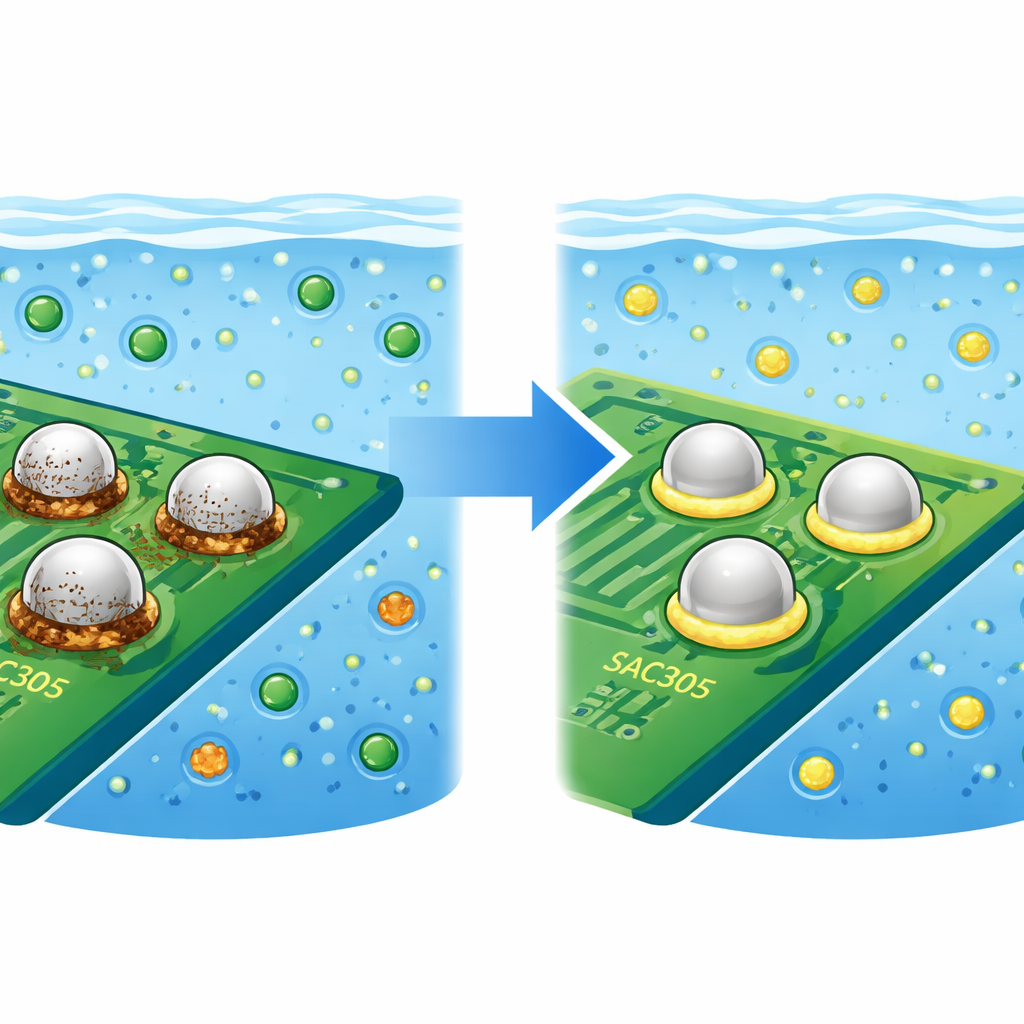
Every smartphone, car, and aircraft depends on thousands of tiny metal joints that connect electronic parts together. These joints are often exposed to heat, humidity, and even salty air, especially in coastal regions and marine or aviation electronics. Over time, salt water can quietly eat away at these connections, leading to sudden failures. This study explores whether a rare-earth element called cerium can act like a microscopic rust shield for a widely used lead-free solder alloy, helping electronics survive harsh, salty conditions for longer.
The move away from toxic solder
For decades, electronic devices relied on solders containing lead because they melt easily and are cheap to use. However, lead is toxic, and strict regulations have pushed manufacturers toward safer alternatives. One of the most successful replacements is an alloy of tin, silver, and copper known as SAC305. It is now a workhorse material for electronic packaging. Despite its many advantages, SAC305 can still suffer from corrosion, especially when exposed to humidity and salt, as happens in coastal cities, ships, offshore platforms, and airplanes. When corrosion attacks a solder joint, it can weaken the metal, increase electrical resistance, and ultimately cause devices to fail.
Salt, weak spots, and where damage begins
Under the microscope, SAC305 is not a uniform block of metal. It contains a tin-rich background with tiny islands of silver–tin and copper–tin compounds. These regions differ slightly in composition and electrical behavior and can act as preferred spots where corrosion starts when salt-containing water reaches the surface. Chloride ions from dissolved salt are especially aggressive, helping to break down protective oxide films and creating pits and cracks. Previous research has shown that adjusting the alloy’s composition can refine this internal structure and improve its resistance to attack, but changing the alloy itself can complicate manufacturing. The authors instead asked whether they could protect the existing material by adding a chemical guardian into the salty environment.
A rare-earth helper in salty water
The team tested cerium, a relatively abundant rare-earth element already studied as an environmentally friendlier corrosion inhibitor for other metals. They immersed SAC305 samples in a 3.5% salt solution—similar to seawater—and added different amounts of cerium, measured in parts per million. Using simple weight-loss tests, they tracked how much metal dissolved over four hours at room temperature. They also used electrochemical techniques, which measure how easily corrosion currents flow, at temperatures of 30, 40, and 50 °C. Across these tests, they found that adding cerium generally slowed the corrosion process, with the most effective level around 700 ppm. At this concentration, the metal surface lost less material and carried much smaller corrosion currents, indicating that the attack by salt water was strongly reduced.
How a thin invisible film can save the day
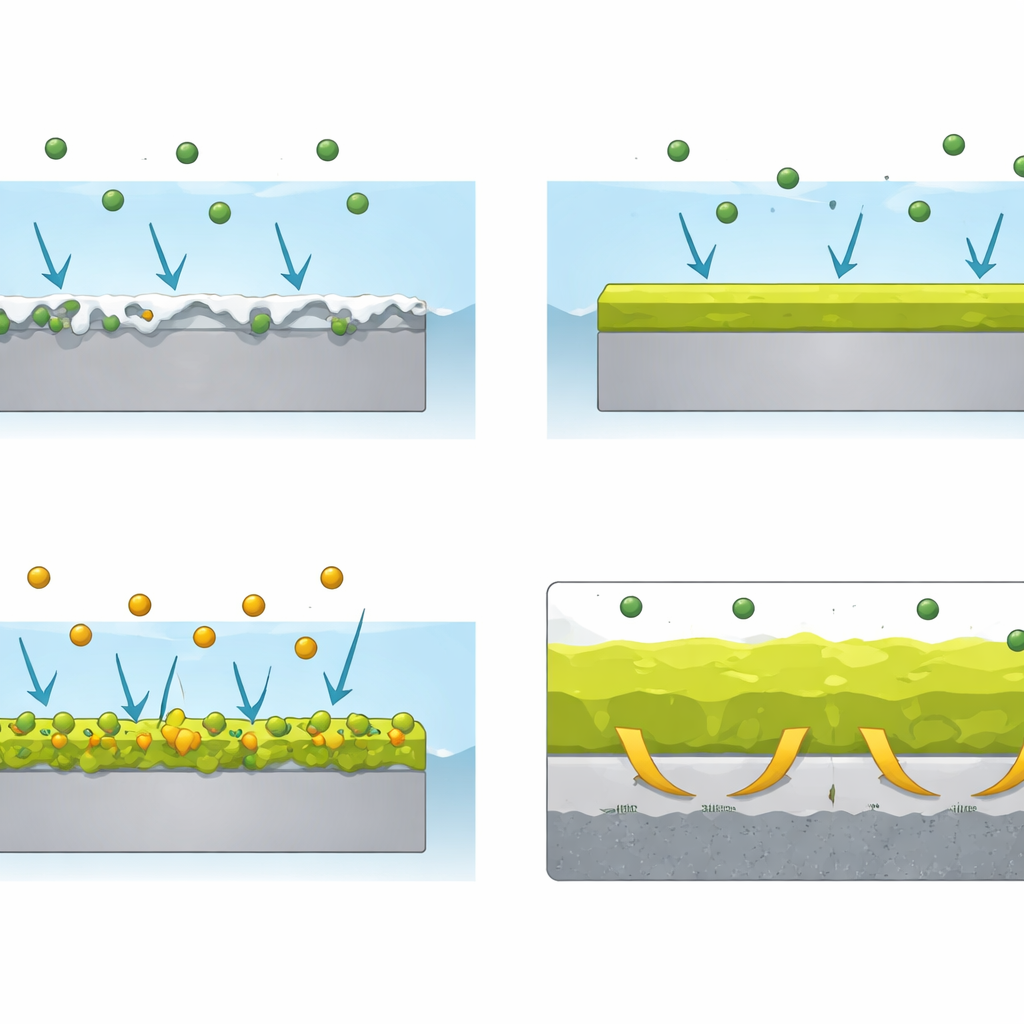
The experiments suggest that cerium works by forming a very thin, adherent coating on the solder surface. When salt water and oxygen reach the metal, tiny regions on the surface become more alkaline, encouraging cerium species dissolved in the water to turn into solid hydroxides and oxides. These new compounds settle preferentially on the most vulnerable spots, creating a patchy but effective barrier that blocks both the metal-dissolving reaction and the oxygen-consuming reaction that drives corrosion. Microscopy images show smoother, less damaged surfaces when cerium is present, and electrical measurements indicate that the surface behaves more like it is covered by a protective skin. The protection remains strongest at moderate temperature; as the solution gets hotter, the shield becomes less stable and somewhat less effective, though it still provides noticeable benefit.
What this means for everyday electronics
In simple terms, the study shows that adding a modest amount of cerium to a salty environment can give the SAC305 solder alloy a protective overcoat, significantly slowing down the "rusting" process that threatens electronic joints. At an optimal level of about 700 ppm, cerium helps build a stable barrier that shields the metal against chloride-rich attack, particularly near room temperature. For industries that rely on lead-free solder in corrosive settings—such as marine electronics, offshore energy systems, and aircraft—this approach offers a practical, more eco-friendly way to extend the life and reliability of critical components without redesigning the solder itself.
Citation: Vani, R., Kumar, G., Sharma, S. et al. Cerium as corrosion inhibitor for Sn–3Ag–0.5Cu solder alloy in 3.5% NaCl solution. Sci Rep 16, 14085 (2026). https://doi.org/10.1038/s41598-026-44525-1
Keywords: lead-free solder, corrosion protection, cerium inhibitor, marine electronics, tin silver copper alloy