Clear Sky Science · en
Heart rate optimizer: a novel bio-inspired metaheuristic algorithm
Smarter Choices from Everyday Heartbeats
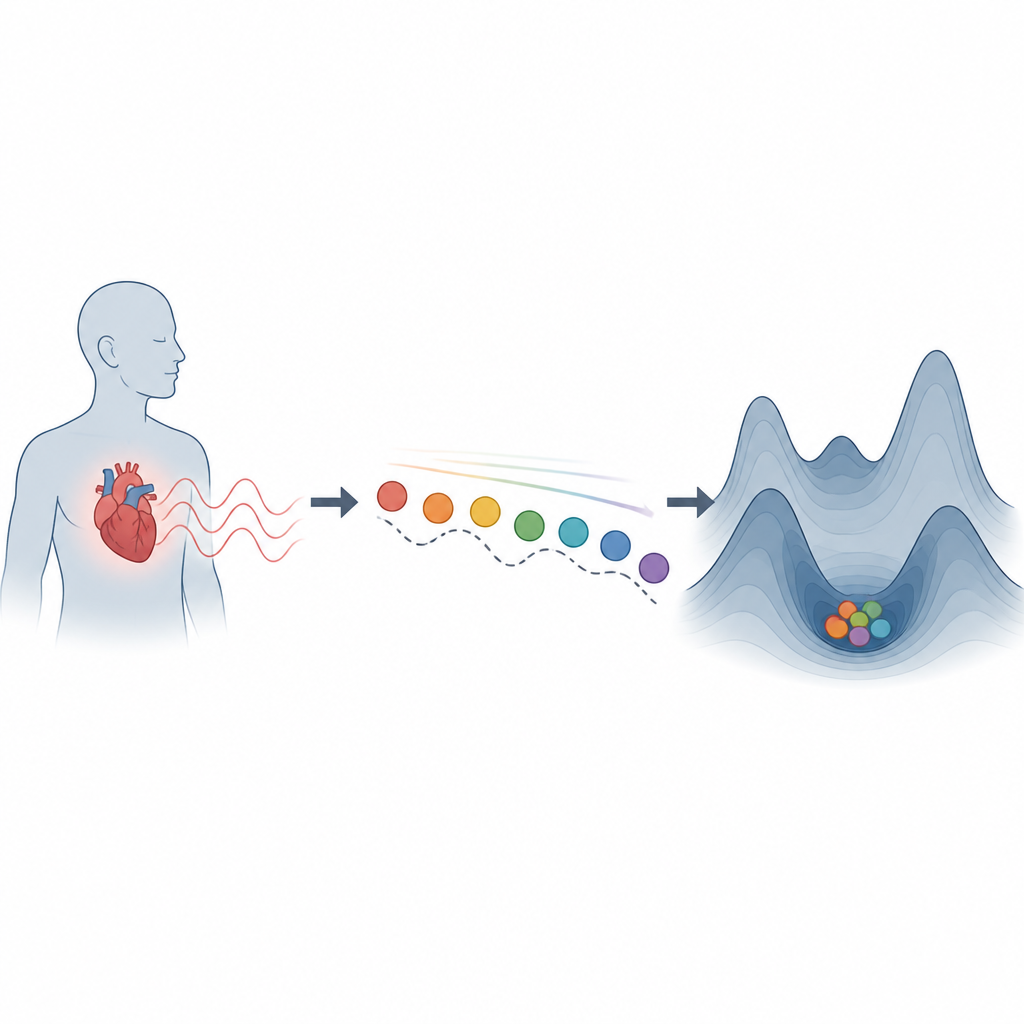
Many of the toughest problems in modern life involve choosing the best option from an overwhelming number of possibilities, whether that is designing lighter bridges, tuning machine learning models, or planning factory schedules. This paper introduces a new computer method called the Heart Rate Optimizer, which takes inspiration from the way our heart speeds up and slows down to keep the body stable. By copying this natural rhythm, the method helps computers search more intelligently for good solutions in complicated decision spaces.
Why Finding the Best Option Is So Hard
Engineers, data scientists, and planners often face puzzles where there are countless ways to arrange parts, schedule tasks, or adjust settings. Trying every possibility is impossible, so they rely on search strategies known as metaheuristic algorithms. These strategies wander through the space of options, testing different combinations and keeping track of what works well. The challenge is to roam widely enough to discover new ideas while also spending enough time refining the most promising ones. Many existing methods get stuck too early, move too slowly, or struggle when the number of choices becomes very large.
Borrowing a Trick from the Beating Heart
The Heart Rate Optimizer is built around a simple idea: the same way heartbeats change with rest, stress, or exercise, a search process can change its pace to suit what it is finding. In this method, each possible solution is treated like an “agent” whose behavior is driven by a simulated heart rhythm. When the virtual heart is in a fast “tachycardia-like” state, agents take large, bold steps to explore faraway regions. When the heart slows into a “bradycardia-like” state, they take shorter, careful steps to polish an already good design. The method also imitates small, irregular heart fluctuations by occasionally making rare, long jumps, helping the search escape from local dead ends.
Keeping Variety Without Losing Focus
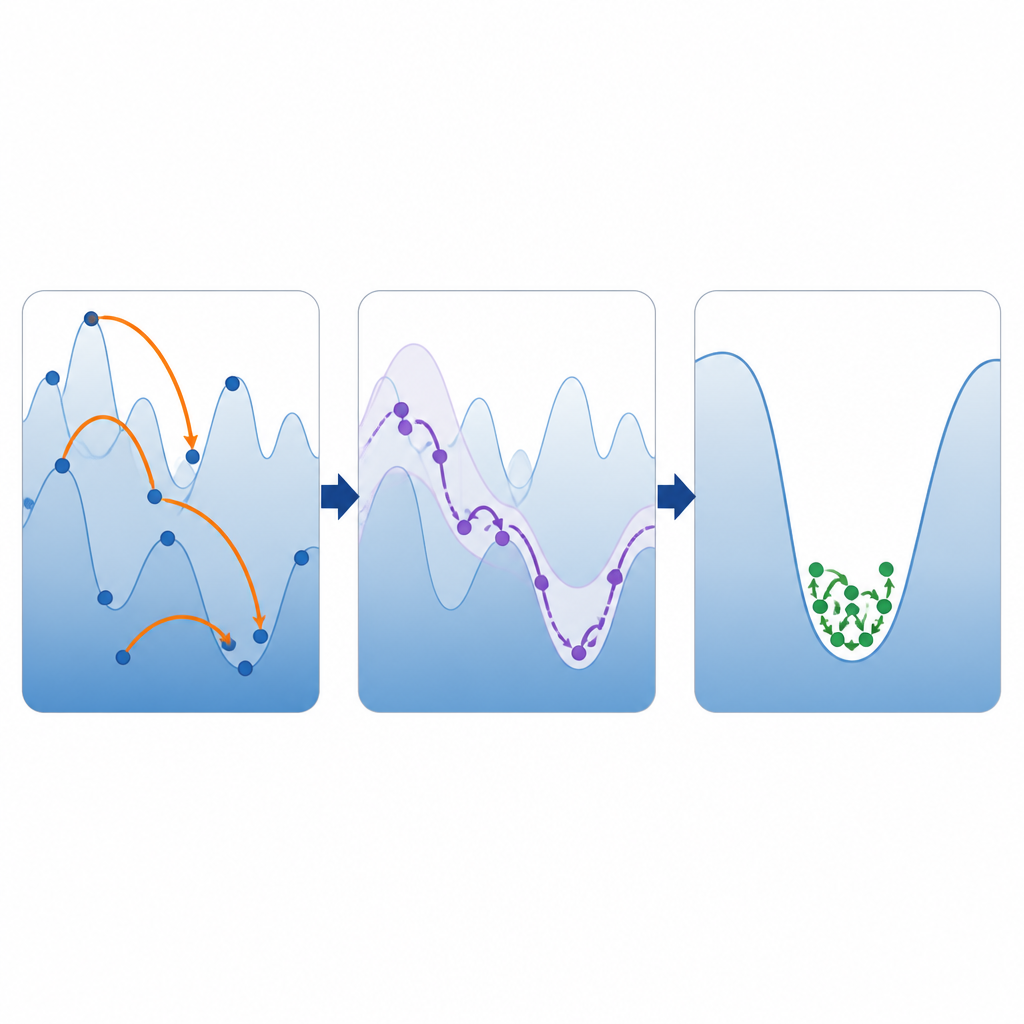
To avoid the group of agents becoming too similar, the Heart Rate Optimizer adds two extra ideas. First, it uses a mathematical trick called Orthogonal Learning that mixes information from the best solutions in a structured way, so that agents learn from success without simply copying it. Second, it maintains an “archive” of especially good past solutions and nudges current agents toward them with gentle adjustments. These steps help preserve variety in the population while still steering the search toward promising areas. Together with a heart-inspired control signal that reacts to how quickly progress is being made, the method automatically shifts between broad exploration and tight fine-tuning.
Beating Other Methods on Tough Tests
The authors put their method through a wide range of trials. They tested it on standard mathematical benchmarks designed to be tricky, including high-dimensional problems from two widely used international test suites. They also applied it to practical tasks: packing items into bins efficiently, assigning facilities to locations, scheduling jobs on machines, and optimizing the shapes and sizes of a welded beam, a pressure vessel, and a metal spring. Across these cases, the Heart Rate Optimizer often found better answers, did so more consistently, and converged faster than nine well-known competing algorithms. Statistical tests supported that these improvements were not due to luck alone.
What This Means in Simple Terms
In everyday language, this study shows that letting a computer “breathe” with a heart-like rhythm can make it much better at complex trial-and-error tasks. By speeding up when it needs to scout and slowing down when it needs to refine, the Heart Rate Optimizer reliably discovers high-quality solutions to problems that are too large to solve exactly. While more work is needed to tune it automatically and test it on even larger and changing problems, the results suggest that this heart-inspired approach is a practical new tool for designing machines, planning operations, and tackling demanding optimization challenges.
Citation: Hosney, M.E., Emam, M.M., Saad, M.R. et al. Heart rate optimizer: a novel bio-inspired metaheuristic algorithm. Sci Rep 16, 15985 (2026). https://doi.org/10.1038/s41598-026-44516-2
Keywords: heart rate optimizer, bio-inspired optimization, metaheuristic algorithm, engineering design, combinatorial problems