Clear Sky Science · en
Location based bursty event detection and information dissemination using influencers in Twitter
Why online whispers matter in a flood
When disaster strikes, people now reach for their phones as quickly as they do for higher ground. Posts on platforms like Twitter can reveal where help is needed long before official reports catch up. This study shows how carefully reading those frantic messages, and routing them through the right trusted voices, can turn scattered online chatter into a life-saving early warning system during crises such as the 2022 Assam floods in India.
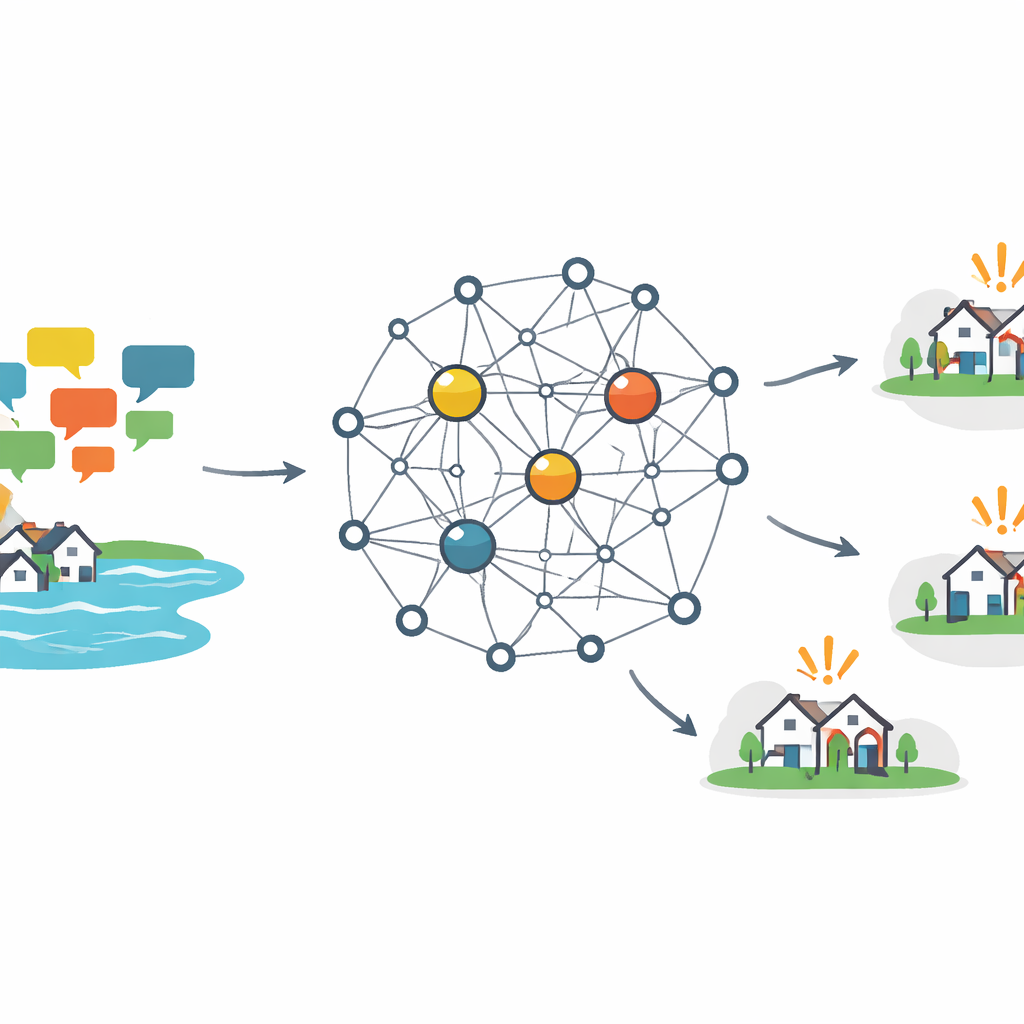
Turning tweets into early warning signals
The researchers set out to answer a simple but urgent question: can Twitter be used to spot dangerous events in specific places and quickly alert the people who need to know? They focused on a real flood in Assam, collecting 20,000 tweets that mentioned the disaster. Many of these posts were messy, emotional, and unlabeled, just like most of what we see on social media. The team’s idea was to automatically sift through this stream, figure out which messages truly described the unfolding crisis, and then use that information to warn nearby communities.
Teaching computers to hear distress in words
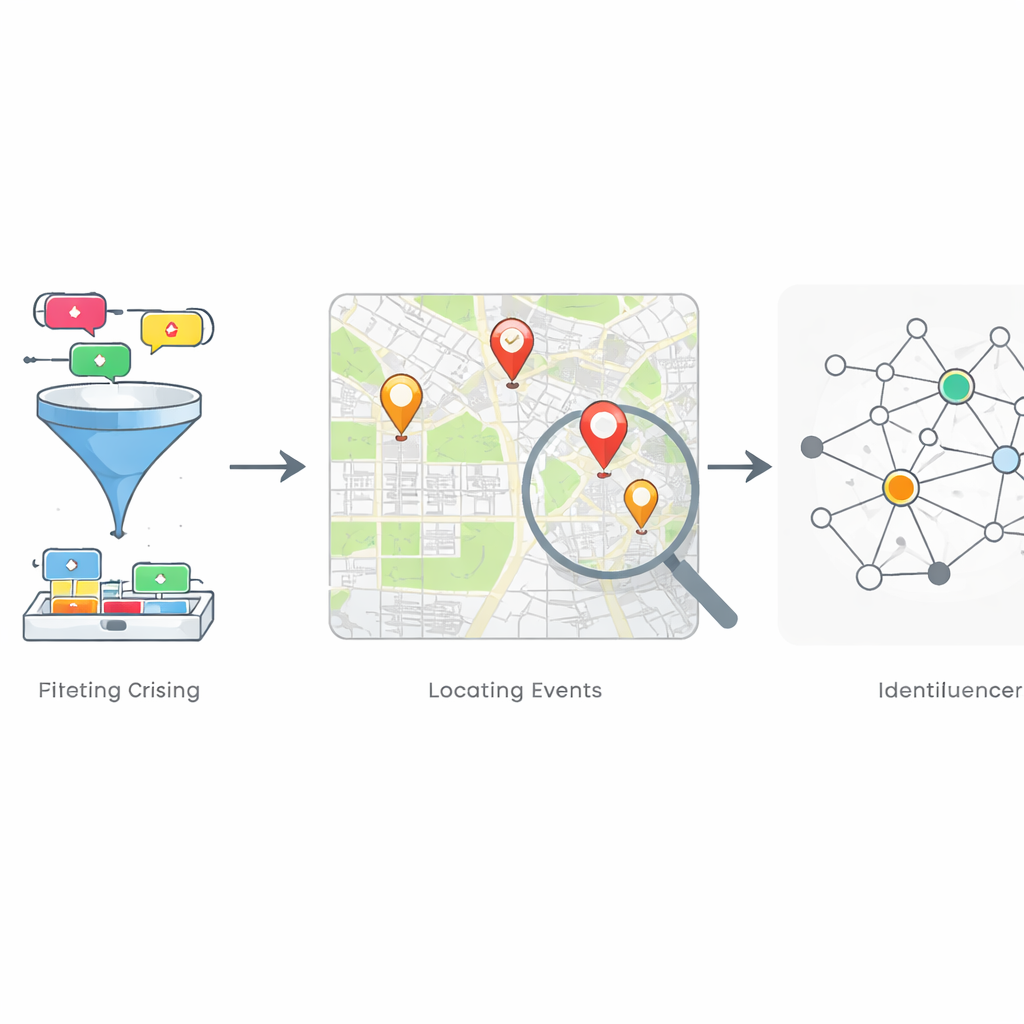
To separate genuine disaster reports from everything else, the authors combined two powerful text-analysis tools. First, they used a sentiment system called VADER that can judge whether a tweet sounds strongly negative, neutral, or positive, based on the words and tone people use. Strongly negative messages during a flood often signal damage, danger, or urgent need. These labeled tweets were then turned into simple numerical patterns and fed into a collection of machine learning models, including an advanced language model known as BERT. After careful testing, an ensemble of traditional models working together slightly outperformed the deep learning approach, correctly telling disaster-related tweets from others about 98 percent of the time.
Finding where help is needed, not just what happened
Knowing that a disaster tweet is serious is only half the battle; responders must also know where it points. Location data on social media is often missing or misleading, either because users forget to tag their posts or are traveling while talking about another place. The researchers tackled this by extracting location clues directly from the text, such as town and district names, and matching them to a database of postal codes. They combined this with any GPS-style tags that did exist, then cross-checked everything using a database engine. This careful matching produced a cleaner map of where the flood damage was being reported across Assam, down to specific districts and communities.
Letting trusted voices carry the message
Once they had a map of crisis locations, the authors turned to the social network itself. They built a graph of Twitter users connected by replies and mentions and then looked for natural “communities” of people who interact closely, often tied to shared places. Within each community, they used a measure called harmonic centrality to find users who sit on many of the shortest paths between others. In plain terms, these are people whose messages spread quickly and widely through their group. The system flagged these highly connected users as influencers who could be contacted or monitored to help spread verified alerts about local flood conditions.
What this means for people on the ground
In the end, the study delivers a blueprint for turning noisy social media data into targeted, location-aware warnings during disasters. By automatically spotting serious tweets, pinning them to real places, grouping nearby users into communities, and identifying the most influential voices in each group, the system can help emergency agencies reach the right people at the right time. While the approach still depends on enough posts containing usable location clues, it shows how our everyday online reactions can be transformed into an informal sensor network that strengthens early response and may ultimately save lives.
Citation: Manikandan, D., Valliyammai, C. Location based bursty event detection and information dissemination using influencers in Twitter. Sci Rep 16, 14631 (2026). https://doi.org/10.1038/s41598-026-44512-6
Keywords: disaster early warning, social media analytics, Twitter influencers, crisis mapping, machine learning