Clear Sky Science · en
Comparable immunogenicity from murine blood collection methods in intranasal gonococcal vaccination with ACP and MtrE supports refinement of preclinical vaccine studies
Why this research matters for future vaccines
Gonorrhea is becoming harder to treat as the bacteria behind it increasingly outsmart our antibiotics. At the same time, vaccine developers still rely on animal studies to decide which experimental shots look most promising. This study tackles two linked questions: can we design better vaccine candidates against gonorrhea, and can we collect blood from lab mice in a way that is kinder to the animals without compromising scientific results? The answers matter both for public health and for making vaccine research more humane.
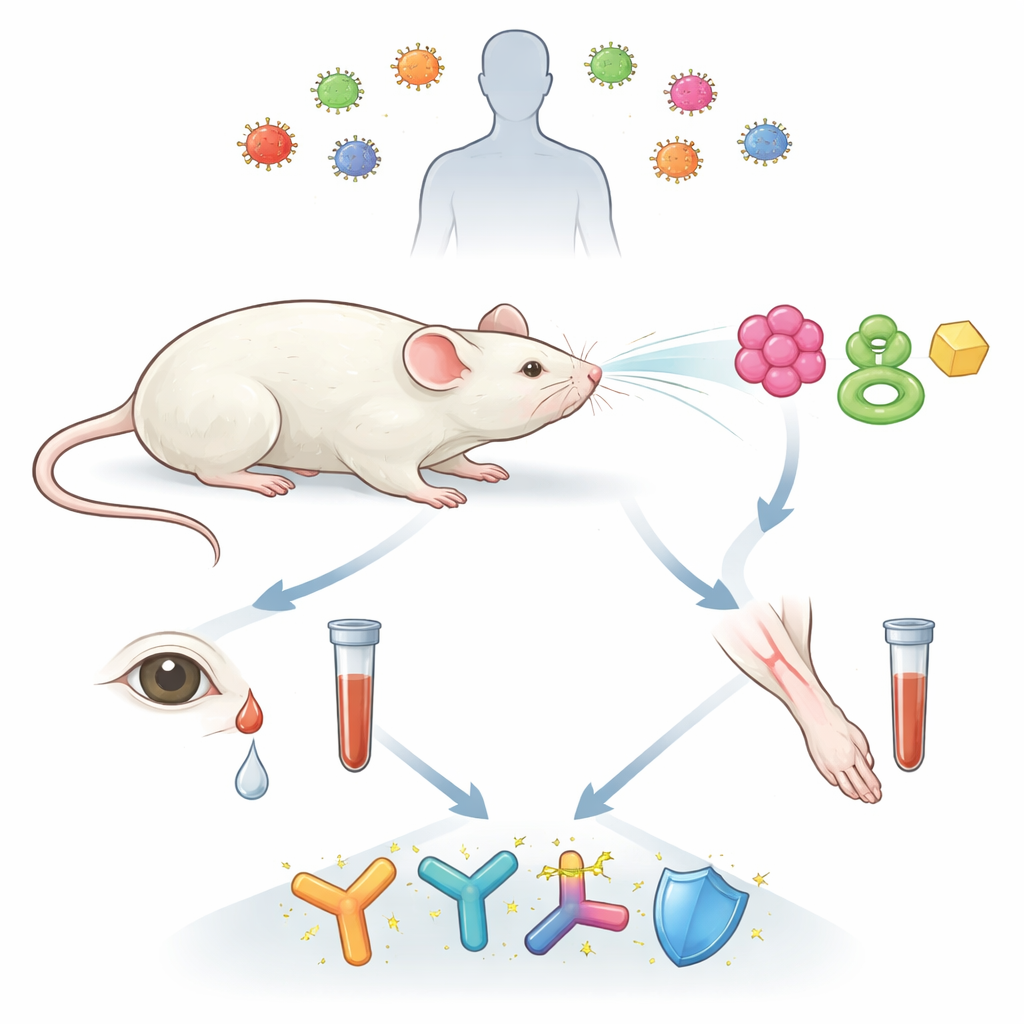
Safer blood draws for lab animals
In many mouse experiments, scientists measure vaccine-induced antibodies in the blood. A traditional technique, retro-orbital bleeding, draws blood from a vein behind the eye. It is efficient but can cause pain, eye damage, and even blindness. A gentler alternative is sampling from the saphenous vein in the hind leg, which is less invasive and aligns better with animal welfare guidelines. However, researchers have worried that switching methods might alter measured antibody levels or the performance of functional tests. This study directly compared these two blood collection routes in mice given experimental gonorrhea vaccines, to see whether the less invasive method yields equally trustworthy data.
Designing promising gonorrhea vaccine targets
The team focused on two proteins from the gonorrhea bacterium Neisseria gonorrhoeae, called ACP and MtrE. Using detailed three-dimensional structures, they mapped the regions of each protein most visible to the immune system and most likely to trigger strong responses from antibodies and T cells. They then engineered “mature” versions of these proteins, trimming off signal segments that would never be seen by the immune system during real infection. Both proteins were produced in bacteria, purified to high quality, and formulated as intranasal vaccines—either ACP alone, ACP with a DNA-based immune booster called CpG, or MtrE with CpG. Female mice received three nasal doses, mimicking a mucosal route that may be particularly relevant for a sexually transmitted infection.
Tracking antibody responses in blood and at mucosal surfaces
After immunization, the researchers collected blood either from behind the eye or from the leg vein, and also took vaginal samples to assess local immunity. They found that all vaccine formulations induced antibodies that specifically recognized the target proteins and, in the case of ACP and MtrE, recognized the natural forms present on many different gonorrhea strains. The ACP plus CpG combination consistently produced the strongest and most balanced antibody responses in the bloodstream and in the genital tract, including multiple IgG subclasses and IgA, which is important at mucosal surfaces. 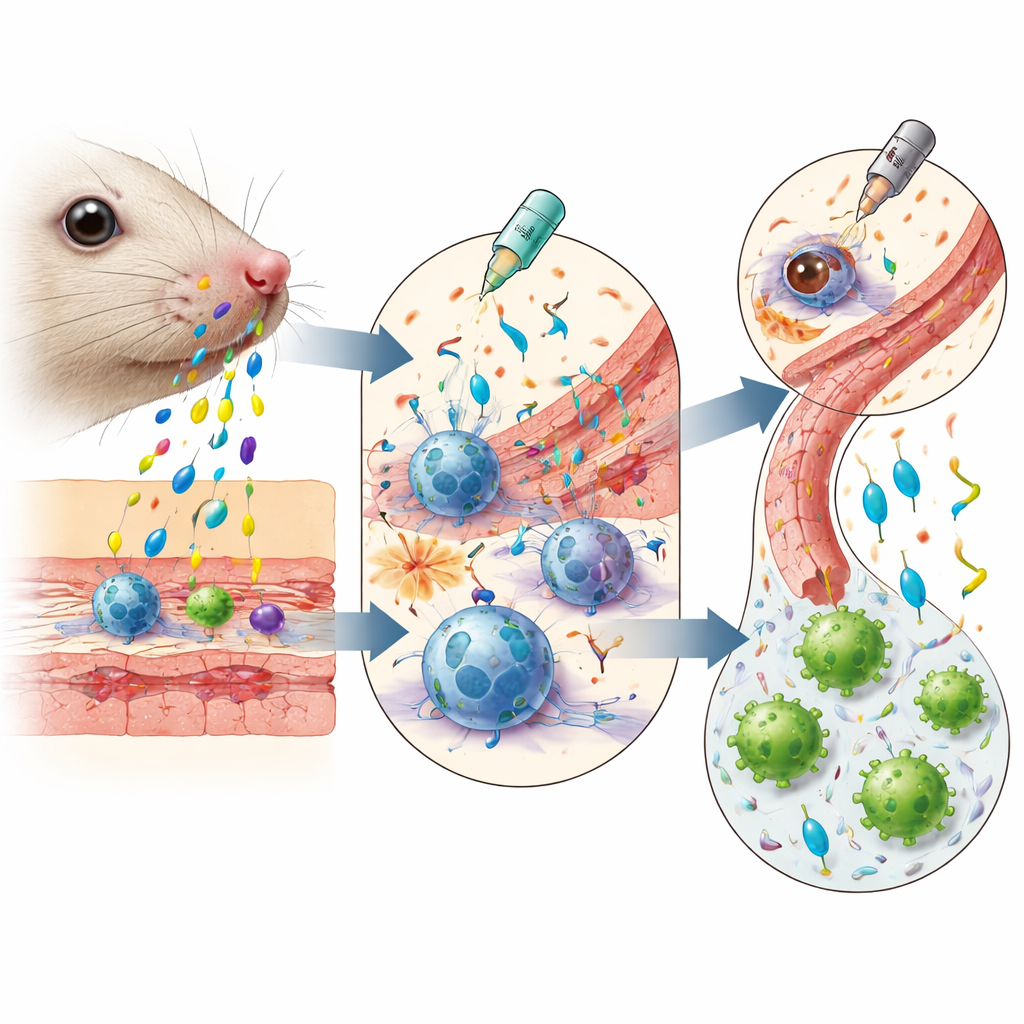
Putting the antibodies to the test
Beyond simply counting antibodies, the team asked whether they actually did useful work against the bacteria. Using human complement, a part of our natural defense system, they showed that sera from vaccinated mice killed gonorrhea efficiently, achieving much higher bactericidal titers than control animals, regardless of how the blood was collected. They also tested whether antibodies could block a clever gonococcal trick: a protein called ACP can shield the bacteria from human lysozyme, an enzyme that normally helps break down microbes. Sera from ACP-vaccinated mice, especially when ACP was given with CpG, restored lysozyme’s destructive activity in the lab. Again, results from eye and leg blood were essentially equivalent, even though individual animals varied in how strongly they responded.
What this means for people and for animals
To a non-specialist, the key takeaway is that the more humane leg-vein sampling method provides almost the same immunological information as the traditional eye-bleeding technique, even in demanding tests that measure how well vaccine-induced antibodies kill bacteria or disarm a bacterial defense protein. At the same time, the work strengthens the case for ACP—particularly when paired with CpG—as a promising component of future gonorrhea vaccines delivered through the nose. Together, these findings suggest that vaccine researchers can refine their methods to better protect animal welfare without sacrificing data quality, while also advancing candidates that may one day help curb drug-resistant gonorrhea in humans.
Citation: Chanda, A., Song, Y., Nazir, J. et al. Comparable immunogenicity from murine blood collection methods in intranasal gonococcal vaccination with ACP and MtrE supports refinement of preclinical vaccine studies. Sci Rep 16, 13867 (2026). https://doi.org/10.1038/s41598-026-44505-5
Keywords: gonorrhea vaccine, animal welfare, mouse blood collection, intranasal immunization, Neisseria gonorrhoeae