Clear Sky Science · en
Preparation and characterization of a natural composite scaffold composed of chitosan, hydroxyapatite, and graphene oxide for bone repair
Helping Broken Bones Heal Better
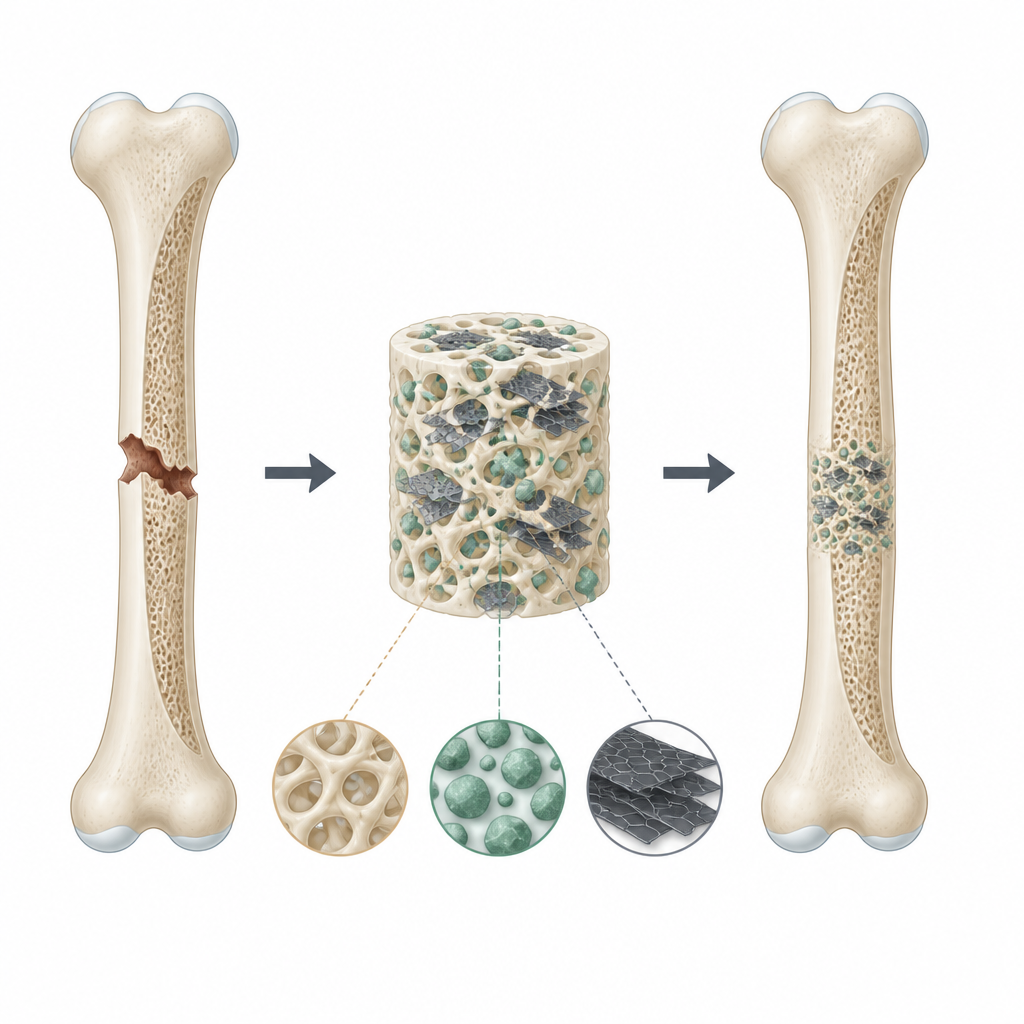
When a bone is badly damaged, the body sometimes cannot rebuild it on its own. Surgeons can add support materials to guide new bone growth, but many current options are either too weak, too slow to break down, or do not get along well with living cells. This study explores a new, naturally based support material that aims to be strong like real bone, safe for the body, and able to slowly disappear as new bone takes its place.
Building a Gentle Support for Bone
The researchers focused on creating a three-part “scaffold,” a sponge-like structure that can be placed into a bone gap. They combined chitosan, a sugar-based material from shellfish shells; nano-hydroxyapatite, a mineral similar to the hard part of bone; and graphene oxide, a sheet-like carbon material with special surface properties. The goal was to take advantage of the natural comfort of chitosan and bone mineral, while using a tiny amount of graphene oxide to boost strength and stability without harming cells.
How the New Scaffold Is Made and Studied
To make the scaffold, the team mixed chitosan and bone mineral into a gel and then added different small amounts of graphene oxide, from zero up to one percent by weight. They froze and dried the gel to create a light, porous cylinder that resembles a stiff sponge. Using tools that “feel” the chemical bonds and look at surfaces and crystal patterns, they confirmed that all three ingredients were tightly linked together. Microscopy images showed a three-dimensional mesh filled with pores where bone cells could enter, and with more graphene oxide the pore walls became noticeably thicker and denser.
Strength, Stability, and Water Balance
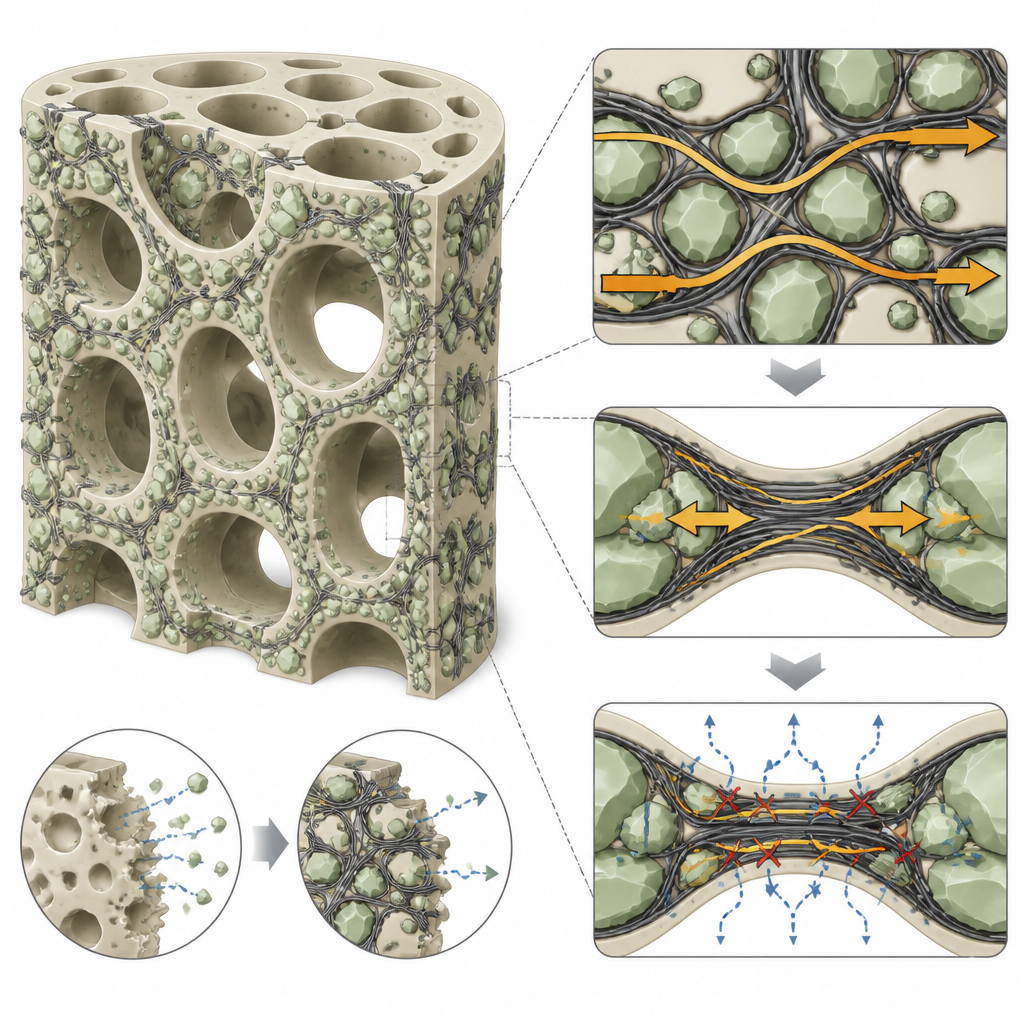
The key test for any bone repair material is whether it can handle physical forces while still allowing new tissue to grow. Compression tests showed that even a tiny amount of graphene oxide greatly increased how much stress the scaffold could bear. With one percent graphene oxide, strength jumped to the same range as the hard outer layer of natural bone, while the material still stretched to about 80 percent strain before failure, meaning it remained tough and not brittle. At the same time, porosity and water uptake decreased only slightly, staying high enough to let nutrients and cells move through. In fluid tests that mimic the body, scaffolds with more graphene oxide broke down more slowly, cutting the 21-day mass loss by more than half and suggesting a better match to the time needed for real bone to regrow.
Friendliness to Living Cells
Strength alone is not enough; a bone scaffold must also be kind to the cells that build new tissue. The team grew mouse bone-forming cells in liquids that had been in contact with the different scaffolds. Over a week, cells on all versions of the material kept dividing, and there were no signs of poisoning even at the highest graphene oxide content. In fact, cell numbers tended to increase slightly as more graphene oxide was added, hinting that the surface created by the three-part mixture may help cells attach and spread.
Why This Matters for Future Bone Repair
Altogether, the study shows that carefully adding a small amount of graphene oxide to a natural chitosan and bone-mineral scaffold can join three desirable traits: strength similar to real bone, a slower and more controlled breakdown in the body, and healthy behavior of bone cells. The best balance was reached at about one percent graphene oxide. While more work is needed before this material is used widely in patients, it offers a promising blueprint for future implants that can safely carry loads, guide new bone growth, and then gradually vanish as the body repairs itself.
Citation: Li, C., Qin, F., Zhao, S. et al. Preparation and characterization of a natural composite scaffold composed of chitosan, hydroxyapatite, and graphene oxide for bone repair. Sci Rep 16, 15101 (2026). https://doi.org/10.1038/s41598-026-44493-6
Keywords: bone scaffold, chitosan, hydroxyapatite, graphene oxide, bone tissue engineering