Clear Sky Science · en
Short-term physiological effects of pressure rise time modulation during volume-guaranteed neonatal ventilation
Helping Tiny Lungs Breathe Safely
When newborns are too sick to breathe well on their own, machines step in to do the work of the lungs. These ventilators can save lives—but the way they are set can also strain delicate organs, including the brain. This study asked a focused question: if doctors adjust how quickly a ventilator builds up pressure with each breath in newborns, does it change how well oxygen reaches the body and brain in the short term?
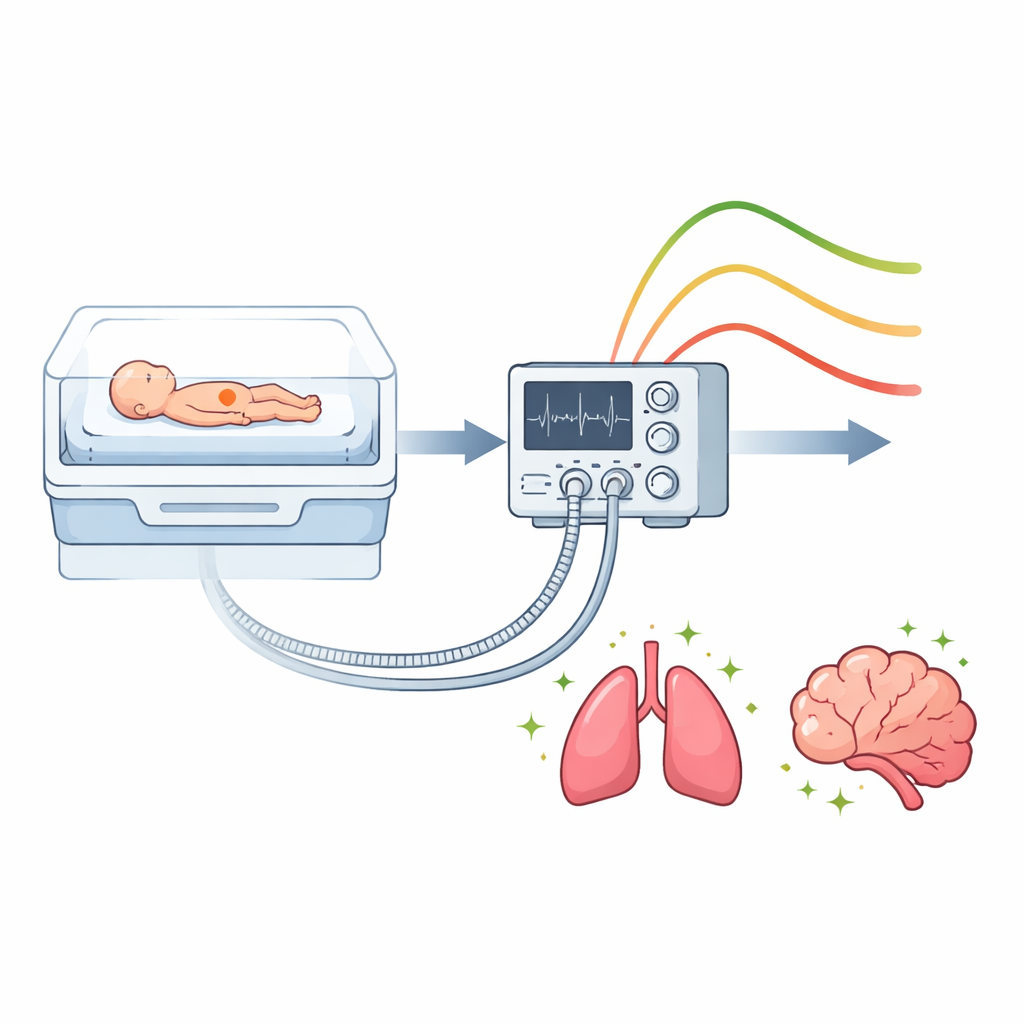
A Knob on the Breathing Machine
Modern ventilators do more than simply push air in and out. They carefully deliver a set volume of air with each breath, trying to protect fragile lungs from overstretching. One adjustable feature is called “pressure rise time,” which controls how fast pressure and airflow increase at the start of a breath. A very fast rise is like opening a faucet suddenly; a slower rise is like turning the tap gently. Although this setting is readily available on many newborn ventilators, doctors have had little evidence about whether changing it meaningfully affects how well babies’ bodies and brains are oxygenated.
Studying Real Babies, Not Just Machines
The researchers followed 17 hospitalized newborns who were already on breathing machines but were otherwise stable. These infants were being ventilated using modes that guarantee a target breath size, while the machine automatically adjusted pressure to reach that goal. Each baby was exposed to three different pressure rise times—short, medium, and long—for 20 minutes each. Throughout each period, the team continuously measured oxygen levels in the blood with a pulse sensor on the skin and in the brain using a light-based monitor placed on the forehead. They also tracked how the ventilator itself behaved, including how high and how long airway pressures stayed during each breath.
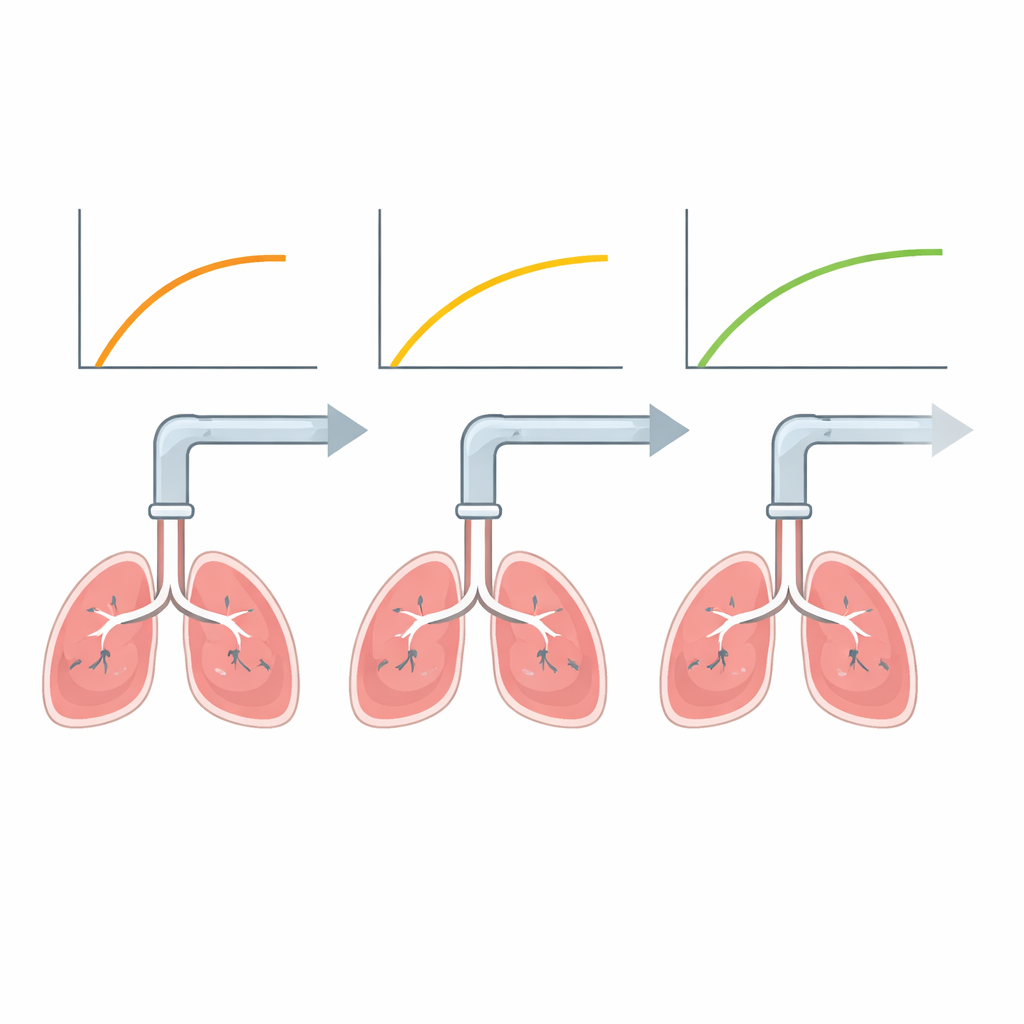
What Changed Inside the Machine
When the ventilator was set to one common mode (assist-control with volume guarantee), changing the pressure rise time did not meaningfully alter the pressures in the breathing circuit or the babies’ oxygen levels. In another commonly used mode (pressure support with volume guarantee), a different pattern emerged: as the pressure rise time became longer, the peak pressure the ventilator needed to reach the same breath size actually went up. This suggests that slowing how quickly pressure builds may force the machine to “work harder” later in the breath to deliver the promised volume. Even so, average airway pressure and the amount of oxygen added to the air stayed largely the same.
What Did Not Change in the Babies
Despite these mechanical shifts inside the ventilator, the babies themselves appeared remarkably stable. Peripheral oxygen saturation—the familiar fingertip-style oxygen reading—remained steady across all settings. So did the brain’s oxygen levels, as measured by near-infrared light sensors. No baby showed signs of clinical worsening or distress during any of the test periods. In other words, within the short 20-minute windows studied and in this relatively robust group of late preterm and term newborns, tweaking how quickly pressure rises with each breath affected the machine more than the baby.
Why This Matters and What Comes Next
The study suggests that, in stable newborns on volume-guaranteed ventilation, doctors may have some flexibility in adjusting pressure rise time without immediately harming oxygen delivery to the body or brain. While changes in this setting do alter how the ventilator generates each breath, they did not translate into short-term drops in oxygen levels. However, the study was small, short in duration, and focused on relatively mature infants rather than the tiniest, most fragile preterm babies. The authors stress that larger, longer studies are needed to learn whether certain pressure rise time choices might still influence lung injury or brain health over days and weeks. For now, the work provides some reassurance that modest changes to this ventilator “speed dial” are unlikely to cause sudden harm in stable newborns, while highlighting the need for deeper research before firm bedside rules can be written.
Citation: Aliyev, F., Yigit, S., Yucel, E. et al. Short-term physiological effects of pressure rise time modulation during volume-guaranteed neonatal ventilation. Sci Rep 16, 10620 (2026). https://doi.org/10.1038/s41598-026-44486-5
Keywords: neonatal ventilation, pressure rise time, brain oxygenation, ventilator settings, preterm infants