Clear Sky Science · en
Decoding clone evolution in HER2 amplified breast cancer through single-cell and spatial transcriptomics analysis of copy number variations
Why early breast changes matter
Many breast cancers are found at a very early stage, when abnormal cells are still confined inside the milk ducts. Some of these ductal lesions never become dangerous, while others break out and turn into invasive tumors that can spread. This study asks a crucial question for patients and doctors: can we read the genetic "fault lines" of these early lesions to see which ones are likely to progress, and which might safely be watched rather than aggressively treated?
Looking at thousands of cells one by one
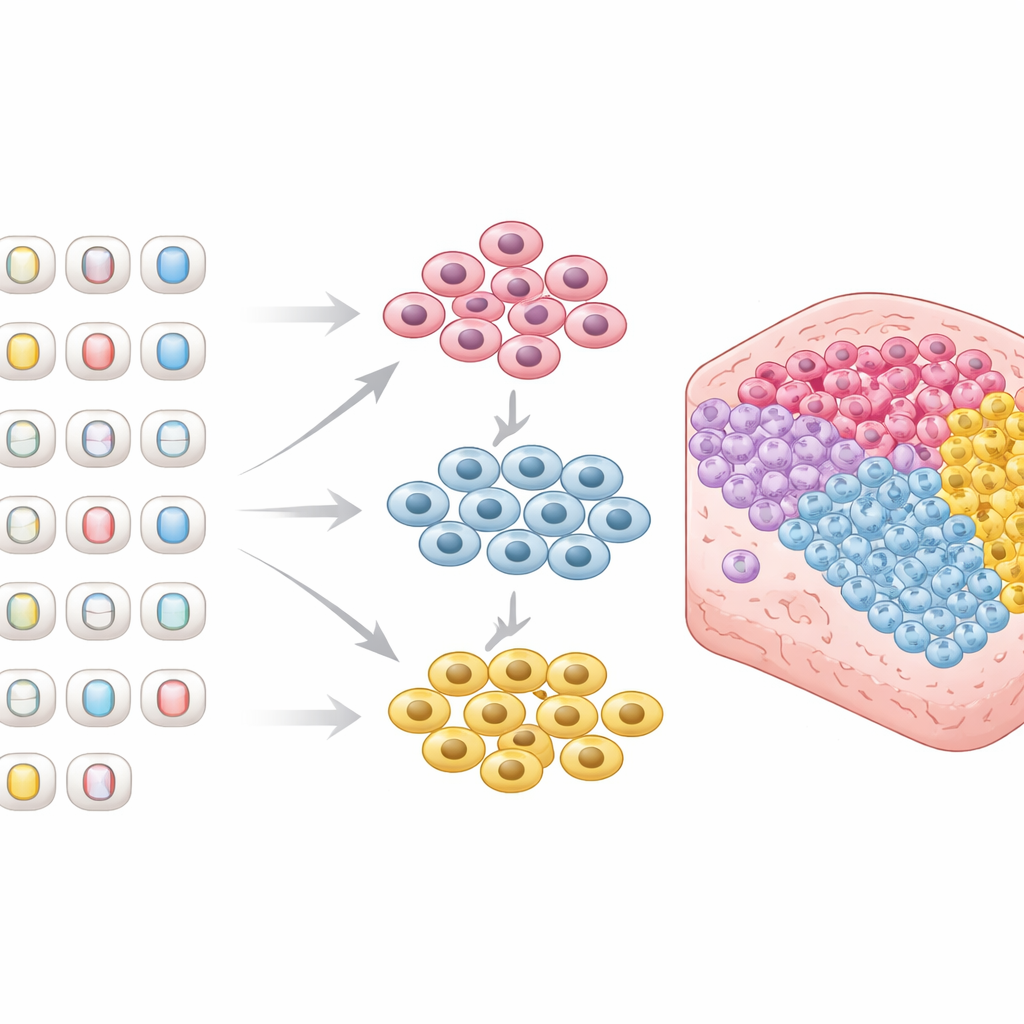
To tackle this, the researchers focused on HER2-positive breast cancer, a subtype driven by excess HER2 protein that often behaves aggressively. Instead of blending tissue into a single sample, they used powerful tools that measure gene activity in individual cells and in precise spots across tissue slices. From 14 patients, they profiled more than 68,000 single cells, and from another 8 patients, nearly 5,000 tiny regions across tumor sections. By reading out gene activity patterns, they could infer where stretches of DNA had been duplicated or lost, a type of change known as copy number variation. These changes act like genetic scars that record how tumor cell families branch and evolve over time.
Early warning signs in "in-place" tumors
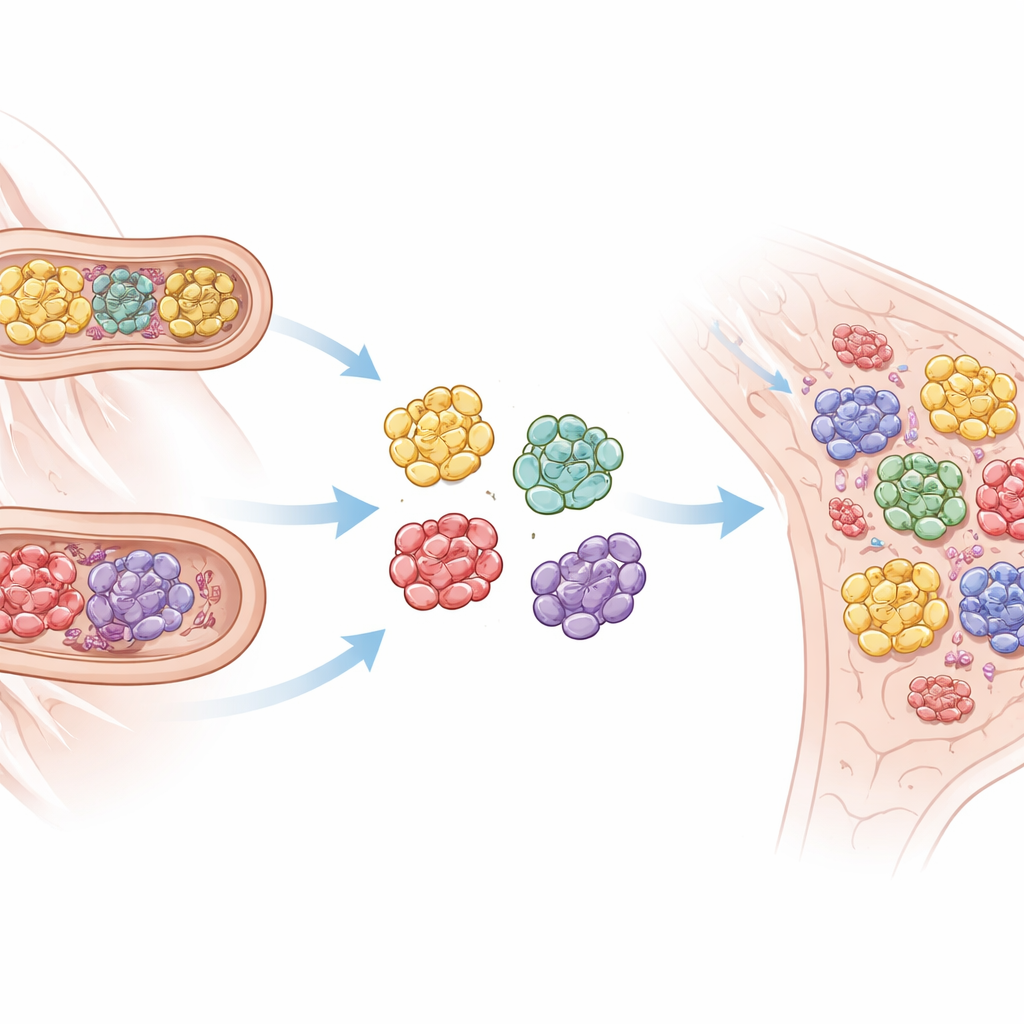
One of the most important findings is that serious genetic damage is already present in ductal carcinoma in situ, the stage where cells have not yet broken through the duct wall. The team found large-scale DNA gains and losses in these early lesions, including frequent extra copies along a section of chromosome 17 that contains the HER2 gene. Many of these damaged regions were shared between ductal carcinoma in situ and fully invasive ductal carcinoma from the same patients. This pattern suggests that a core set of harmful changes appears early and then persists, rather than each stage arising from completely separate origins.
Growing genetic chaos as cancer breaks out
Although both stages share a common genetic backbone, invasive tumors carried a heavier load of DNA alterations than their in-duct counterparts. Invasive ductal carcinoma cells had higher copy number burden overall, hinting at mounting genomic instability as the disease advances. By combining genetic patterns with spatial maps of where cells sit in the tissue, the researchers reconstructed branching "family trees" of tumor cell clones. These trees revealed several coexisting paths: in some areas, multiple genetically distinct clones broke through the duct and invaded together; in others, a new invasive clone appeared to branch off and evolve more independently. This multi-threaded pattern of spread may help explain why HER2-positive tumors can be so varied in behavior, even within a single breast.
From maps of change to clues about outcome
The team then asked whether specific altered DNA regions carried information about patient survival. By comparing their gene lists to large public cancer datasets, they identified groups of genes that were repeatedly gained in HER2-positive tumors and that tracked with poorer outcomes. Several genes located near HER2 on chromosome 17, such as CASC3 and ILF2, were not only frequently amplified but were also linked to shorter overall survival when present at high levels. These findings suggest that HER2 rarely acts alone: a cluster of neighboring genes, all boosted together by the same DNA gain, may cooperate to drive faster-growing, harder-to-treat disease.
What this means for patients
For people facing a diagnosis of HER2-positive ductal carcinoma in situ or invasive cancer, this work offers both a warning and an opportunity. The warning is that major genetic disruptions, including the extra copies that activate HER2, can arise early, even before a tumor is technically invasive. The opportunity is that these early DNA changes may serve as measurable markers of risk. By reading the pattern and intensity of copy number alterations, future tests might help doctors distinguish slow-growing lesions from those poised to break out, guiding decisions about surgery, radiation, and drug therapy. In the long run, targeting not only HER2 but also its amplified neighbors could open new ways to interrupt the multi-track evolutionary paths that let these cancers progress.
Citation: Yang, J., Li, Y., Luo, S. et al. Decoding clone evolution in HER2 amplified breast cancer through single-cell and spatial transcriptomics analysis of copy number variations. Sci Rep 16, 13658 (2026). https://doi.org/10.1038/s41598-026-44476-7
Keywords: HER2-positive breast cancer, ductal carcinoma in situ, copy number variation, single-cell transcriptomics, tumor evolution