Clear Sky Science · en
Thermodynamic assessment of tri-reforming of methane with optimization of operating conditions to achieve suitable syngas for methanol production
Turning a Common Gas into a Cleaner Building Block
Methane, the main component of natural gas, is both a valuable fuel and a powerful greenhouse gas. Industry already uses methane to make countless products, including methanol, a liquid that can be used as a fuel, solvent, and starting point for many chemicals. This paper explores how to tune an advanced process called tri‑reforming so that methane and carbon dioxide can be turned into an ideal mixture of gases for making methanol, while using less energy and cutting climate‑warming emissions.
Combining Three Flames into One Smarter Fire
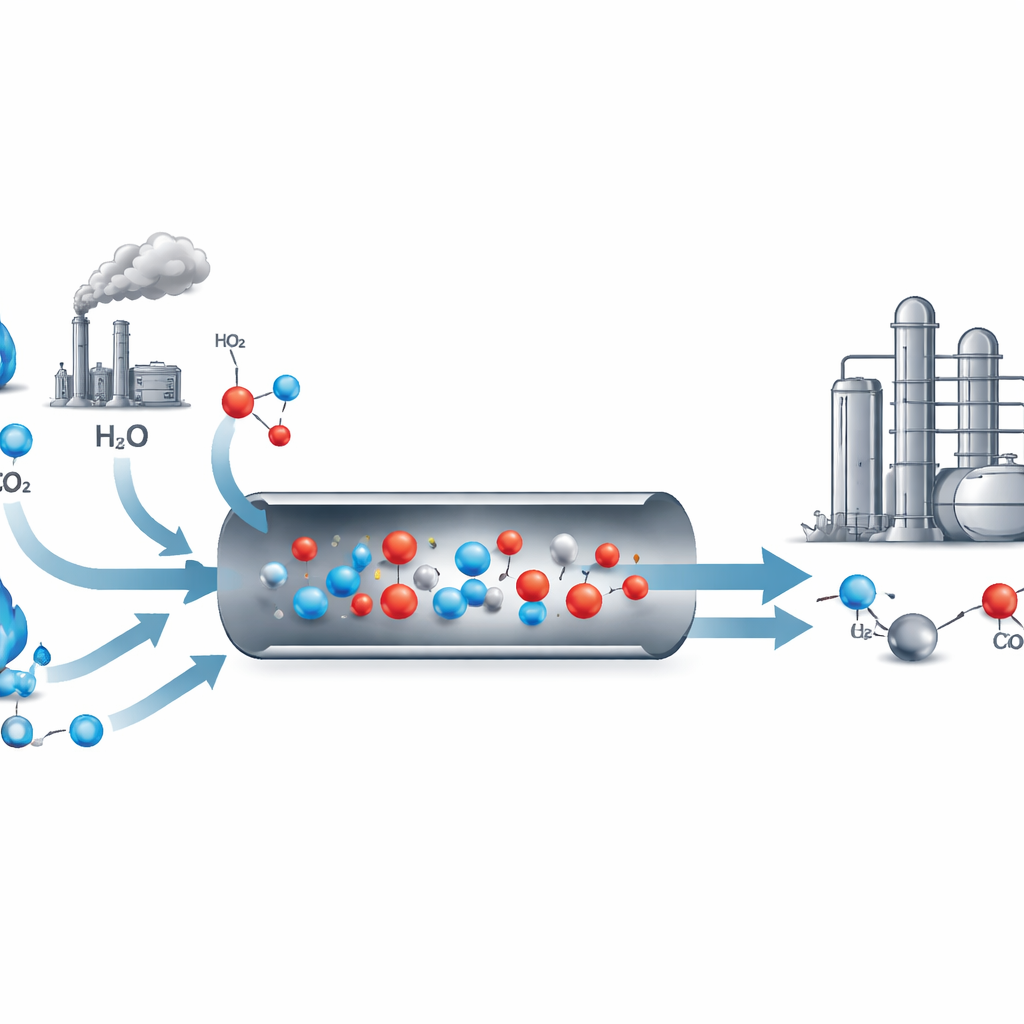
Traditional factories use separate processes to react methane with steam, carbon dioxide, or oxygen, each with its own advantages and drawbacks. Tri‑reforming cleverly combines all three in a single reactor. Steam and carbon dioxide help prevent the formation of soot that can ruin catalysts, while oxygen supplies heat for the energy‑hungry reactions. By adjusting how much water, carbon dioxide, and oxygen enter with methane, engineers can dial in the desired mix of hydrogen and carbon monoxide, known together as syngas. For making methanol, the sweet spot is roughly two hydrogen molecules for every carbon monoxide molecule.
Using the Rules of Heat and Energy as a Map
Instead of relying on complex trial‑and‑error experiments, the authors use the laws of thermodynamics to predict how the mixture in the reactor will behave. They calculate, for a wide range of temperatures, pressures, and feed ratios, how completely methane, steam, and carbon dioxide are converted and how much hydrogen and carbon monoxide are formed. Their calculations show that higher temperatures and lower pressures generally help break down methane and carbon dioxide and boost the amounts of useful products. However, not all components respond in simple ways: water conversion first rises and then falls with temperature because different reactions compete, some making water and some consuming it.
Finding the Right Balance of Ingredients
The study then examines how changing each ingredient in the feed shifts the outcome. Adding more steam pushes the chemistry toward higher hydrogen production and a higher hydrogen‑to‑carbon‑monoxide ratio, while also suppressing solid carbon deposits that would foul the reactor. In contrast, feeding more carbon dioxide favors carbon monoxide and tends to lower the hydrogen‑to‑carbon‑monoxide ratio, even though it improves carbon dioxide use. Oxygen plays a double role: it burns some methane and supplies heat, but too much oxygen steers the process toward simple combustion rather than efficient fuel production. The authors show that the effects of pressure and oxygen level flip depending on temperature, so the process window must be chosen with care.
Teaching a Digital Evolution to Tune the Process
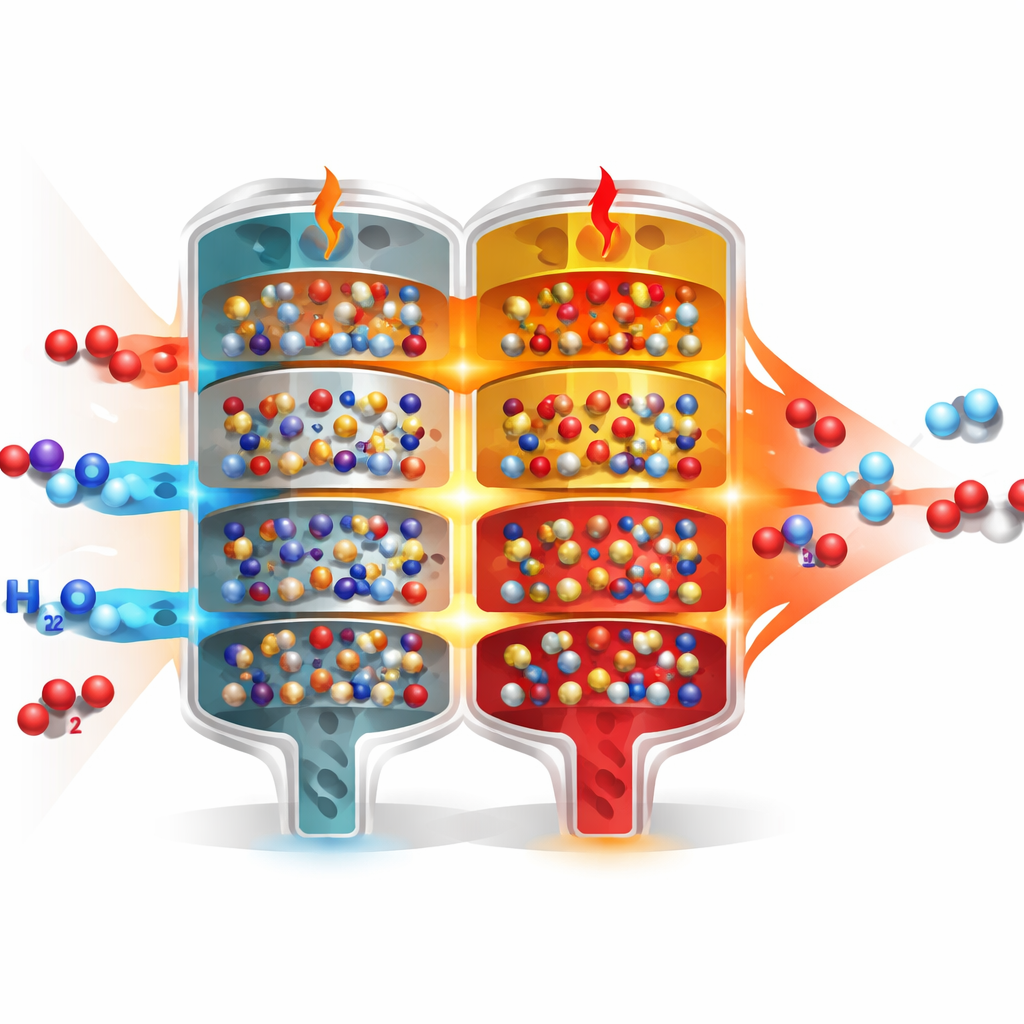
To move from broad trends to a concrete operating recipe, the researchers turn to a genetic algorithm, an optimization method inspired by natural selection. They let a computer create many virtual "candidates," each with different temperatures, pressures, and feed ratios. Using their thermodynamic model as a fitness test, they reward candidates that produce syngas with a hydrogen‑to‑carbon‑monoxide ratio as close as possible to 2, while also demanding that both methane and carbon dioxide conversions exceed 90 percent. Over 200 generations of selection, crossover, and mutation, the algorithm homes in on the most promising conditions.
A Recipe for Methanol‑Ready Gas
The final outcome is a set of operating conditions that turn methane, steam, carbon dioxide, and a small amount of oxygen into a nearly ideal methanol feed. At about 989 °C and atmospheric pressure, with incoming gases mixed in a ratio of 1 part methane to 0.61 parts steam, 0.30 parts carbon dioxide, and 0.10 parts oxygen, the model predicts almost complete methane conversion and 90 percent carbon dioxide conversion. The resulting syngas has a hydrogen‑to‑carbon‑monoxide ratio of 1.99, essentially perfect for standard methanol plants. In simple terms, the study shows that by carefully balancing heat, pressure, and the mix of four familiar gases, it is possible to turn a climate‑challenging fuel into a cleaner, more versatile liquid while efficiently consuming carbon dioxide.
Citation: Alamdari, A., Azarhoosh, M.J. & Aghaeinejad-Meybodi, A. Thermodynamic assessment of tri-reforming of methane with optimization of operating conditions to achieve suitable syngas for methanol production. Sci Rep 16, 14257 (2026). https://doi.org/10.1038/s41598-026-44472-x
Keywords: syngas, methane reforming, methanol production, carbon dioxide utilization, process optimization