Clear Sky Science · en
Influence of urban innovation capacity on urban energy transition in China—the moderating role of climate risk
Why City Innovation Matters for Cleaner Energy
As climate change brings more heatwaves, floods, and storms, the way cities produce and use energy is becoming a central question for everyday life—from the price of electricity to the air we breathe. This study looks at hundreds of cities across China to ask a deceptively simple question: when a city becomes more innovative in business and technology, does it actually speed up the shift away from coal and oil toward cleaner energy—and how do growing climate risks change that story?
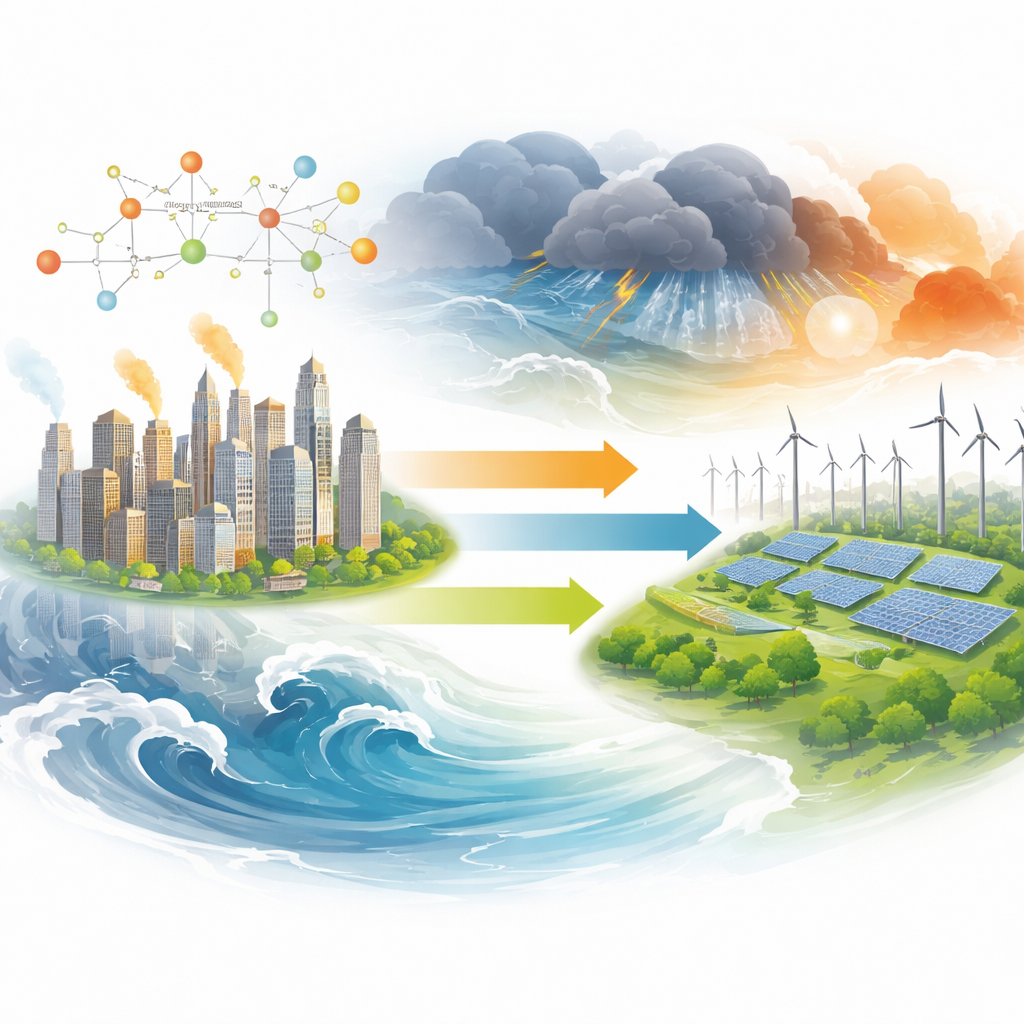
From Smokestacks to Solar Panels
The authors start from a long view of energy history. Humanity has already gone through two big shifts in its main energy sources: first from wood to coal, then from coal to oil and gas. Each shift has been powered by new inventions, from the steam engine to the internal combustion engine. Today, a third transition is under way, aiming to replace fossil fuels with renewable sources like wind and solar. In China, this transition is especially urgent. Its cities consume about two-thirds of the country’s energy and produce more than 70 percent of its carbon dioxide emissions. The study argues that cities are therefore the key battleground for building a low‑carbon future while still supporting economic growth.
Measuring City Progress and Ingenuity
To track how far cities have moved toward cleaner energy, the researchers use an index that combines several pieces of information: the balance between fossil fuels and cleaner sources, how much energy cities need to generate a unit of economic output, and indicators of environmental quality such as air pollution and carbon emissions per person. They pair this with a detailed measure of regional innovation and entrepreneurship, built from data on new firms, foreign and venture capital investment, patents, and trademarks. Together, these measures capture both the “state” of a city’s energy system and the “muscle” of its innovation engine over the years 2003 to 2019.
How Cities Shape Each Other
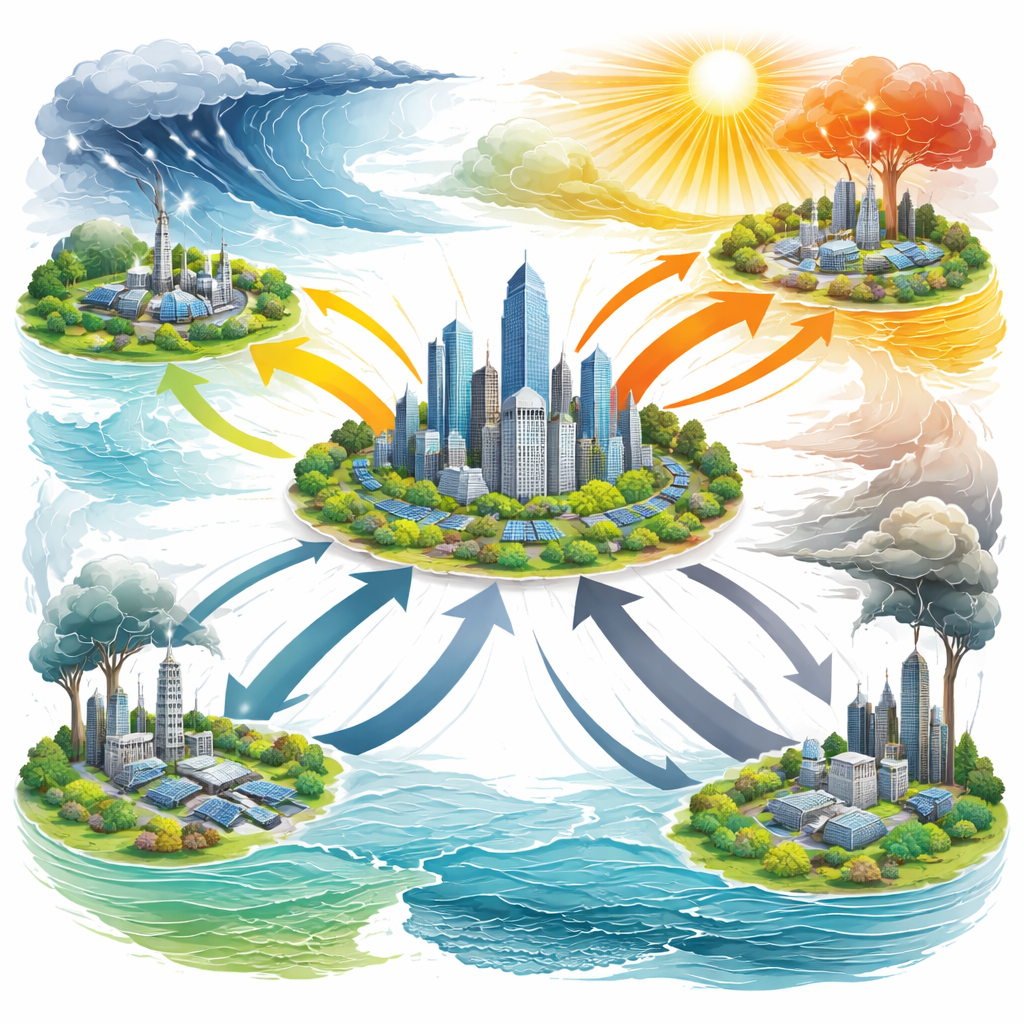
One of the study’s most striking messages is that no city is an island. Using a statistical approach that tracks both time and geography, the authors find that a city’s energy choices today are strongly influenced by its own past decisions and by what nearby cities are doing. When one city pushes ahead with cleaner energy and better technology, neighbors are more likely to follow, imitating policies and learning from experience. At the same time, the analysis uncovers a surprising downside: strong innovation in one city can draw talent, money, and clean‑energy industries away from surrounding areas. This “pull” can leave neighboring cities lagging behind, even as the pioneer city advances.
Climate Risks Complicate the Picture
The study adds another layer by examining climate risk, focusing on how uncertain and shifting climate policies can rattle markets and investment plans. In cities where climate‑related rules and signals are more unstable, the positive link between innovation and cleaner energy weakens. Investors and officials become more cautious, delaying or downsizing projects that might otherwise speed the transition. Yet the story changes when looking across city borders. High climate risk in nearby cities can actually spur cooperation, as regions facing shared dangers exchange knowledge, pool resources, and coordinate clean‑energy strategies to protect themselves collectively.
Different Regions, Different Paths
The researchers also find that China’s eastern, central, and western regions are not moving at the same pace. Coastal eastern cities, which are richer and more connected to global markets, tend to turn innovation into cleaner energy more effectively and spread positive effects to their neighbors. In many central and western cities, however, limited financial resources, weaker technology bases, and heavier dependence on traditional industries blunt the benefits of innovation. In these places, local government budgets and openness to outside investment—rather than innovation alone—play a larger role in nudging energy systems toward lower emissions.
What It All Means for Ordinary Life
In plain terms, the study finds that innovative cities are better positioned to clean up their energy use and that their choices ripple outward to surrounding areas. But innovation is not a magic wand: it can leave some neighbors behind, and its power is muted when climate‑related rules are uncertain or when regions lack the means to act. The authors conclude that to protect people from climate risks while keeping economies growing, governments need to foster innovation, manage climate risks more predictably, and encourage cities to work together rather than compete in ways that simply shift problems next door.
Citation: Wei, J., Tan, J. Influence of urban innovation capacity on urban energy transition in China—the moderating role of climate risk. Sci Rep 16, 13730 (2026). https://doi.org/10.1038/s41598-026-44465-w
Keywords: urban energy transition, innovation, climate risk, China cities, renewable energy