Clear Sky Science · en
The attractiveness of reclaimed and developed post-mining sites in Poland urban areas
From Empty Pits to City Oasis
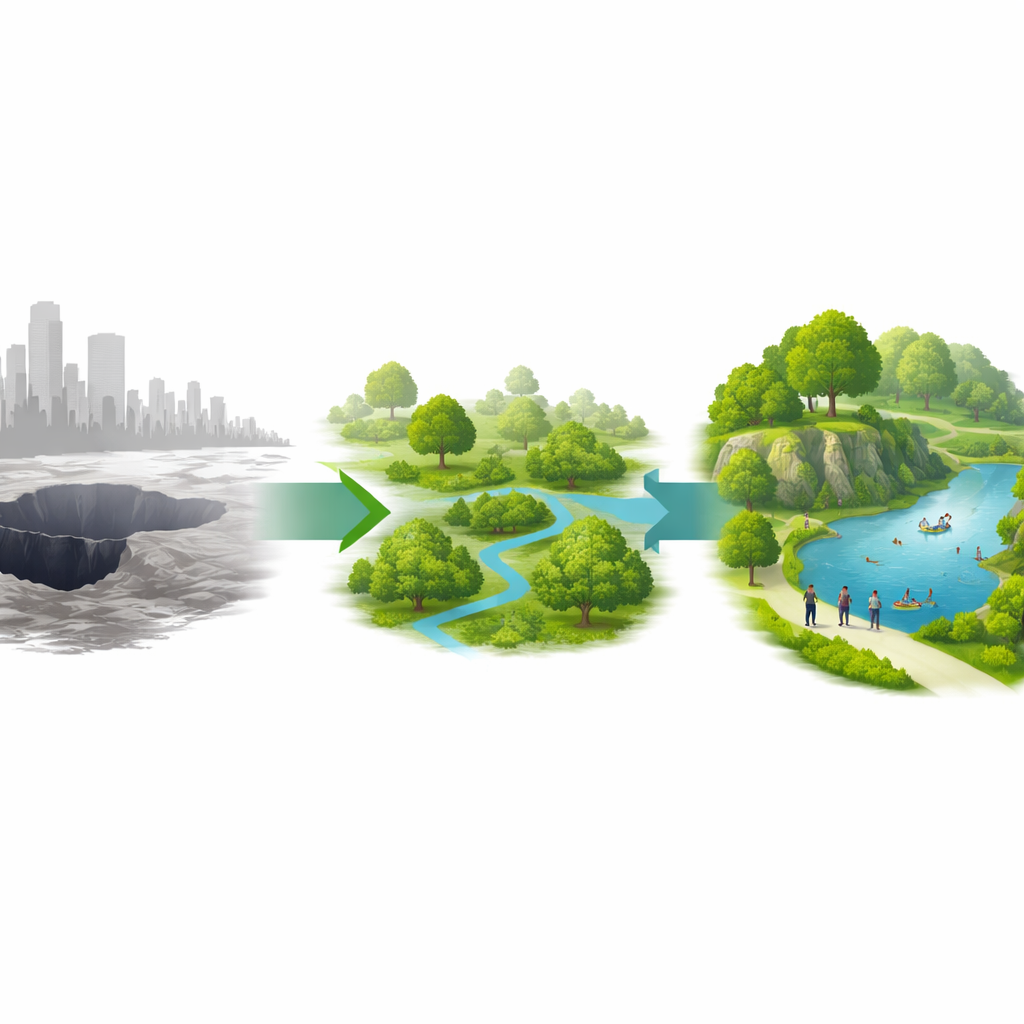
Across many cities, old open-pit quarries and clay pits linger as scars in the landscape—steep, fenced-off holes that feel dangerous and useless. This paper shows how such forgotten mining sites in Poland’s major cities have been turned into some of the most attractive places for walks, swimming, and nature watching. By looking at four reclaimed sites and asking both experts and everyday users what makes them appealing, the authors reveal how cities can transform post-industrial wastelands into safe, lively green spaces that people genuinely enjoy.
Why Old Mines Matter to City Life
Surface mining leaves behind large excavations that can destabilize ground, threaten safety, and damage the environment if they are simply abandoned. As towns have grown outward, many former mines that once lay beyond the city edge now sit inside dense neighborhoods, where they are highly visible and often perceived as ugly or low-value. Yet these same holes in the ground can offer rare cliffs, exposed rock layers, and new water bodies—features that are difficult to create from scratch. The authors argue that, if handled well, such sites can serve three roles at once: recreational parks for residents, living museums of mining history, and pockets of urban biodiversity that support plants and animals, including rare species.
Four Urban Pits with New Lives
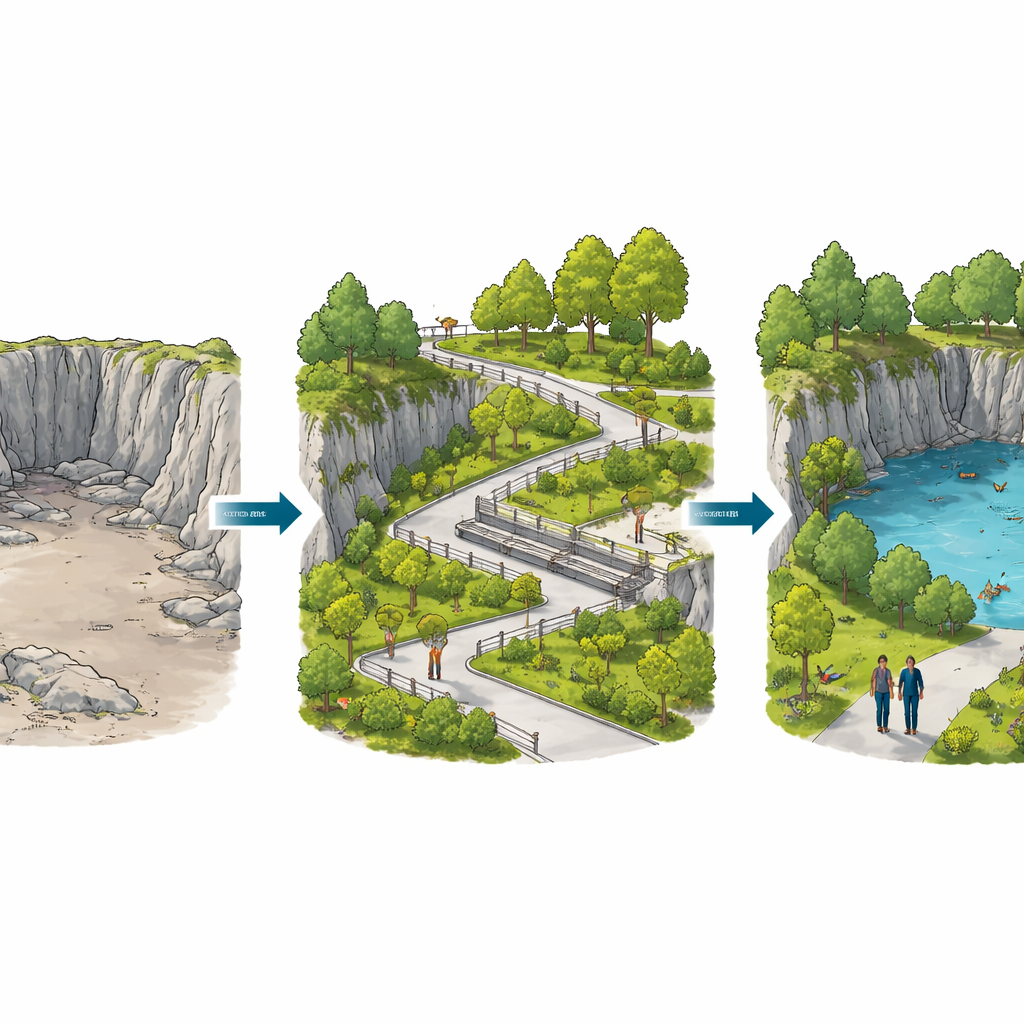
The study focuses on four post-mining sites in different Polish cities. In Kielce, the Kadzielnia Reserve is a former limestone quarry in the very center of town, now a small but dramatic nature reserve with cliffs, caves, fossils, a concert amphitheater, and safe walking paths. In Kraków, Zakrzówek Park is a large former quarry dominated by a deep, emerald-colored lake, ringed by paths, viewpoints, swimming platforms, and climbing walls. Near Szczecin, Szmaragdowe Lake fills a flooded chalk pit at the edge of the city, surrounded by forest trails and an environmental education center. In Wrocław, the Glinianki Bathing Area is a set of clay-pit ponds turned into a commercial swimming and water-sports complex with beaches, sports fields, and event facilities.
How the Team Measured Attractiveness
To move beyond simple impressions, the authors created a structured way to rate each site’s appeal. They broke attractiveness into three down-to-earth dimensions: how easy a place is to reach and use (accessibility), how well it is equipped and maintained (land development), and how strongly it preserves and showcases nature and mining heritage (natural and cultural values). For each dimension, they built 24 concrete criteria—such as parking, public transport, paths, safety, cleanliness, information boards, and presence of protected species—and scored sites on a five-point scale. At the same time, they ran large online surveys in which hundreds of visitors to each site answered parallel questions about their own experience, allowing a direct comparison between expert judgment and public perception.
What People Value on the Ground
Overall, both experts and visitors rated the reclaimed sites positively, but for slightly different reasons. Kadzielnia scored highest overall, thanks to its central location, excellent public transport links, free entry, and strong emphasis on geology and history through caves, rock outcrops, and educational boards. Zakrzówek and Glinianki excelled in recreational features, such as swimming areas, picnic spots, water sports, and play zones, though users noted limits in parking and, in Wrocław, the impact of ticket prices. Szmaragdowe Lake, more remote and less developed, was loved for its scenery and calm but seen as harder to access. Across all four places, people consistently appreciated clear paths, safety measures, and the possibility to bring dogs, but were often critical of toilets and food options. Importantly, the survey showed that local residents notice and value preserved rock faces, wildlife habitats, and traces of former mining, even when they come mainly to relax.
Lessons for Future Urban Transformations
The study concludes that turning mines into successful urban spaces is not just a matter of planting trees or filling pits with water. The most attractive sites are those that combine easy daily access, varied recreational uses, and visible respect for nature and history. Involving local communities in planning helps ensure that new parks fit real needs rather than top-down design ideas. While the exact details will differ from country to country, the authors’ rating method and survey approach can be reused elsewhere to guide decisions about how to reclaim post-mining areas. In short, when cities treat former quarries and pits as opportunities instead of problems, they can gain safe, green, and culturally rich places that improve urban life.
Citation: Strzałkowski, P., Sitarska, M., Szymkiewicz, A. et al. The attractiveness of reclaimed and developed post-mining sites in Poland urban areas. Sci Rep 16, 14356 (2026). https://doi.org/10.1038/s41598-026-44464-x
Keywords: post-mining reclamation, urban green spaces, quarry restoration, geotourism, sustainable cities