Clear Sky Science · en
Two Trichoderma endophytic fungi alleviates drought stress and improves plant growth in Cinnamomum migao seedlings
Helping Trees Cope With Thirst
As heatwaves and water shortages become more common, many valuable plants struggle to survive. Cinnamomum migao, a medicinal tree native to a few dry valleys in southwestern China, is one such species. Its fruits are in high demand for traditional remedies, yet wild supplies are dwindling and young trees grow slowly, especially under drought. This study explores a surprising ally living on and inside plant roots—friendly fungi—that can help these seedlings grow better and stay healthier when water is scarce. 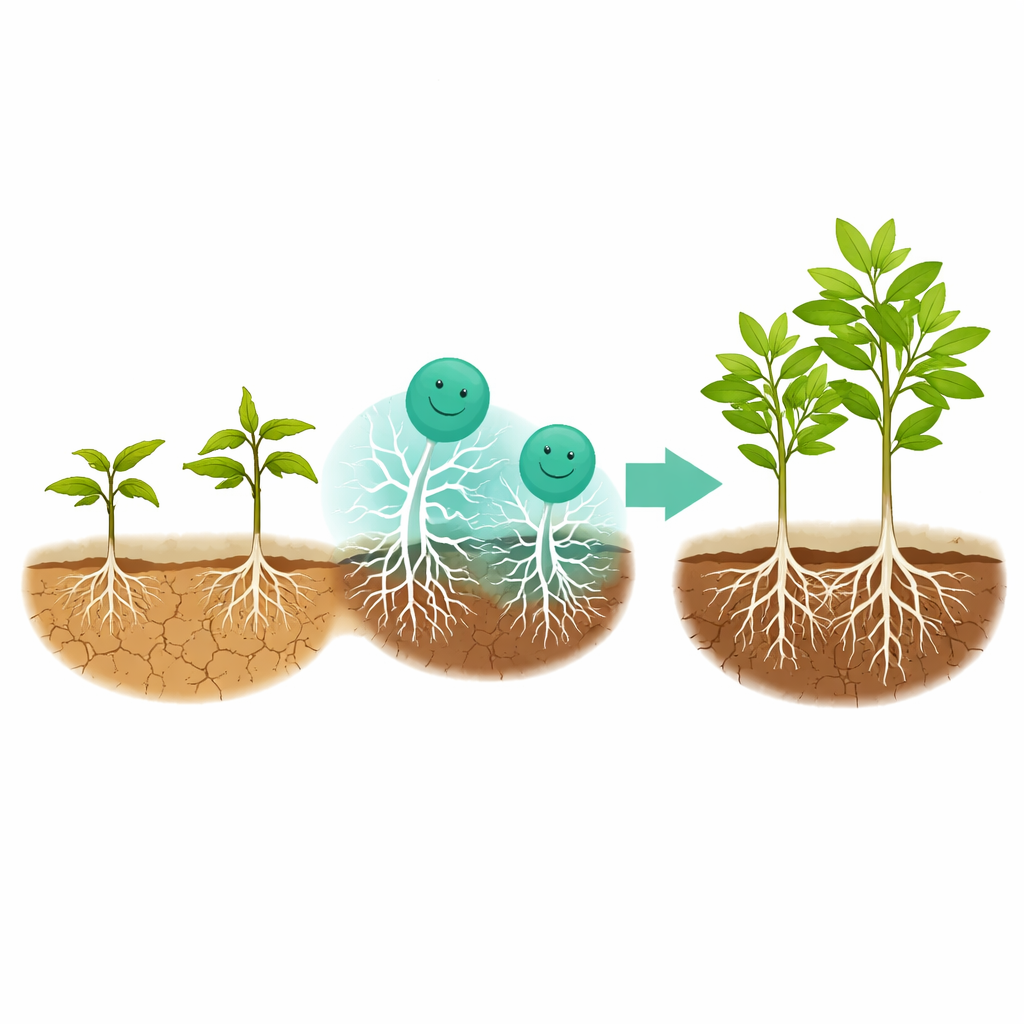
A Rare Medicinal Tree Under Pressure
Cinnamomum migao has long been used to treat ailments such as stomach pain, chest tightness, and motion sickness, and now underpins several high-value herbal medicines. But natural populations are shrinking, and attempts to cultivate the tree run into a major obstacle: drought. When soil dries, seedlings lose water, their leaves shrink, and growth slows dramatically, delaying fruiting and lowering yields. The authors wanted to know whether certain “endophytic” fungi—microbes that live harmlessly within plant tissues—could act as living helpers, boosting the tree’s ability to withstand dry conditions and grow more vigorously.
Enlisting Helpful Fungi Around the Roots
The team focused on two species of Trichoderma, common soil fungi known to form close relationships with plant roots. They grew C. migao seedlings in pots and either left them untreated or repeatedly added one of the fungi around the roots. The young trees were then subjected to four levels of soil moisture, from well-watered to severely dry, for several months. At each stage, the researchers measured how tall and thick the stems grew, how large the leaves became, how much root and shoot biomass developed, and how much water the leaves could hold. They also tested leaf chemistry, including pigments for photosynthesis, small molecules that help retain water, antioxidant defenses, and plant hormones that coordinate growth and stress responses. 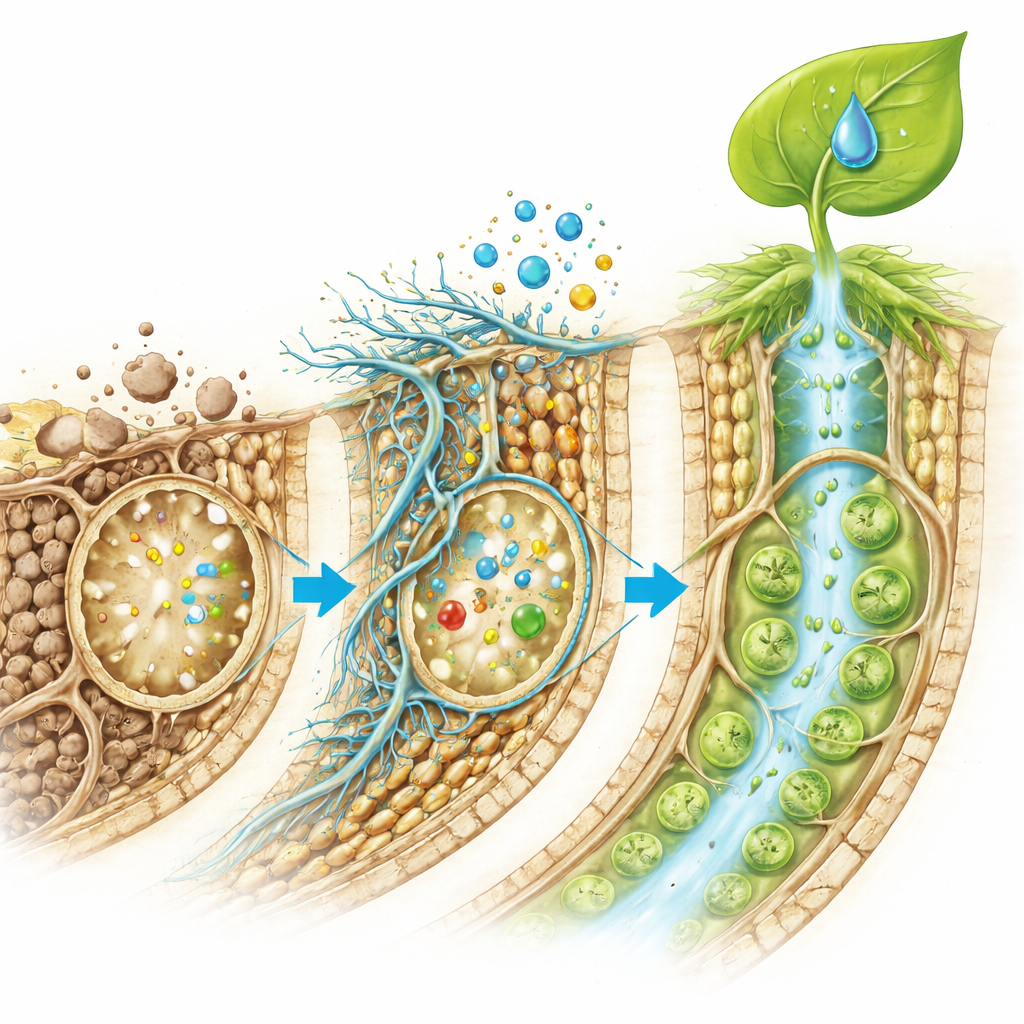
Stronger Growth, Deeper Roots, and Greener Leaves
Across nearly all drought levels, seedlings partnered with either Trichoderma species outperformed untreated plants. Inoculated trees were taller, had thicker stems, more and wider leaves, and heavier roots and shoots. Their roots tended to be longer and more robust, improving the ability to search for water in dry soil. Leaves of treated plants maintained higher relative water content and a more favorable water gradient between soil and plant, helping keep tissues hydrated. They also retained more chlorophyll, the green pigment essential for capturing light, which supports continued photosynthesis even as water becomes scarce. In many cases, Trichoderma harzianum gave a slight edge in maintaining leaf area and pigment levels under stronger drought.
Inner Chemistry That Shields Against Drought
The hidden chemistry of the seedlings revealed how these fungi provided protection. Fungi-treated plants accumulated more “osmotic” substances—soluble sugars, proteins, and the amino acid proline—that help cells hold onto water, like tiny molecular sponges. Their antioxidant enzyme systems, including superoxide dismutase, peroxidase, and catalase, were more active, helping neutralize reactive oxygen molecules that build up under stress and can damage membranes and chloroplasts. As a result, treated plants produced less malondialdehyde, a marker of cell damage. At the same time, the balance of plant hormones shifted: levels of abscisic acid, which triggers drought responses such as tighter control of water loss, rose, while growth-promoting hormones like auxin, gibberellin, and cytokinin forms declined under stress, steering the plant toward survival rather than risky expansion.
A Natural Partnership With Practical Promise
Put simply, the two Trichoderma fungi acted as microscopic partners that reshaped C. migao seedlings from the roots upward. They encouraged stronger root systems, helped cells stay hydrated, shielded tissues from oxidative damage, kept leaves greener, and tuned hormone signals so that the plant could ride out dry spells more safely. While extreme drought still imposed limits, these changes together made the seedlings more resilient and productive under moderate water shortages. For growers trying to cultivate this rare medicinal tree in increasingly dry landscapes, such fungal inoculants offer a low-cost, nature-based tool to improve survival and growth, easing pressure on wild populations and helping secure future supplies of this traditional remedy.
Citation: Zhang, Ly., Fu, T., Chen, Jz. et al. Two Trichoderma endophytic fungi alleviates drought stress and improves plant growth in Cinnamomum migao seedlings. Sci Rep 16, 14261 (2026). https://doi.org/10.1038/s41598-026-44455-y
Keywords: drought-tolerant plants, beneficial fungi, plant–microbe partnership, medicinal tree cultivation, Trichoderma inoculant