Clear Sky Science · en
Combined antioxidant therapy with quercetin and curcumin protects against radiation-induced nephrotoxicity
Why Protecting Kidneys from Radiation Matters
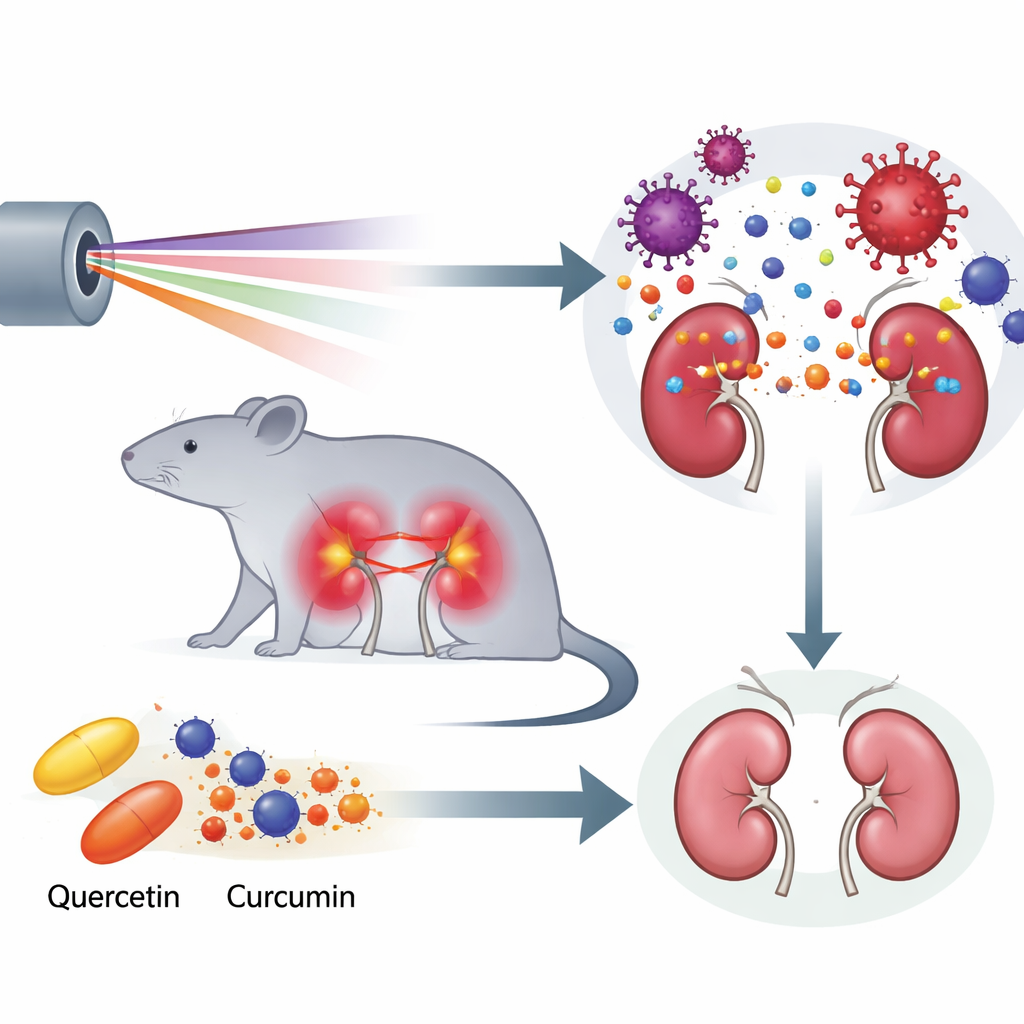
Radiation is a powerful tool in medicine, used to diagnose and treat many diseases, including cancer. But while it can save lives, it can also unintentionally harm healthy organs such as the kidneys, which quietly filter our blood around the clock. This study explores whether two natural plant compounds—quercetin (found in apples and onions) and curcumin (the yellow pigment in turmeric)—can work together like a protective shield to reduce radiation damage to the kidneys, at least in an animal model.
Natural Helpers from Everyday Foods
Quercetin and curcumin belong to a family of substances known for their strong ability to neutralize "free radicals," the highly reactive molecules that can damage cells. When radiation passes through the body, it generates a storm of these molecules, especially in water-rich tissues. The researchers reasoned that if they could tame this chemical storm, they might lessen the blow that radiation delivers to kidney cells. Using rats as a stand‑in for humans, they designed a series of experiments to see how well each compound worked on its own and, more importantly, how powerful they might be when combined.
How the Study Was Carried Out
The team divided male albino rats into six groups. One group was left untreated as a baseline, while others received quercetin alone, curcumin alone, radiation alone, or a mix of quercetin and curcumin either before or after radiation. The radiation schedule was spread out over several doses, mimicking the way patients often receive repeated treatments rather than one massive blast. After the treatments, the scientists collected blood and kidney samples to look at traditional kidney function markers—such as creatinine, urea, uric acid, and key salts—as well as the activity of natural antioxidant enzymes that help keep harmful molecules in check.
What Happened Inside the Kidneys
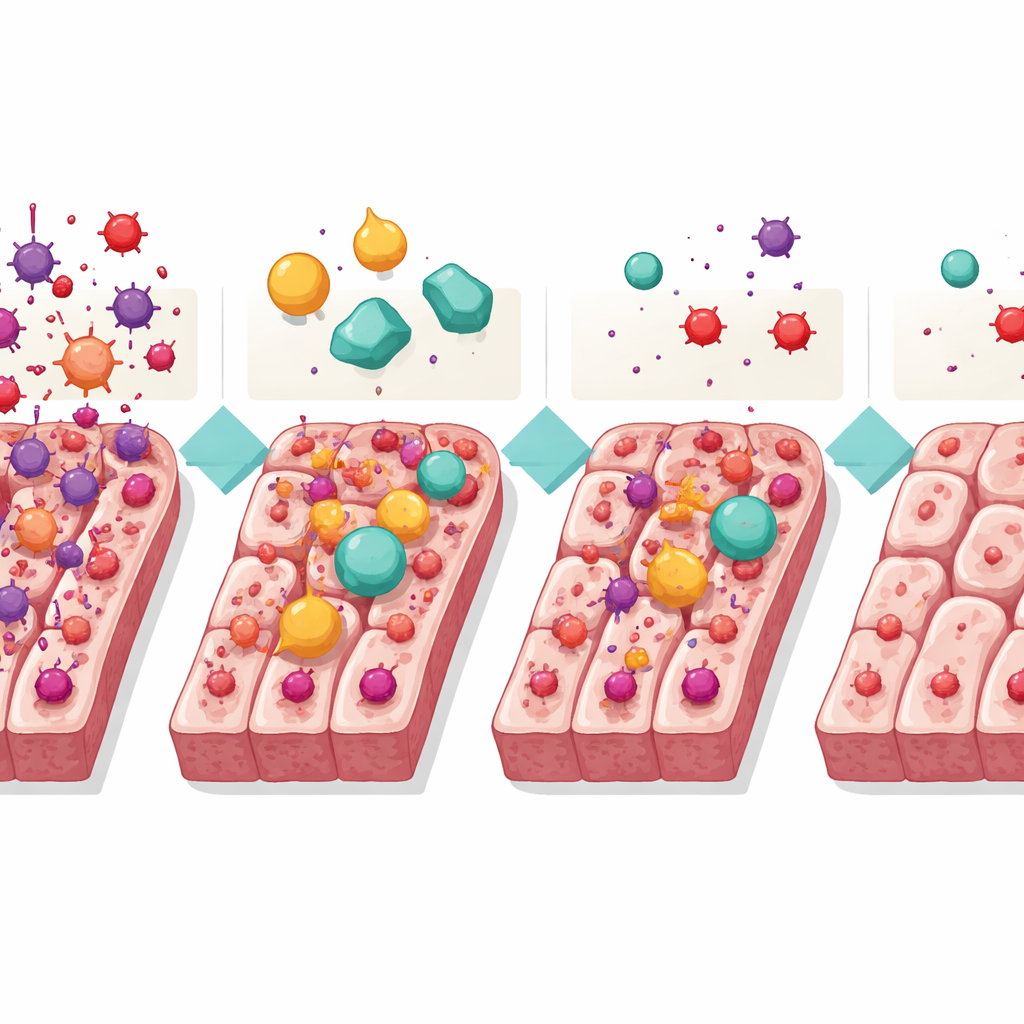
Rats exposed only to radiation showed clear signs of kidney distress. Blood levels of waste products rose, protective blood proteins dropped, and salt balance was disturbed—all signals that the kidneys were struggling. At the same time, the natural antioxidant enzymes that normally mop up damaging molecules were noticeably weakened. When the researchers examined kidney tissue under the microscope, they saw swollen and damaged filtering units, leaky tubules, and early signs of cell death and inflammation, all pointing to the beginnings of radiation‑related kidney disease.
How the Plant Compounds Changed the Picture
When rats received quercetin and curcumin together before radiation, the picture improved dramatically. Kidney waste products in the blood moved closer to normal values, salt balance was partly restored, and the activity of protective enzymes rebounded. Tissue slices from these animals showed far fewer structural problems: the fine filters and tubules of the kidney largely retained their normal shape, with much less swelling and cell breakdown. Even when the combined treatment was given after radiation, many of the harmful changes were softened, though the effect was strongest when the antioxidants were present ahead of time, ready to intercept the wave of damaging molecules triggered by radiation.
Looking Deeper at Molecular Clues
Beyond standard blood tests and microscope images, the scientists also used a light‑based technique to "fingerprint" chemical bonds in kidney tissue. Radiation alone left its mark as changes linked to fat breakdown and other forms of oxidative wear and tear. In contrast, animals treated with the quercetin‑curcumin combination showed spectral patterns suggesting better preservation of cell membranes and proteins, along with signals consistent with heightened antioxidant activity. Taken together, these layers of evidence—blood chemistry, tissue structure, and molecular signatures—all pointed in the same direction: the plant compounds helped buffer the kidneys against radiation’s indirect chemical onslaught.
What This Means for Everyday Health
For a lay reader, the key message is that not all radiation damage is inevitable. While these experiments were done in rats, they show that bolstering the body’s natural defenses before exposure can meaningfully reduce harm to vulnerable organs like the kidneys. Quercetin and curcumin, common ingredients in many diets and supplements, acted together to preserve kidney function and structure in the face of a realistic radiation schedule. More work is needed before this approach can be applied safely to people, especially those undergoing cancer therapy. Still, the study offers a hopeful glimpse that simple, food‑derived compounds might someday become part of a strategy to make life‑saving radiation treatments gentler on the body’s most delicate filters.
Citation: El-Hady, A.M.A., Azzoz, R.M., Soliman, S.M. et al. Combined antioxidant therapy with quercetin and curcumin protects against radiation-induced nephrotoxicity. Sci Rep 16, 11373 (2026). https://doi.org/10.1038/s41598-026-44446-z
Keywords: radiation nephrotoxicity, antioxidants, quercetin, curcumin, kidney protection