Clear Sky Science · en
Long noncoding RNA FOXP1-DT modulates regulatory T cells in Graves’ disease
Why This Matters for People With Thyroid Problems
Graves’ disease is a common cause of an overactive thyroid, bringing symptoms like weight loss, rapid heartbeat, and anxiety. But behind these visible problems lies a deeper issue: the immune system mistakenly attacks the body. This study looks at a tiny piece of genetic material, a long noncoding RNA called FOXP1-DT, and shows how its shortage may upset the immune balance that normally keeps such attacks in check. Understanding this hidden layer of control could open doors to better diagnosis and treatment of Graves’ disease.
How the Body’s Peacekeeping Cells Go Off Balance
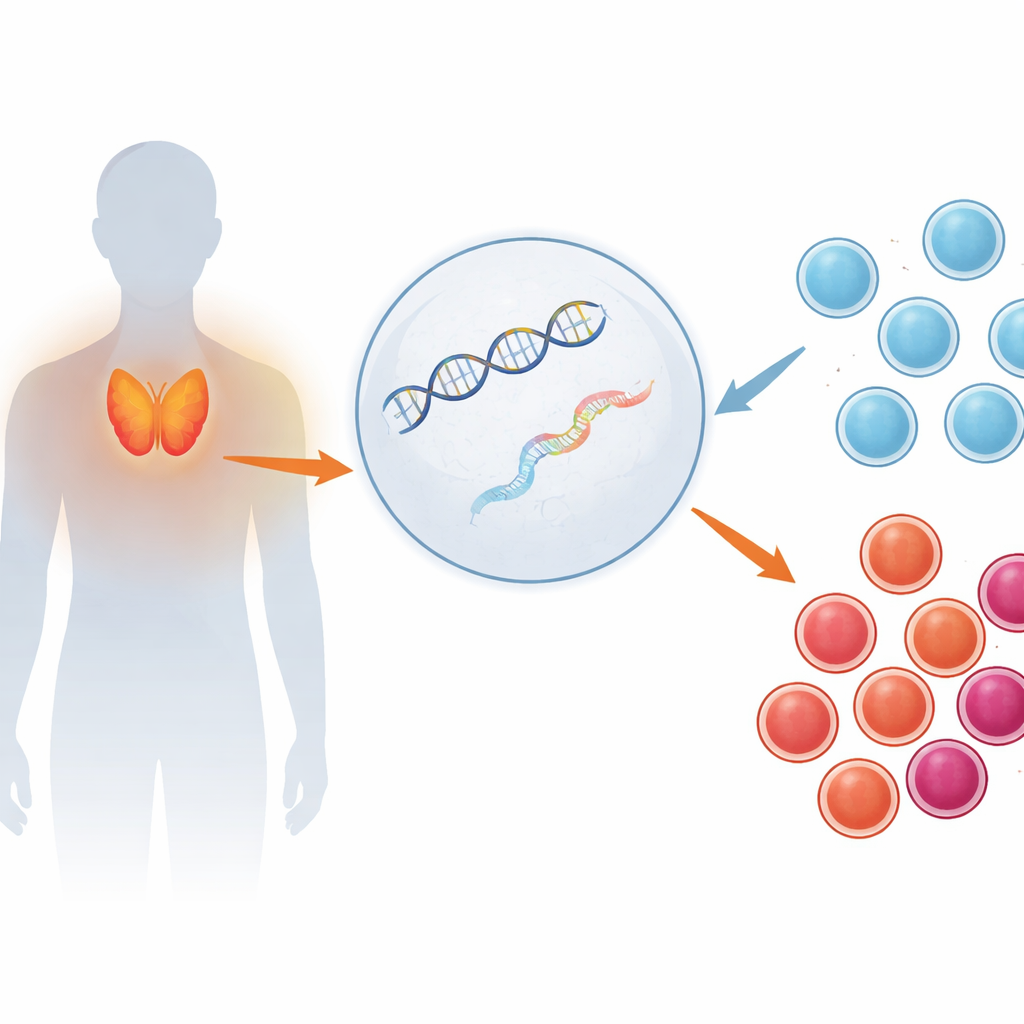
Our immune system relies on special “peacekeeping” cells called regulatory T cells, or Tregs, to prevent friendly fire against the body’s own tissues. In Graves’ disease, earlier research has shown that both the number and function of these Tregs are reduced. When that happens, immune cells are more likely to produce antibodies that overstimulate the thyroid. The authors of this paper focused on why Tregs are weakened in Graves’ disease, looking for molecular clues in blood samples from fifteen newly diagnosed patients and fifteen healthy people.
A Quiet RNA With a Big Job
Most people think of genes as recipes for proteins, but the human genome also produces many RNA molecules that never become proteins. These long noncoding RNAs can still act as powerful regulators. The team previously found that one such RNA, FOXP1-DT, was unusually low in people with Graves’ disease. In this study, they confirmed that FOXP1-DT levels are significantly reduced in immune cells from patients compared with healthy volunteers, and that lower FOXP1-DT is linked to higher levels of thyroid‑stimulating antibodies that drive the disease. Interestingly, this change did not appear in data from another thyroid condition, Hashimoto’s thyroiditis, hinting that FOXP1-DT may be especially relevant to Graves’ disease.
Connecting FOXP1-DT to Immune Peacekeepers
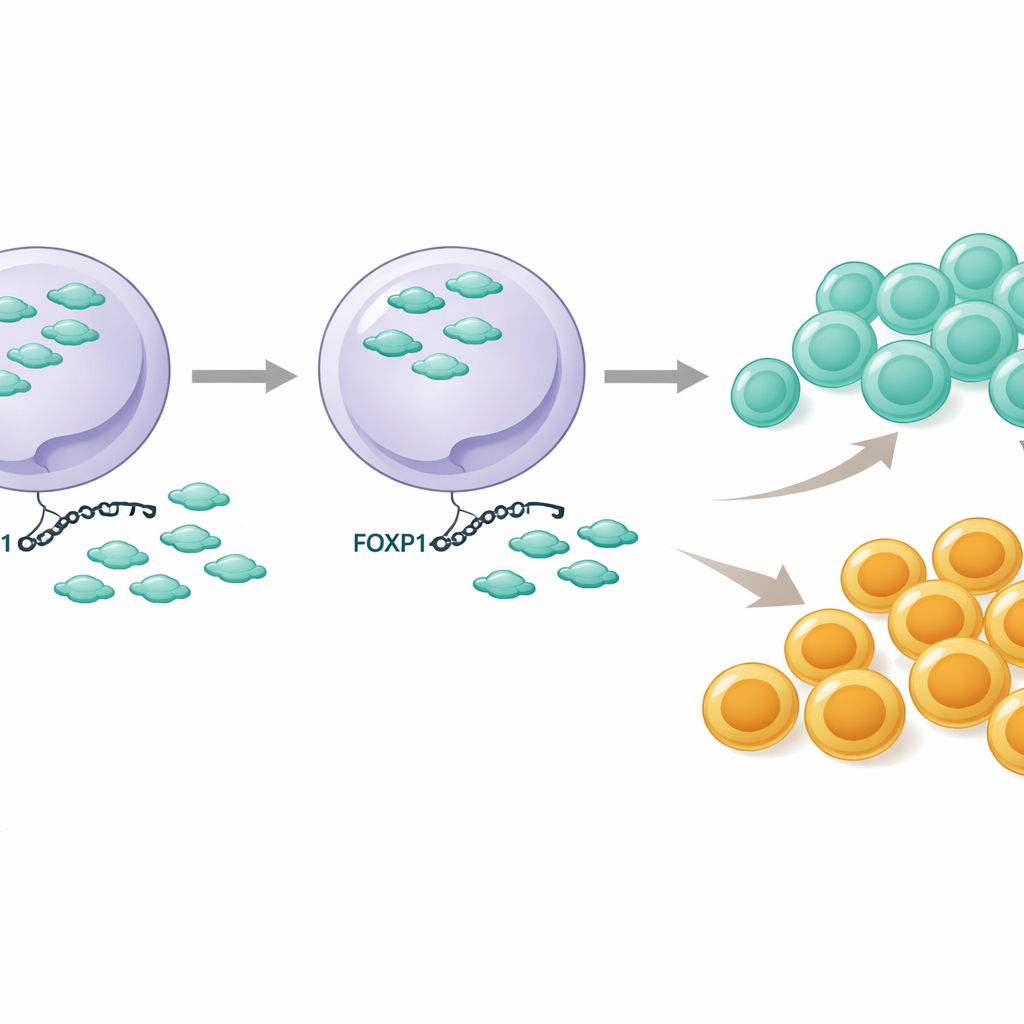
FOXP1-DT sits in the genome right next to a gene called FOXP1, which helps Treg cells develop and function properly. The researchers showed that FOXP1-DT is mainly found in the cell nucleus, where gene activity is controlled, and that FOXP1 itself is also reduced in patients with Graves’ disease. The two moved together: people with less FOXP1-DT tended to have less FOXP1, and they also showed a lower proportion of Treg cells in their blood. At the same time, another key Treg gene, FOXP3, was reduced in patients overall, but it did not track directly with FOXP1-DT levels, suggesting that FOXP1-DT is acting through a more focused route involving FOXP1.
Testing Cause and Effect in Immune Cells
To go beyond simple associations, the scientists manipulated FOXP1-DT levels in human T cells grown in the lab. When they deliberately reduced FOXP1-DT using small RNA tools, FOXP1 levels dropped as well, and the share of Treg cells among these T cells declined. In patients, higher FOXP1 levels also matched higher Treg numbers. Together, these experiments support a chain of events in which FOXP1-DT helps maintain FOXP1, which in turn helps keep enough Treg cells around to restrain harmful immune responses. When FOXP1-DT is scarce, this protective pathway weakens, giving autoimmune reactions more room to grow.
What This Could Mean for Care and Future Research
Because FOXP1-DT levels were consistently lower in Graves’ patients and could distinguish them from healthy people with good sensitivity and specificity, the authors suggest that this RNA might one day serve as a blood-based marker to aid diagnosis or monitoring. They also note that its link to disease‑driving antibodies hints that it may reflect how active the illness is. Although more work in larger groups and in purified cell types is needed, the study points to a new “FOXP1-DT/FOXP1 axis” as an important stabilizer of immune tolerance. In plain terms, a quiet RNA that does not code for any protein appears to help keep the immune system from attacking the thyroid—and when that safeguard falters, Graves’ disease may be more likely to develop or worsen.
Citation: Xu, Q., Lu, C., Xu, J. et al. Long noncoding RNA FOXP1-DT modulates regulatory T cells in Graves’ disease. Sci Rep 16, 13539 (2026). https://doi.org/10.1038/s41598-026-44419-2
Keywords: Graves’ disease, regulatory T cells, autoimmune thyroid, long noncoding RNA, FOXP1