Clear Sky Science · en
Performance of an alkasite restorative material under acidic conditions: surface roughness, gloss and hardness
Why Acidic Drinks Matter for Your Fillings
Many people enjoy soft drinks or live with conditions like acid reflux, but few realize that these acids can damage not only teeth but also modern tooth-colored fillings. This study looked at how different filling materials stand up when soaked in cola and simulated stomach acid, compared with a neutral saliva-like solution. The goal was to see which materials stay smooth, shiny, and hard—and which ones become rough, dull, and softer—because these surface changes can affect both appearance and long-term oral health.
What the Researchers Tested
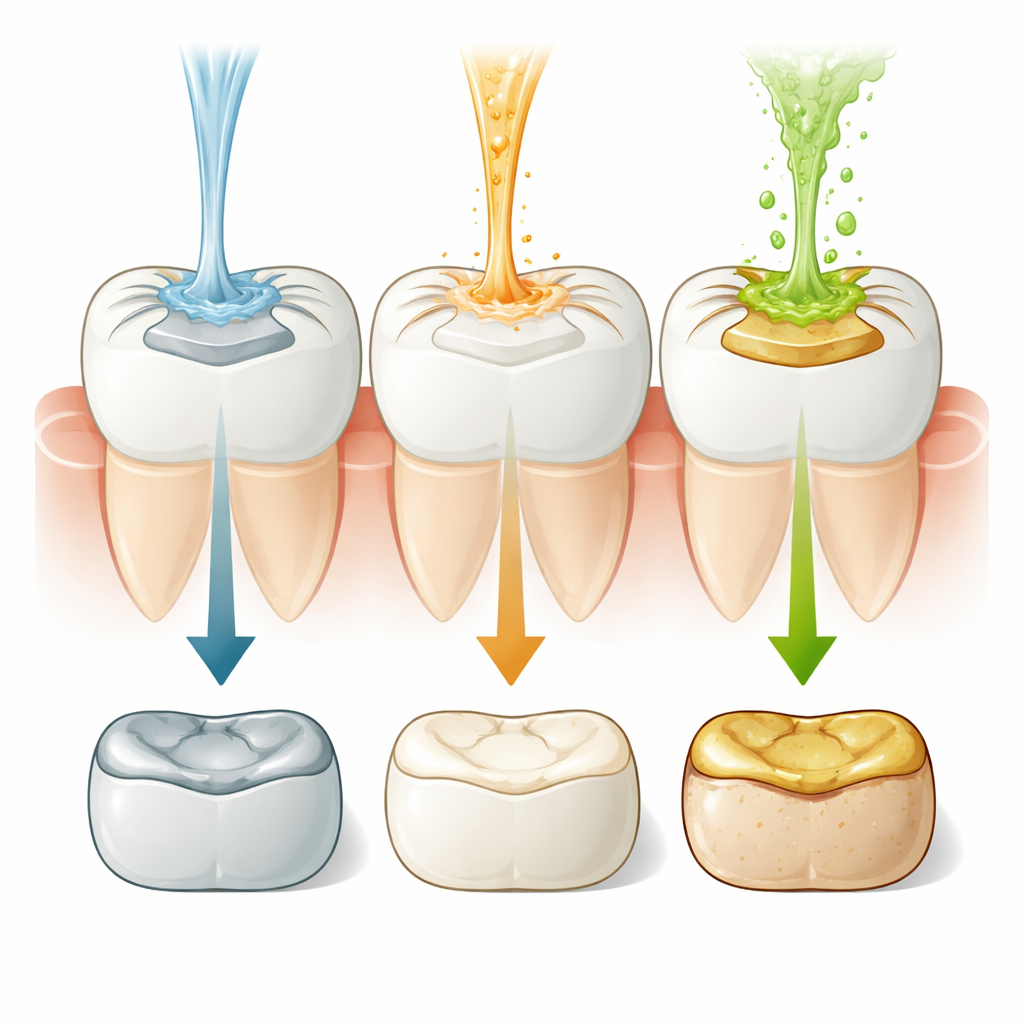
The study compared three common types of tooth-colored restorations: a new "alkasite" material designed to release helpful minerals (Cention Forte), a conventional high-strength white filling (a nanohybrid resin composite), and a resin-modified glass ionomer, a long-standing ion-releasing material. Disk-shaped samples of each were carefully made, polished to a smooth finish, and then soaked for four days at body temperature in one of three liquids: artificial saliva (representing a healthy mouth), Coca-Cola (everyday dietary acid), or a strong simulated gastric acid (representing reflux or frequent vomiting). After this immersion, the team measured how rough the surfaces became, how glossy they remained, and how hard they stayed, then examined them in detail with an electron microscope.
How the Surfaces Changed
Across all materials, acidic conditions took a toll. The simulated gastric acid caused the most damage, followed by cola, while artificial saliva was the gentlest. The alkasite material, despite its promise as a “smart” filling that can release fluoride and other ions, showed the greatest surface deterioration under acid. Its surface became noticeably rougher, its shine dropped, and it lost hardness, especially in the gastric acid solution. In contrast, the nanohybrid composite consistently remained the smoothest, glossiest, and hardest, even after acid exposure. The glass ionomer material showed a steady, more uniform wear pattern: its shine and hardness declined in acids, but its roughness changed less dramatically than the alkasite.
What the Microscope Revealed
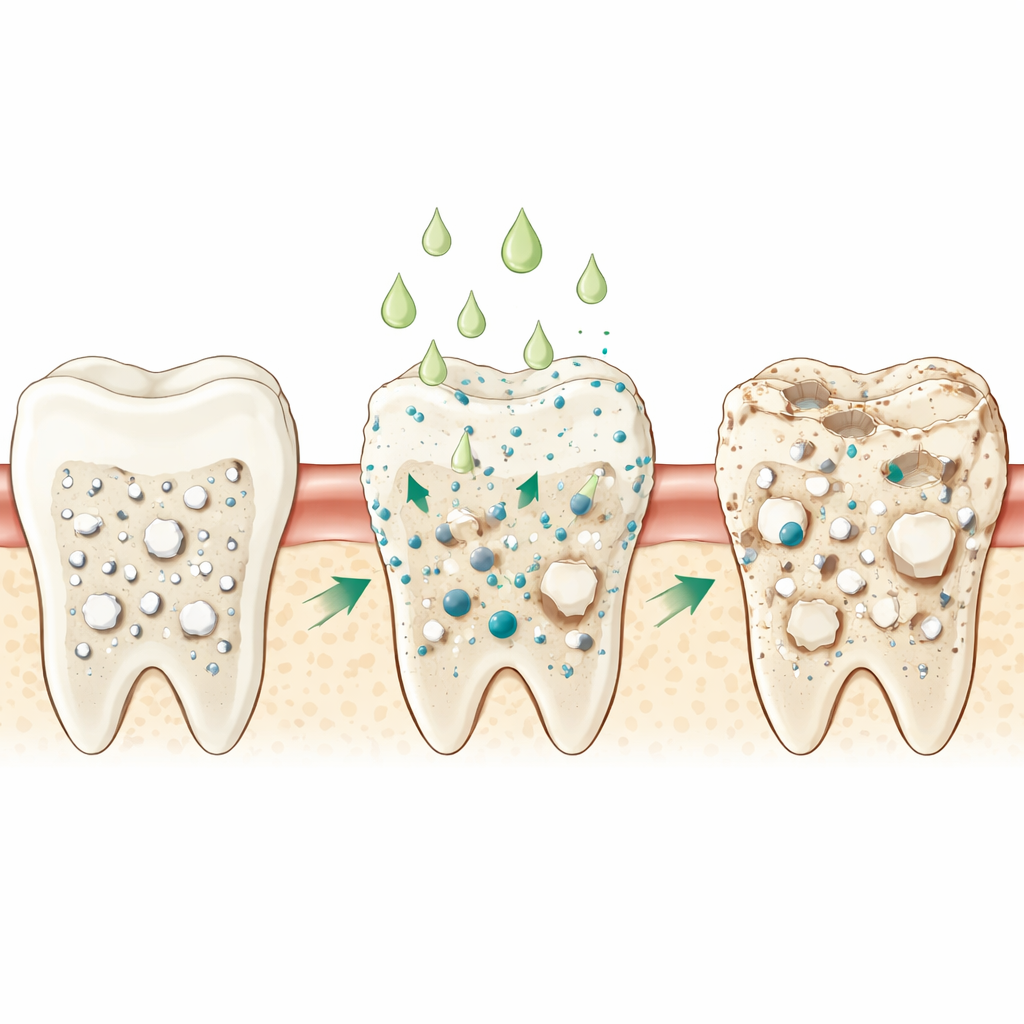
High-magnification images helped explain why these numbers changed. The nanohybrid composite kept a mostly smooth, uniform surface, with only fine scratches even after acid exposure, indicating a tightly bound structure that resists chemical attack. The glass ionomer showed gradual texture changes: small pits, exposed filler particles, and signs of its glassy components dissolving. The alkasite, however, developed obvious craters, voids, and areas where large filler particles stuck out or were lost altogether. Its special alkaline glass fillers, which are meant to release helpful ions in acid, also appeared to make the surface more vulnerable, breaking down and leaving defects behind.
What This Means for Everyday Mouths
Surface roughness, gloss, and hardness are not just technical details—they influence how fillings look, how long they last, and how easily plaque and stains build up. Rough surfaces above a certain threshold are more likely to harbor bacteria and discoloration, and softer materials may wear faster under chewing and toothbrushing. This study found that the new alkasite material can perform acceptably in neutral conditions but is less stable when exposed to strong or frequent acids, while the traditional nanohybrid composite remained the most resilient overall. For people who regularly drink acidic beverages or have gastric reflux, choosing a filling that resists acid damage could make a real difference in long-term dental health and appearance.
Take-Home Message for Patients
The research suggests that not all white fillings are equally suited for mouths that face frequent acid attacks. The alkasite material, although bioactive and potentially helpful at releasing protective ions, became rougher, duller, and softer when soaked in cola and strong acid, changes that may shorten its lifetime in high-risk patients. In contrast, conventional nanohybrid composite held up best, keeping smoother and harder surfaces under the same harsh conditions. For patients with low acid exposure, alkasite restorations may still be a reasonable choice, but for those who sip soft drinks often or live with chronic reflux, dentists may prefer more acid-resistant composites and will stress the importance of managing dietary and medical factors that drive erosion.
Citation: Turkistani, A.A. Performance of an alkasite restorative material under acidic conditions: surface roughness, gloss and hardness. Sci Rep 16, 10680 (2026). https://doi.org/10.1038/s41598-026-44405-8
Keywords: dental erosion, tooth-colored fillings, acidic drinks, alkasite restorations, surface wear