Clear Sky Science · en
Association between B and T lymphocyte attenuator/herpes virus entry mediator immunoregulatory axis and outcome prediction in a mixed critically ill population
Why tiny blood signals matter in the ICU
When someone is critically ill and ends up in an intensive care unit (ICU), doctors must constantly guess who is likely to recover and who may be at risk of dying. This study looks at a subtle signal in the blood, a molecule called soluble BTLA (sBTLA), that reflects how the immune system is behaving under extreme stress. By tracking this signal over time, the researchers explored whether it can help forecast outcomes and reveal when the immune system is slipping into a dangerous form of shutdown.
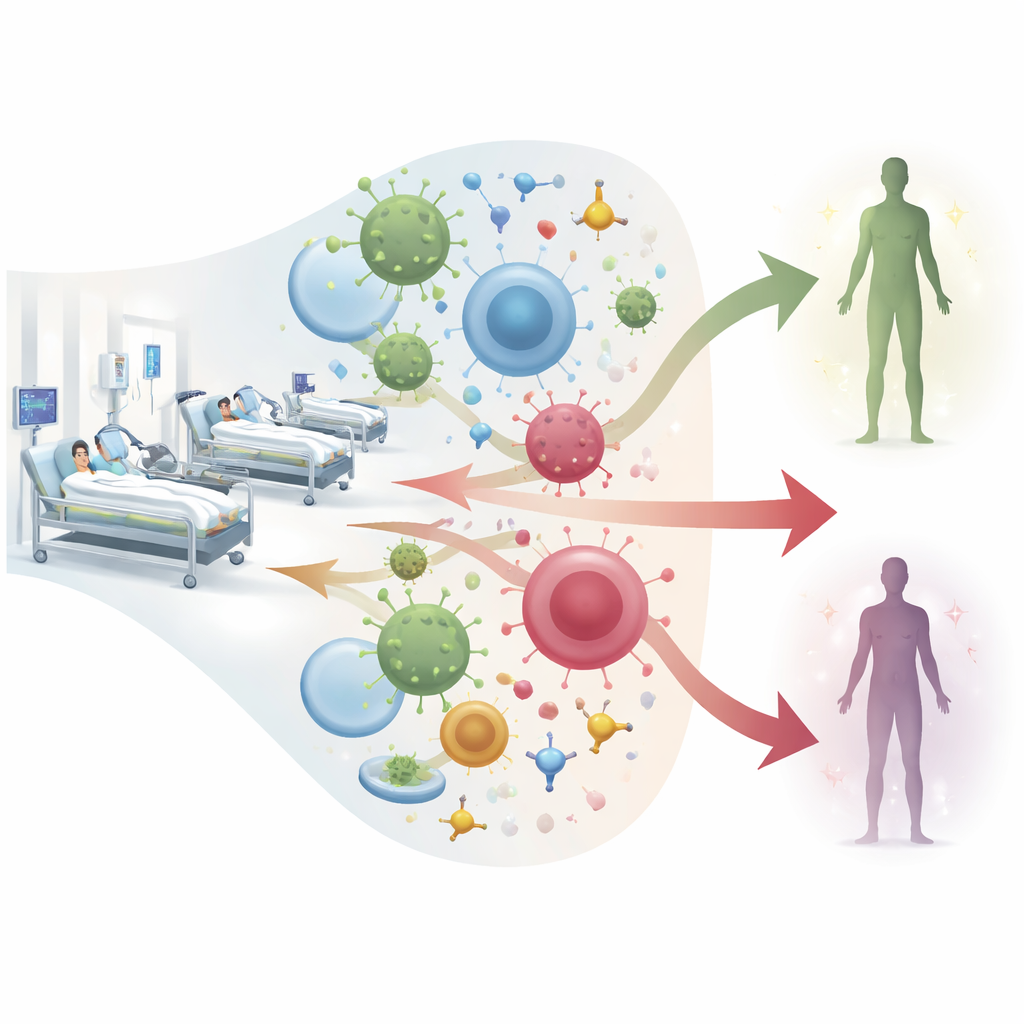
The balancing act of the immune system in crisis
In critical illness, the immune system can behave like a car that slams on the gas and the brakes at the same time. Patients may experience both fierce inflammation and a quieter, less obvious immune paralysis that leaves them vulnerable to infections. BTLA and its partner HVEM are part of a family of molecular “brakes” on immune cells. When BTLA is activated, it tells immune cells to calm down. A soluble form of BTLA circulates in the blood, and earlier work suggested it rises in sepsis and may be linked to poor outcomes. However, its role in a broad, mixed ICU population—not just in sepsis—was largely unknown.
Who was studied and what was measured
The investigators followed 85 mechanically ventilated adults admitted to a general ICU in Athens, Greece, along with 25 healthy volunteers as a comparison group. They drew blood within the first two days in the ICU and again on days 4, 8, and 13, as long as patients remained alive and in the unit. At each time point, they measured levels of sBTLA and several inflammatory messengers, and assessed organ failure using standard scoring systems. They also examined how much HVEM-related genetic material was present in neutrophils, a type of white blood cell, to see whether this partner molecule carried similar prognostic value.
What the blood marker revealed about risk
From the first measurement, ICU patients had higher sBTLA levels than healthy people, and those who ultimately died had the highest levels of all. sBTLA tracked closely with markers of inflammation, markers of damped-down immunity, and with overall illness severity. When the researchers grouped all of these factors into broader patterns, sBTLA emerged as the single strongest contributor to a main “severity axis.” It moderately distinguished survivors from non-survivors and, importantly, patients with higher starting sBTLA levels had greater ICU mortality. Over time, sBTLA tended to stay higher and rise more steeply in patients who did not survive, forming a distinct trajectory that was strongly linked to death, particularly in younger trauma patients.
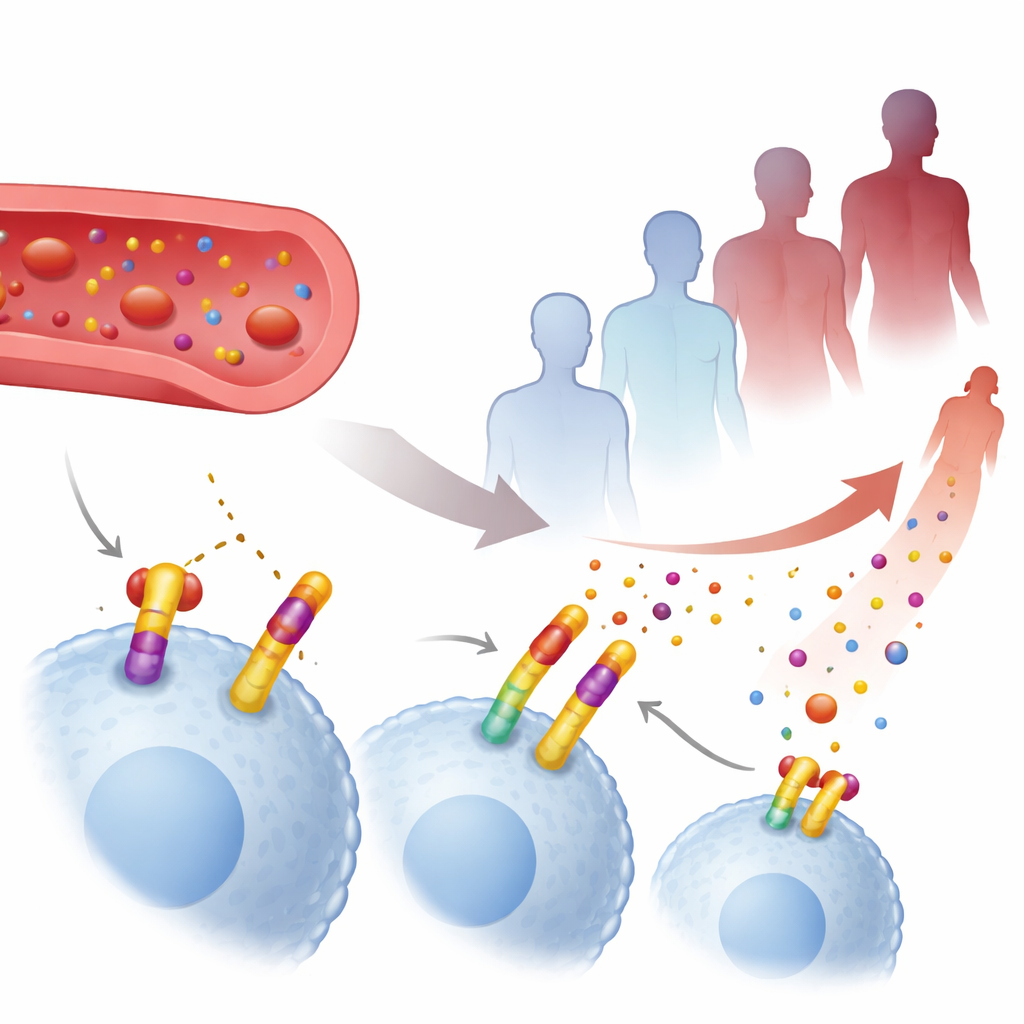
A partner molecule that did not predict outcome
The picture was different for HVEM measured in neutrophils. Its genetic signal was lower in ICU patients than in healthy volunteers, suggesting that critical illness does alter this pathway. However, HVEM levels were similar in survivors and non-survivors and did not correlate with illness severity or other measured factors. In other words, while sBTLA seemed to mirror the evolving state of the immune system and overall risk, neutrophil HVEM did not provide useful prognostic information in this setting.
What this could mean for future ICU care
Taken together, the findings suggest that sBTLA acts as a dynamic window into immune disruption during critical illness: high and rising levels mark patients whose immune systems appear locked in a harmful mixed state of ongoing inflammation and suppression, and who face a higher chance of dying in the ICU. Although the study is relatively small and cannot prove cause and effect, it points to sBTLA as a promising blood test for monitoring risk and possibly guiding personalized treatments aimed at restoring a healthier immune balance.
Citation: Kokkoris, S., Theodorou, E., Lotsios, N.S. et al. Association between B and T lymphocyte attenuator/herpes virus entry mediator immunoregulatory axis and outcome prediction in a mixed critically ill population. Sci Rep 16, 13448 (2026). https://doi.org/10.1038/s41598-026-44389-5
Keywords: critical illness, immune checkpoint, biomarkers, sepsis, intensive care