Clear Sky Science · en
Co-incorporation of Phosphorus and zinc into wollastonite ceramic granules synergically facilitating thin-walled structures regeneration
Fixing Fragile Bones in the Face
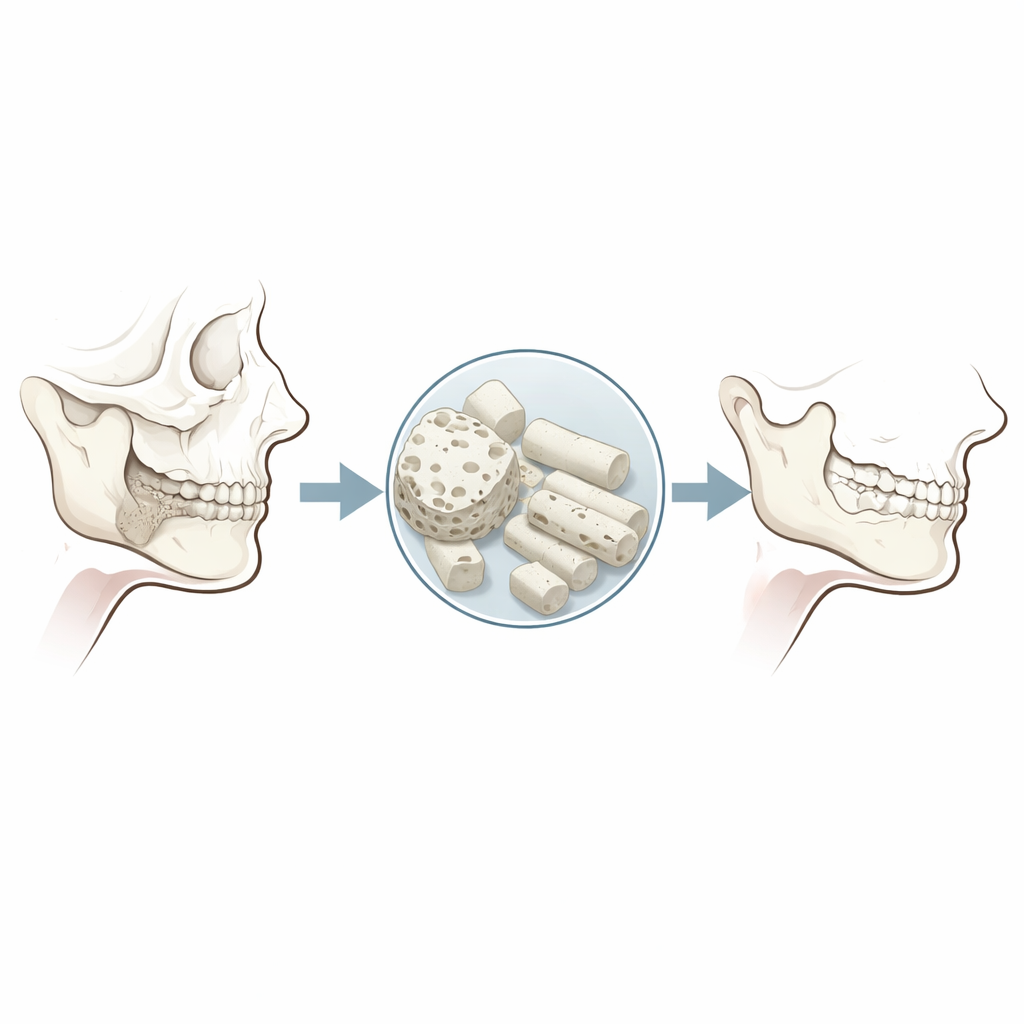
When people lose bone in the jaw or face after injury, infection, or gum disease, rebuilding that delicate structure is difficult. Surgeons need materials that not only fill the gap and support dental implants, but also encourage the body to grow strong new bone while keeping infection at bay. This study explores a new type of tiny ceramic granule that slowly dissolves and releases helpful ingredients to both speed bone repair and fight harmful bacteria in the mouth.
A New Kind of Smart Bone Filler
The researchers focused on a ceramic called wollastonite, already known to work well with bone. They modified it by adding two elements that are naturally found in our skeletons: phosphorus and zinc. Phosphorus is a core building block of bone mineral, while zinc can help cells grow and has known antibacterial effects. By carefully adjusting how much of each element was mixed into the ceramic, the team created four versions of tiny cylindrical granules and asked a simple question: which recipe best balances strength, controlled breakdown, bone growth, and protection against germs?
How the Granules Behave Inside the Body
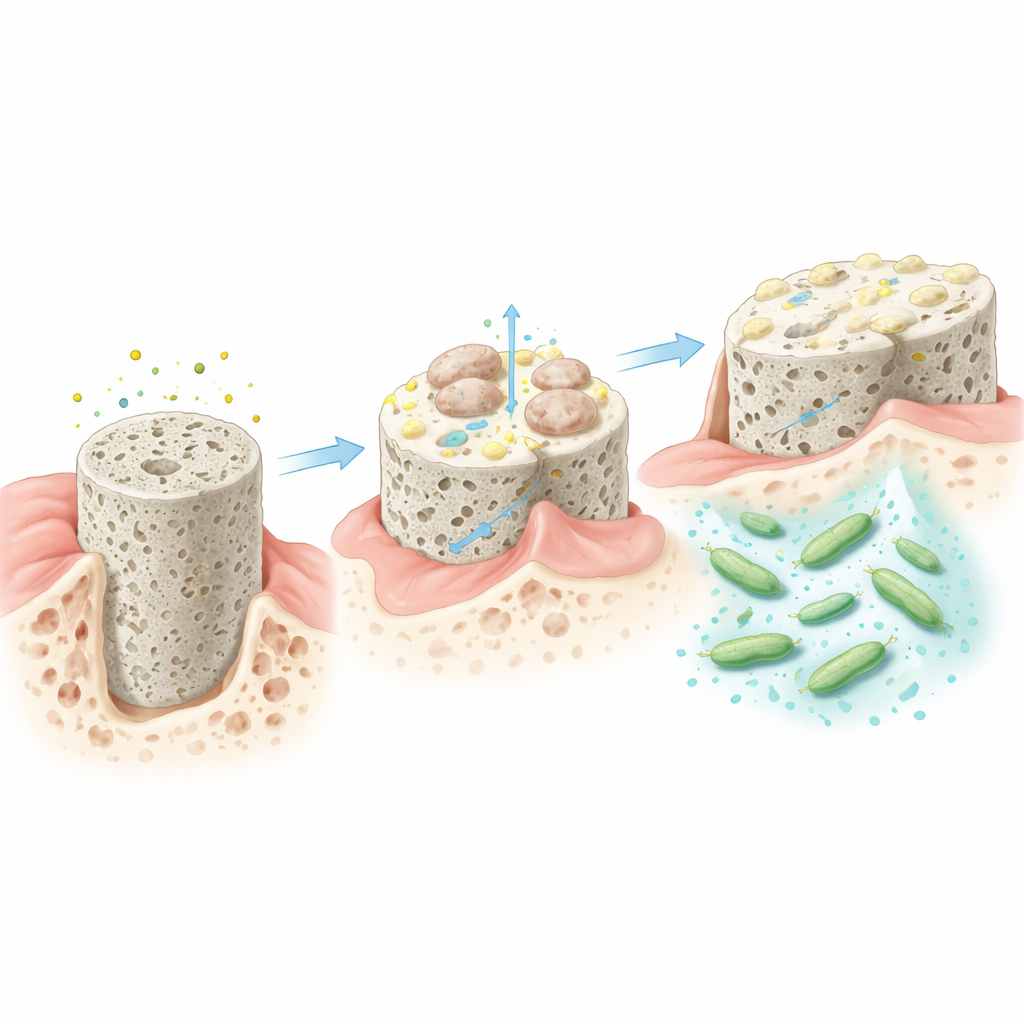
First, the team tested how the granules broke down and what they released in laboratory fluids designed to mimic the body. As the granules dissolved, they let out calcium, silicon, phosphorus, and zinc ions. These ions are known to signal bone-forming cells to get to work. Granules that combined both phosphorus and zinc released these ions in a sustained, balanced way, while those with only one dopant either broke down too fast or released too little. At the same time, the zinc-containing versions were mechanically stronger and degraded more slowly, helping the granules hold their shape while new bone formed around them.
Encouraging Cells While Holding Off Bacteria
The next step was to see how living cells responded. The researchers exposed bone marrow stem cells from rats to liquid that had been in contact with the different granules. Under the microscope and using molecular tests, they found that cells treated with co-doped granules—especially the one with a phosphorus to zinc ratio of 2:1—divided more, produced more bone-related proteins, and formed more mineral nodules. In simple terms, this recipe gave the strongest “grow bone here” signal. When the same materials were tested against Staphylococcus aureus, a common cause of oral and implant infections, the zinc-rich granules sharply reduced bacterial growth, with higher zinc levels giving stronger antibacterial effects.
Healing Real Bone Defects in Animals
To find out if these benefits held up in living tissue, the team created small round defects in the skull bones of rabbits and filled them with the different granules. Over 8 and 16 weeks, X-ray, micro-CT scans, and tissue slices showed how new bone filled in the gaps. Granules that contained both phosphorus and zinc, and particularly the 2:1 mixture, supported the growth of thick, interconnected bone strands that bridged between the particles. The defects in this group nearly disappeared, and the remaining granules were closely locked into the new bone. In contrast, granules with only phosphorus tended to break down too quickly, while those with only zinc supported less new bone and more fibrous scar-like tissue.
What This Could Mean for Future Dental Care
Overall, the study shows that tuning the mix of phosphorus and zinc in wollastonite ceramics can turn simple granules into “dual function” implants that both guide bone regeneration and discourage infection. For patients needing reconstruction of thin, complex areas of the jaw or face—where space is tight and bacteria are abundant—such smart fillers could offer a more reliable alternative to borrowed bone or inert metal hardware. The most promising formula, with more phosphorus than zinc, appears to strike the right balance: it nudges stem cells to build new bone quickly, lays down bone-like mineral on its surface, and still carries enough zinc to suppress dangerous microbes in the healing zone.
Citation: Dong, L., Li, Y., Feng, Y. et al. Co-incorporation of Phosphorus and zinc into wollastonite ceramic granules synergically facilitating thin-walled structures regeneration. Sci Rep 16, 13668 (2026). https://doi.org/10.1038/s41598-026-44387-7
Keywords: bone regeneration, oral surgery, bioceramic implants, antibacterial materials, wollastonite