Clear Sky Science · en
Predicting wear behavior of AZ31/TiC composites produced via ultrasonic vibration assisted friction stir processing using machine learning models
Why tougher light metals matter
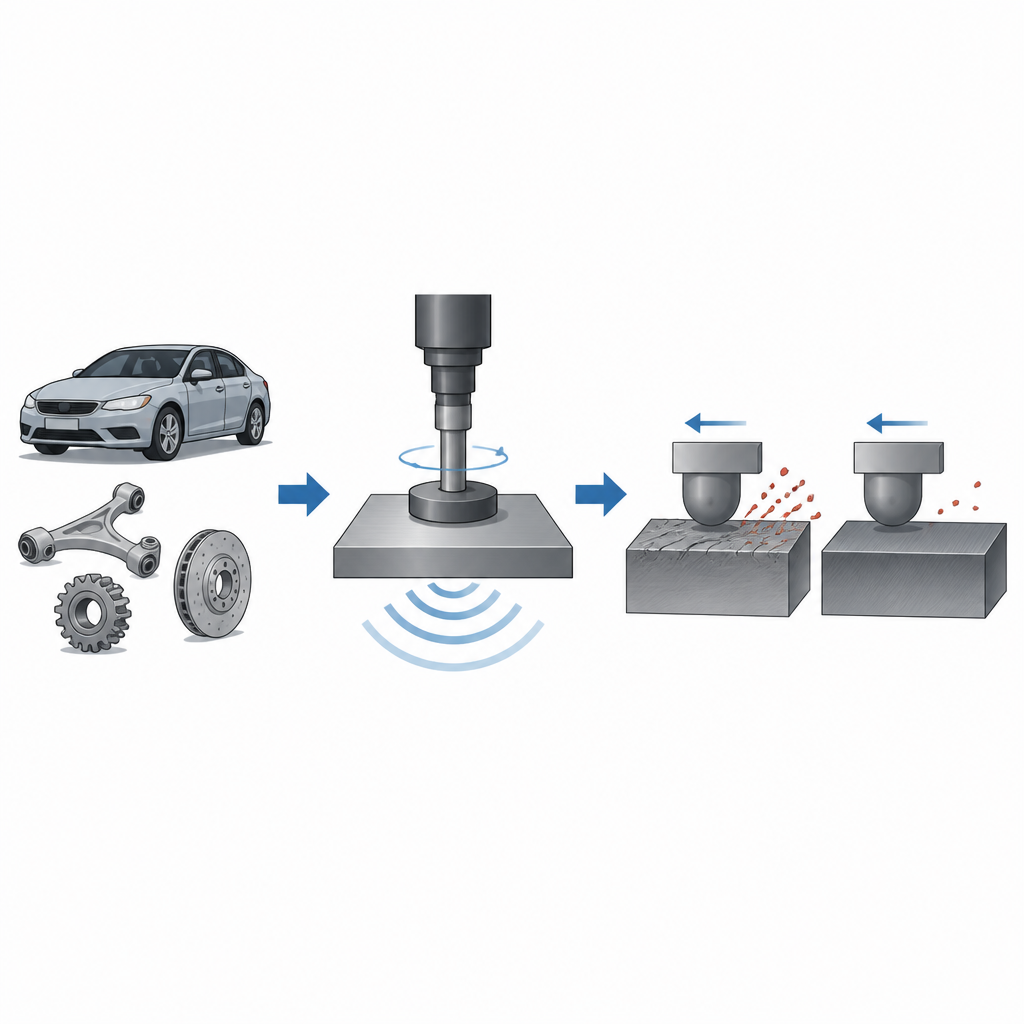
From cars to laptops, manufacturers are eager to swap heavy steel parts for lighter metals that save fuel and energy. Magnesium is one of the lightest structural metals in use today, but it can wear away too quickly when parts slide against each other. This study explores a new way to toughen a common magnesium alloy and uses modern data tools to predict how long it will last, offering insight that could help designers build lighter machines without sacrificing reliability.
Building a stronger metal recipe
The researchers focused on an alloy called AZ31, a workhorse magnesium material, and mixed it with very hard ceramic particles made of titanium carbide. These tiny particles act like pebbles in concrete, helping the soft metal carry more load without being torn apart. The team added a relatively high amount, 15 percent by volume, and then compared two ways of stirring these particles into the surface of the alloy using a rotating tool: a standard method and a version that adds high frequency vibration during processing.
Shaping the metal with sound
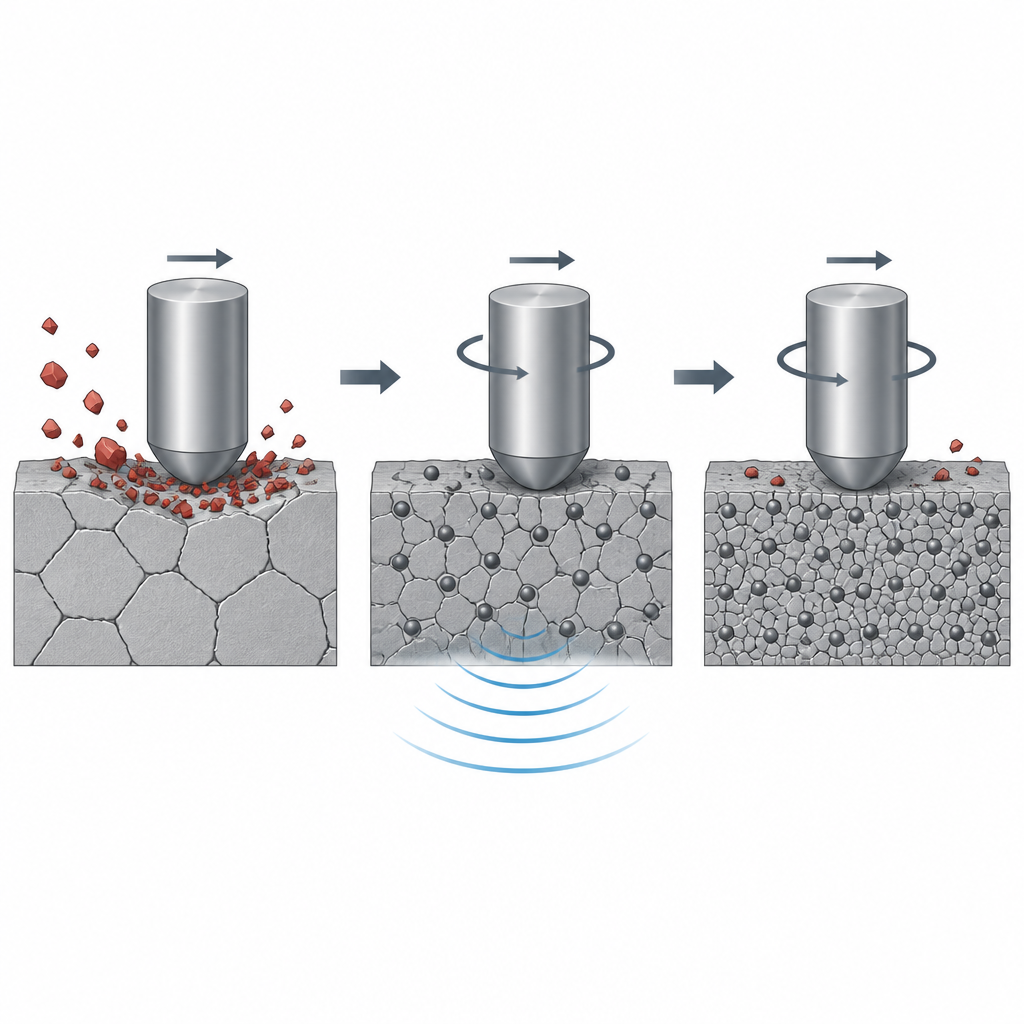
In the vibration assisted method, ultrasonic waves travel into the metal while the rotating tool stirs. This extra shaking helps the moltenlike zone flow more evenly, breaking up clumps and closing gaps. Microscopy images showed that with vibration, the titanium carbide particles were spread much more uniformly and pores were greatly reduced. The metal grains themselves became much finer, like turning coarse sugar into powdered sugar. This refined and more even structure is key to making the surface harder and more resistant to damage.
Putting the new surface to the test
To see how these treated surfaces would stand up in real service, the team ran dry sliding wear tests, pressing pins of the alloy or composite against a rotating steel disc at different loads and speeds. They watched how the friction force changed and weighed the samples before and after to measure how much material was lost. The plain magnesium alloy had the highest friction and wore away the fastest, especially at high loads. Adding titanium carbide particles improved performance, but the vibration treated samples did best, cutting wear by about a quarter at moderate loads and by as much as half under the most severe conditions.
Seeing how the surface fails
Microscope views of the worn tracks revealed how the damage evolved. At low loads, the base alloy showed grooves and oxidized debris, a mix of mild scratching and surface rust. As the load increased, the surface began to tear and deform heavily. In the composites, especially those made with vibration, the grooves were shallower and more uniform. The hard particles stayed anchored in the metal, helping to carry the load and act like microscopic rollers that reduced direct metal to metal contact. This combination of higher hardness, fine grains and stable particles shifted the wear toward gentler abrasion rather than severe tearing.
Letting machines learn from data
Beyond the lab tests, the authors trained several machine learning models to predict the specific wear rate from simple inputs: which material was used, how hard it was pressed and how fast it slid. Among standard methods tested, a Gradient Boosting model matched the measured results with very high accuracy, while simpler linear models lagged behind. The analysis also showed that the choice of material had by far the largest impact on wear, followed by load, with sliding speed playing a smaller role within the tested range.
What this means for real world parts
In plain terms, the study shows that carefully mixing hard particles into a light metal and using sound assisted stirring can make its surface much tougher against sliding wear. Components treated in this way can run under higher loads with less friction and slower loss of material, which is valuable for automotive and other weight sensitive applications. At the same time, data driven models can reliably forecast wear behavior without repeating every experiment, giving engineers a practical tool to explore designs on the computer before cutting any metal.
Citation: Kumar, T.S., Shalini, S., Petrů, J. et al. Predicting wear behavior of AZ31/TiC composites produced via ultrasonic vibration assisted friction stir processing using machine learning models. Sci Rep 16, 14858 (2026). https://doi.org/10.1038/s41598-026-44372-0
Keywords: magnesium alloy wear, titanium carbide composite, ultrasonic friction stir processing, machine learning wear prediction, tribology