Clear Sky Science · en
Gene expression links consistent immune and inflammatory pathways to bovine respiratory disease in high-risk stocker cattle
Why this cattle illness matters
Bovine respiratory disease (BRD) is the cattle industry’s version of the seasonal flu mixed with pneumonia—a common, costly illness that quietly drains money from ranchers and feedlots every year. To keep it in check, many operations routinely give arriving animals powerful antibiotics, even before they look sick. As public concern about antibiotic overuse grows, producers and scientists are searching for ways to spot which animals truly need treatment. This study used modern gene-reading tools on cattle blood to ask a simple question: can we see BRD coming by looking at the animal’s own immune signals, and what actually happens in the body when this disease takes hold?
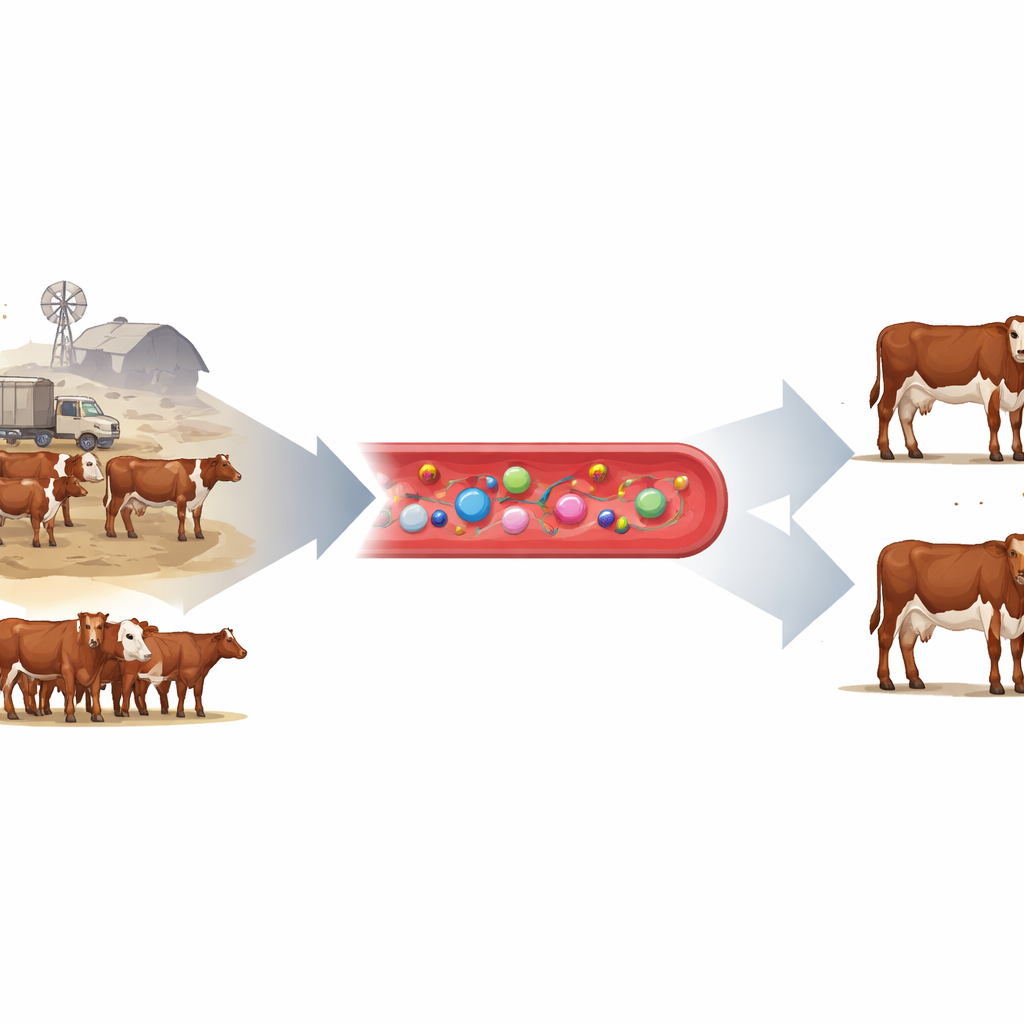
How the study followed young cattle
Researchers worked with 84 high‑risk young heifers that had been through auction markets and transport—conditions known to raise BRD risk. When the animals arrived at a research facility, half were randomly given a long‑acting antibiotic as a preventive measure, while the other half received no such drug. Over a 70‑day period, trained staff checked animals daily and treated those that developed clear signs of respiratory illness. For a subset of 60 heifers, the team drew blood at several time points, including at arrival and whenever BRD was first diagnosed. From these samples, they extracted RNA—the “working copies” of genes—to see which genes were turned on or off in each situation.
Reading immune activity through blood genes
The scientists used RNA sequencing, a technique that counts thousands of gene messages at once, to create a snapshot of each animal’s immune activity. Sophisticated statistical tools then compared gene patterns between healthy cattle and those with BRD, between cattle that had or had not received preventive antibiotics, and between animals that needed only one treatment versus those needing repeated care. They also examined whether the blood gene patterns at arrival could forecast which cattle would later fall ill or have more severe disease.
What changed when cattle actually got sick
The most striking differences appeared at the moment animals showed clinical BRD. More than 2,000 genes were expressed differently between sick and healthy cattle, and these changes consistently pointed to strong activation of immune and inflammatory pathways. Signals linked to immune cell activation, inflammatory messengers, responses to bacteria, and cell stress were all heightened in sick animals. Across multiple comparisons, five genes stood out—IL1R2, HP, S100A9, TLR4, and ALOX15—showing consistent shifts whenever BRD was present. Several of these are tied to sensing bacterial toxins, controlling inflammation, or resolving it once the threat has passed, making them promising candidates as blood‑based markers of lung disease.
What did not change—and why that matters
Despite these strong signatures during illness, the team found almost no meaningful gene‑expression differences at arrival between cattle that remained healthy and those that later developed BRD, even among those needing multiple treatments. Likewise, they saw very few differences in blood genes between sick animals that had previously received preventive antibiotics and those that had not. The limited number of animals that became sick after metaphylaxis likely reduced the power to detect subtle effects, and the relatively low overall disease rate in this group may have made early prediction especially challenging.
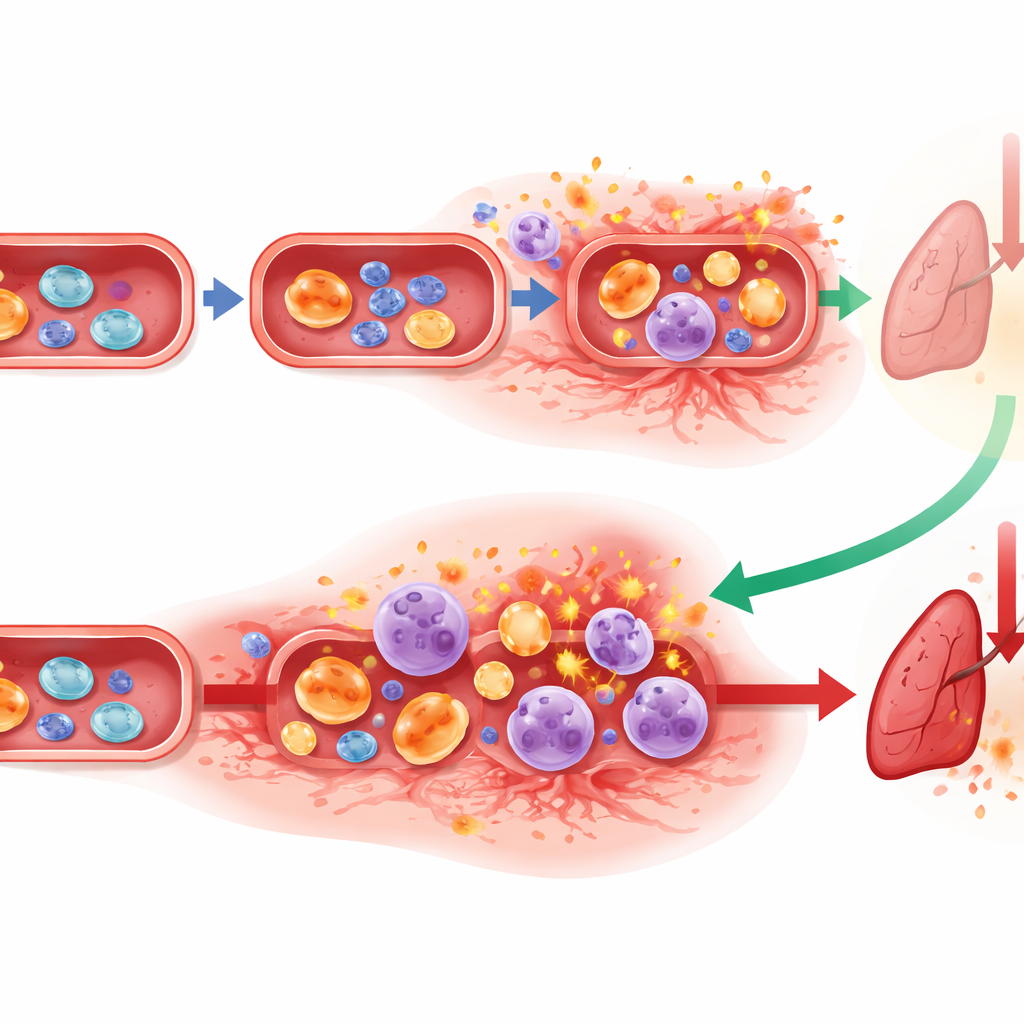
Clues to disease persistence and severity
When the researchers compared first treatments to later retreatments in the same animals, they found changes in genes related to heat shock proteins—cellular “chaperones” that help other proteins fold correctly under stress. These genes tended to be more active in cattle requiring additional treatments, hinting that prolonged or more severe disease may be linked to ongoing cellular stress and possibly to stubborn viral or bacterial presence. However, gene patterns at the time of first treatment did not clearly predict which animals would bounce back quickly and which would need more care.
What this means for cattle health and antibiotic use
Overall, the study confirms that preventive antibiotics can reduce how often BRD appears, but it also shows that the clearest biological signals of the disease emerge only once cattle are already clinically ill. Certain immune and inflammation‑related genes repeatedly distinguished sick from healthy animals and could serve as building blocks for future blood tests that detect BRD more objectively. If such biomarkers can be validated and adapted for practical use, they might one day allow veterinarians and producers to target antibiotic treatments to animals that truly need them—protecting both cattle health and the long‑term effectiveness of antimicrobial drugs.
Citation: Prosser, H.M., Ramirez, B.I., Valeris-Chacin, R.J. et al. Gene expression links consistent immune and inflammatory pathways to bovine respiratory disease in high-risk stocker cattle. Sci Rep 16, 13958 (2026). https://doi.org/10.1038/s41598-026-44370-2
Keywords: bovine respiratory disease, cattle health, immune response, gene expression, antibiotic metaphylaxis