Clear Sky Science · en
Ecofriendly synthesis and characterization of copper chitosan nanoparticles (CuChNPs) and assessing combined effect of nanoparticles and bismerthiozol against bacterial leaf blight of rice
Why rice growers should care
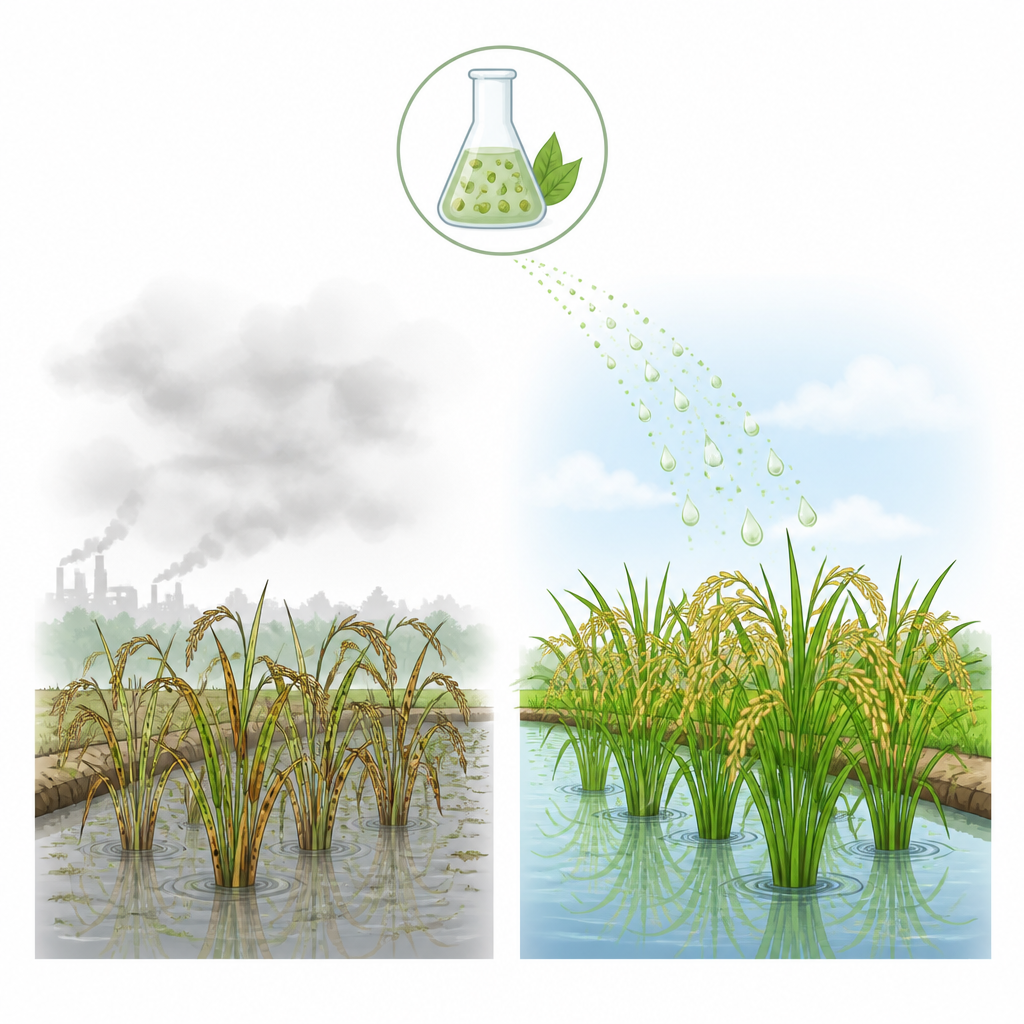
Bacterial leaf blight is a devastating rice disease that can wipe out up to half of a harvest, threatening both farmer livelihoods and food supplies. At the same time, many chemical pesticides used to control it can harm ecosystems and lose effectiveness as bacteria evolve resistance. This study explores a gentler approach: tiny copper particles wrapped in a natural biopolymer, paired with a lower dose of an existing rice bactericide, to protect rice while cutting chemical load.
Tiny helpers built from natural materials
The researchers created copper chitosan nanoparticles using a "green" recipe. Chitosan is a biodegradable material derived from shells of shrimp and other marine animals, while the team used neem leaves, a tree long valued in traditional medicine, to help drive and stabilize the reaction. Copper salts supplied the metal core. When mixed under controlled heat and acidity with chitosan, vitamin C, and neem extract, the solution changed from pale blue to brick brown, a visual sign that nanosized copper particles had formed and were evenly suspended in water.
Testing the shape, size, and stability
To confirm what they had made, the team used a suite of physical tests. Light absorption measurements revealed a signature peak typical of copper particles, while X ray diffraction showed that the copper cores were crystalline and firmly embedded in the chitosan matrix. Imaging with electron microscopes revealed mostly spherical particles around one tenth of a micrometer across, and surface charge measurements indicated that the particles were stable in liquid rather than clumping together. Chemical fingerprinting confirmed that copper, chitosan, and plant compounds from neem all contributed to the final structure, which helps control how the particles release copper and stick to biological surfaces.
From lab plates to potted plants and fields
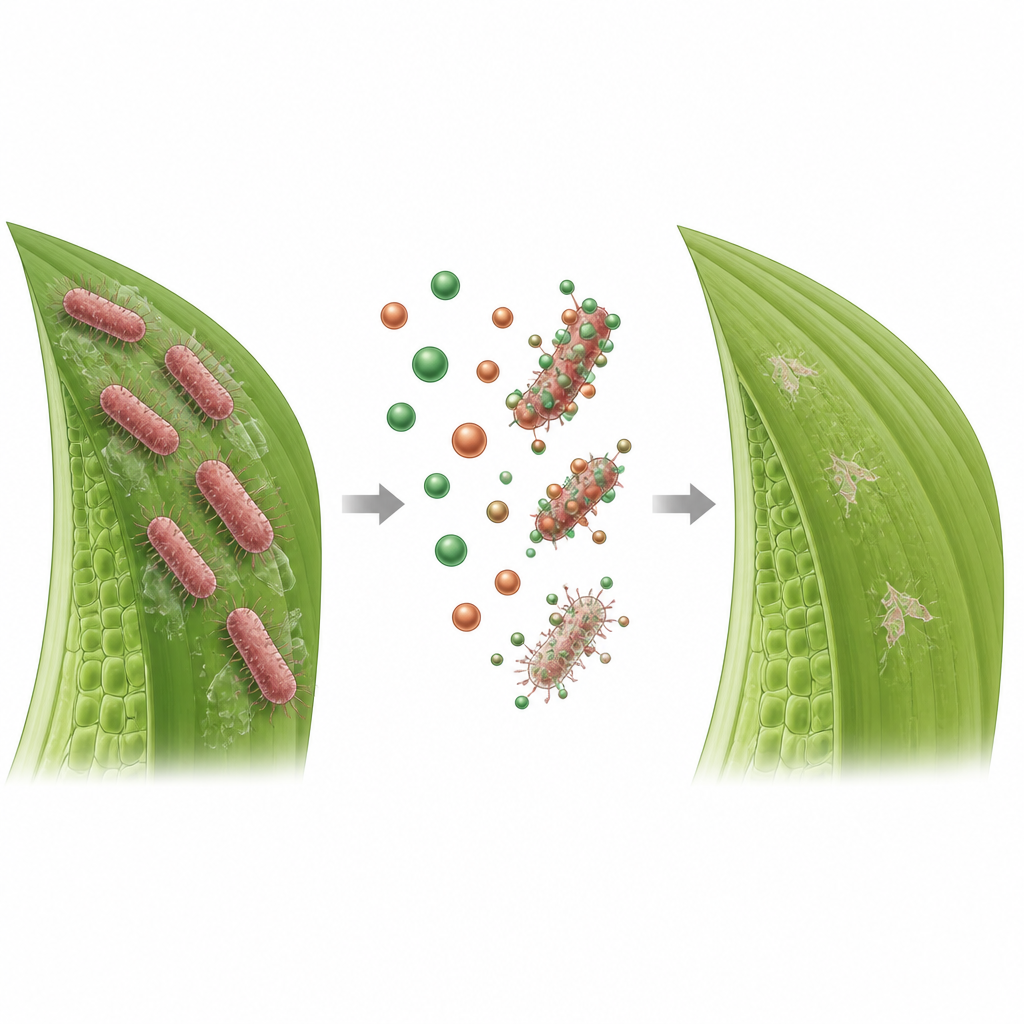
The next step was to see whether these nanoparticles could actually slow down the rice blight bacterium, Xanthomonas oryzae pv. oryzae. In petri dish tests, copper chitosan particles strongly inhibited bacterial growth and kept working for nearly a month, performing better than copper salt, chitosan, or neem extract alone. The researchers then moved to pot trials in a net house, spraying rice plants with either the nanoparticles by themselves or mixtures that combined them with reduced doses of the bactericide bismerthiazol at several strength ratios. All treated plants developed shorter leaf lesions than untreated, infected controls. The standout mixture, using a moderate bismerthiazol dose plus nanoparticles at a 6:4 ratio to water, cut disease severity by roughly half or more over three weeks.
Field performance and promise for farmers
Crucially, the same combinations were tested under real field conditions using a susceptible rice variety. Again, the nanoparticle plus bismerthiazol sprays outperformed standard treatments and untreated plots. The best-performing blend reduced disease by about 55 to 60 percent compared with infected controls, while nanoparticle spray alone also gave meaningful protection. Because the new mixtures used lower chemical doses yet achieved strong control, they could help farmers maintain yields while applying less active ingredient overall. That in turn may slow resistance development in bacteria and lessen harm to non‑target organisms and soils.
What this means for safer rice protection
For non‑specialists, the main message is that it is possible to harness nanotechnology in a way that works with natural materials rather than against the environment. By packaging copper inside a biodegradable shell and pairing it with a reduced dose of an existing product, this study shows a path toward rice disease control that is both effective and potentially less hazardous. Before such sprays can be widely adopted, scientists still need to test long‑term safety, storage stability, and performance across many regions and seasons. But the results suggest that carefully designed nano‑based treatments could help farmers protect rice from bacterial blight while relying less on heavy, repeated chemical applications.
Citation: Akter, R., Rahman, L., Kayess, O. et al. Ecofriendly synthesis and characterization of copper chitosan nanoparticles (CuChNPs) and assessing combined effect of nanoparticles and bismerthiozol against bacterial leaf blight of rice. Sci Rep 16, 15537 (2026). https://doi.org/10.1038/s41598-026-44356-0
Keywords: rice bacterial blight, copper chitosan nanoparticles, nanotechnology in agriculture, eco friendly pesticides, bismerthiazol synergy