Clear Sky Science · en
Impact of artificial intelligence-driven digital twins and lean six sigma-assisted power system asset management on long-term investment planning
Why keeping the lights on is getting harder
Our everyday dependence on electricity hides a fragile reality: modern power grids are under growing strain from extreme weather, cyberattacks, aging equipment, and the rapid rise of wind and solar power. Recent large blackouts across Europe and South Asia show how easily failures can ripple through interconnected networks. This paper explores how a blend of virtual replicas of the grid, advanced artificial intelligence, and a disciplined improvement method from manufacturing can make future power systems cleaner, more reliable, and more attractive to long‑term investors.
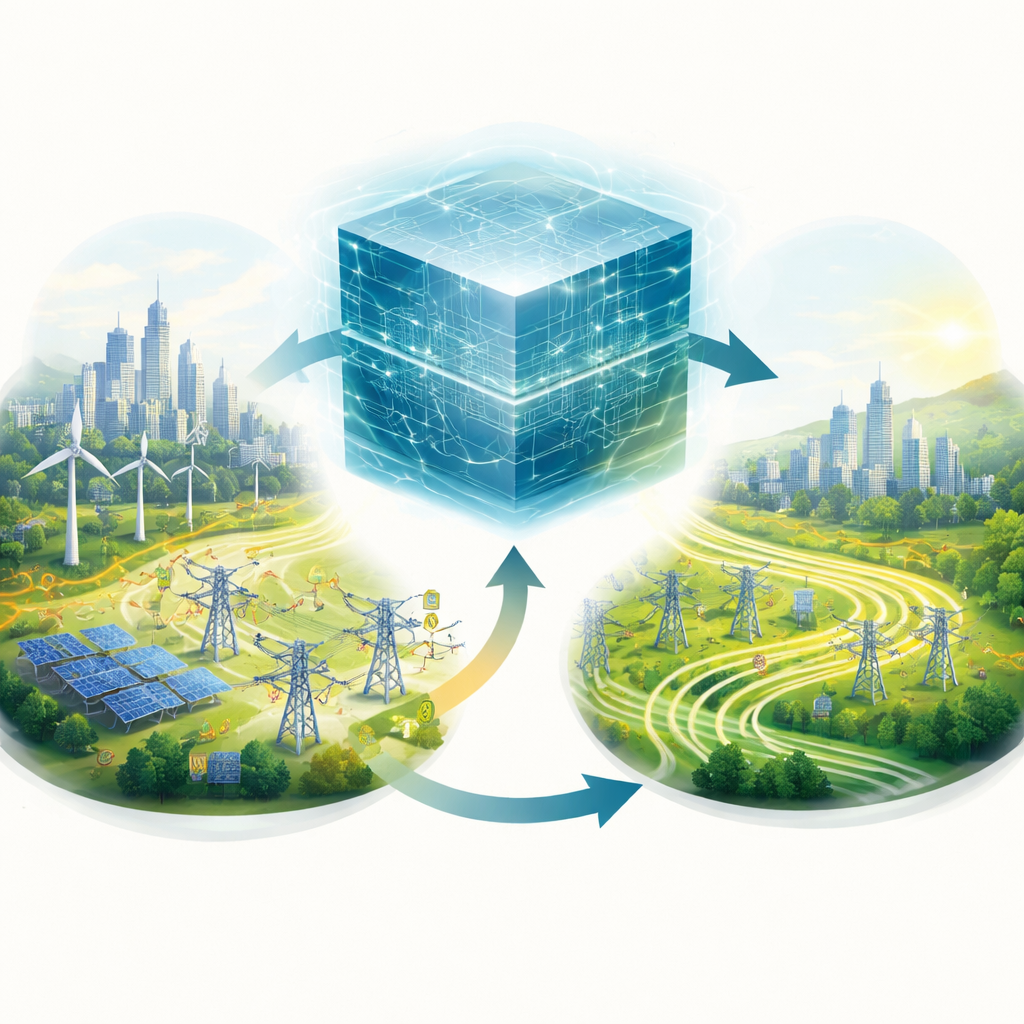
How a virtual twin can watch over the grid
The core idea is to create a detailed “digital twin” of the power system—a virtual copy of lines, transformers, generators, and other equipment that is constantly updated with live data from sensors, communications networks, and control centers. This twin can simulate how the grid behaves under storms, sudden equipment failures, or sharp swings in wind and solar output. By testing different responses in the virtual world first, operators can spot weak points, plan maintenance before things break, and run the real system closer to its limits without sacrificing safety. In the approach described here, the digital twin is reinforced with deep‑learning models that can recognize patterns of wear, forecast demand and renewable output, and recommend the best actions in near real time.
Borrowing a playbook from high‑quality factories
On its own, a powerful model is not enough; utilities also need a structured way to turn data into better decisions. The authors therefore bring in Lean Six Sigma, a method widely used in manufacturing to cut waste and reduce defects. Its five‑step cycle—Define, Measure, Analyze, Improve, and Control—acts as a backbone for how the digital twin is used. First, the biggest problems and critical assets are identified. Next, their performance and costs are measured in a consistent way. Then the causes of failures or inefficiencies are analyzed using the twin and AI tools. Improvement strategies, such as targeted repairs, retrofits, or recycling of old components, are tested virtually and then applied in the field. Finally, the results are monitored to ensure the gains last, and the cycle repeats whenever new issues emerge.
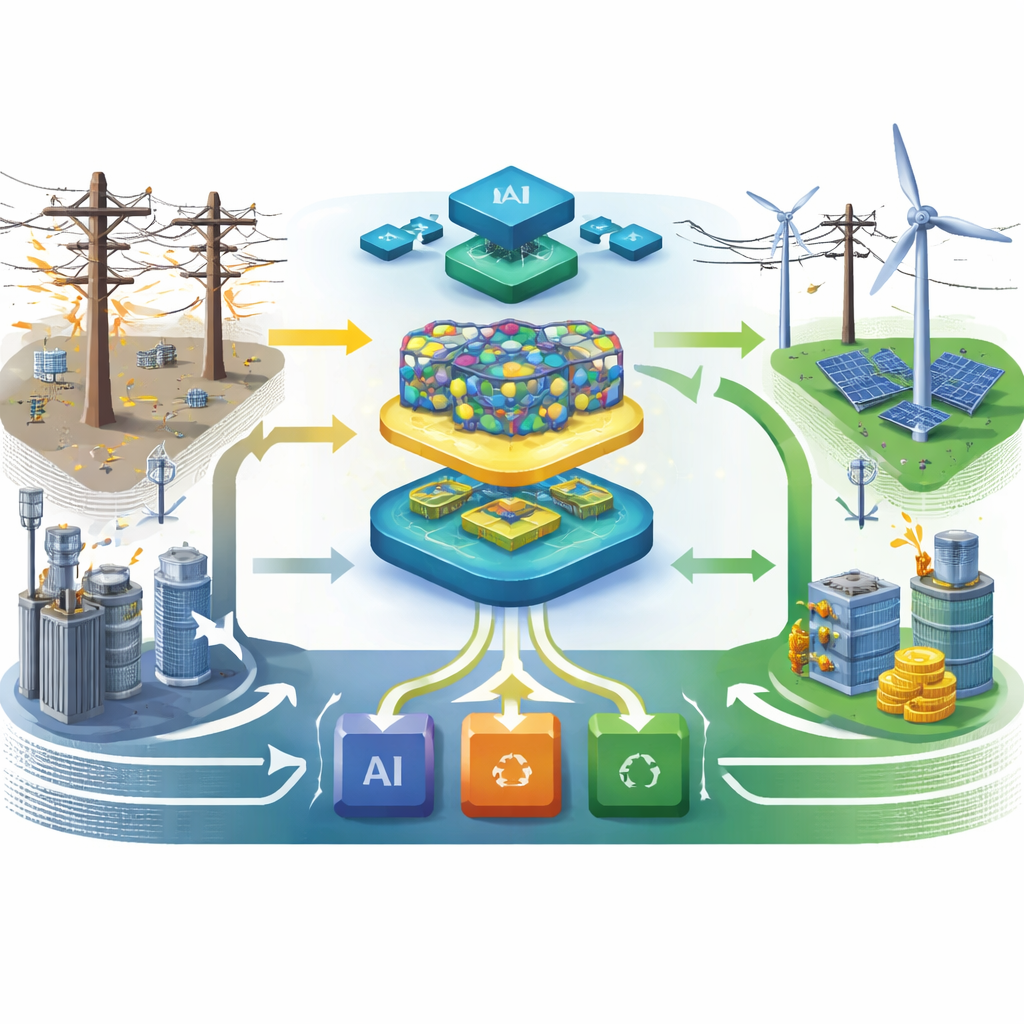
A test case for cleaner power and smarter spending
To see how this combined framework—called OptimTwin—could reshape long‑term planning, the researchers apply it to a widely used test network with high levels of wind and solar power. Using an open‑source planning tool, they compare three futures: a basic case with conventional asset management, an improved case with more careful investment choices, and an OptimTwin case that adds the digital twin, AI, and Lean Six Sigma‑style thinking. The OptimTwin scenario assumes realistic reductions in generation costs for renewables and savings from repairing or retrofitting aging plants instead of simply discarding them. Deep‑learning models are trained to mimic the planning tool’s optimization so that investment pathways can be explored quickly within the twin.
What changes for outages, renewables, and investors
The simulations show that OptimTwin‑based management can sharply cut the amount of unserved demand—the times when the grid cannot meet what customers need—while still allowing very high shares of wind and solar power. In the case study, the framework supports renewable penetration up to about 97% without losing flexibility, meaning the system can still follow rapid swings in supply and demand. At the same time, better timing of maintenance, smarter reuse of existing assets, and fewer costly failures lower total investment needs over the long run. When these avoided costs and improved reliability are translated into financial metrics, the return on investment rises by nearly 10%, signaling a more attractive environment for private capital.
Roadblocks on the way to smart grids
Turning this vision into reality will not be simple. Many utilities still rely on old hardware with little or no connectivity, making it difficult to feed accurate data into a digital twin. Upgrading or replacing these assets requires substantial upfront spending and careful planning to avoid new risks. Skilled staff who understand both quality‑improvement methods and modern AI tools are in short supply, and different teams may struggle to work together. Continuous data streams from critical infrastructure also raise serious cybersecurity and privacy concerns, and regulators will demand transparency from complex learning systems before they are trusted in day‑to‑day operations. The authors argue that phased projects focused on high‑impact equipment, strong cyber protections, and joint training programs are key to overcoming these hurdles.
What this means for everyday electricity users
In plain terms, the study suggests that pairing smart virtual models of the grid with disciplined, step‑by‑step improvement methods can help keep the lights on more often, welcome far more clean energy, and use every dollar invested in infrastructure more wisely. Instead of reacting to failures after they happen, utilities could anticipate them, extend the life of existing equipment, and recycle old assets more thoughtfully. For households and businesses, this could translate into fewer blackouts, a faster transition to renewables, and power bills that better reflect efficient, well‑planned systems rather than emergency fixes. OptimTwin is still a framework that needs further testing, but it points toward a future where digital intelligence and careful management work together to build a more resilient and sustainable electricity grid.
Citation: Tsegaye, S., Sanjeevikumar, P. Impact of artificial intelligence-driven digital twins and lean six sigma-assisted power system asset management on long-term investment planning. Sci Rep 16, 13881 (2026). https://doi.org/10.1038/s41598-026-44347-1
Keywords: digital twins, smart grids, renewable energy, predictive maintenance, infrastructure investment