Clear Sky Science · en
Clinical characteristics, disease activity and psychosocial burden of axial spondyloarthritis in Jordan: a multicenter cross-sectional study
Why this spine disease matters beyond back pain
Persistent back pain is often brushed off as a normal part of getting older or working hard. But for some people, it signals a long‑lasting form of inflammation that can quietly damage the spine, disrupt daily life, and weigh heavily on mental health and work. This study looks at people in Jordan living with axial spondyloarthritis, a chronic spine condition, to understand not only their physical symptoms but also how the disease affects their mood, jobs, and overall quality of life. It also explores whether a simple blood test can help doctors track how active the disease is.
A closer look at a hidden spine condition
Axial spondyloarthritis is a group of inflammatory diseases that mainly attack the spine and the joints that connect it to the pelvis. Many patients develop symptoms in early adulthood, yet their condition is often missed or misattributed to common back strain. In this multicenter study, researchers followed 79 adults treated at two major hospitals in Jordan. Most had the classic, X‑ray‑visible form known as ankylosing spondylitis, while a smaller group had a form that does not yet show up on plain imaging. On average, patients waited almost six years from the start of symptoms to receiving a diagnosis, a delay that can allow stiffness, pain, and joint damage to build unchecked.
Life, work, and mood under strain
The study paints a picture of substantial day‑to‑day burden. Just over half of the patients were current smokers, and more than half were unemployed or retired despite a relatively young average age of just over 40. Many had widespread joint pain beyond the spine, and a notable proportion had eye inflammation or other complications. When patients filled out standard questionnaires about mood and daily functioning, more than 70% showed signs of depression ranging from mild to severe. About one in five screened positive for fibromyalgia, a pain condition that can amplify discomfort and fatigue. These findings suggest that the disease affects far more than the skeleton: it reaches into people’s emotional health, family life, and ability to stay in the workforce. 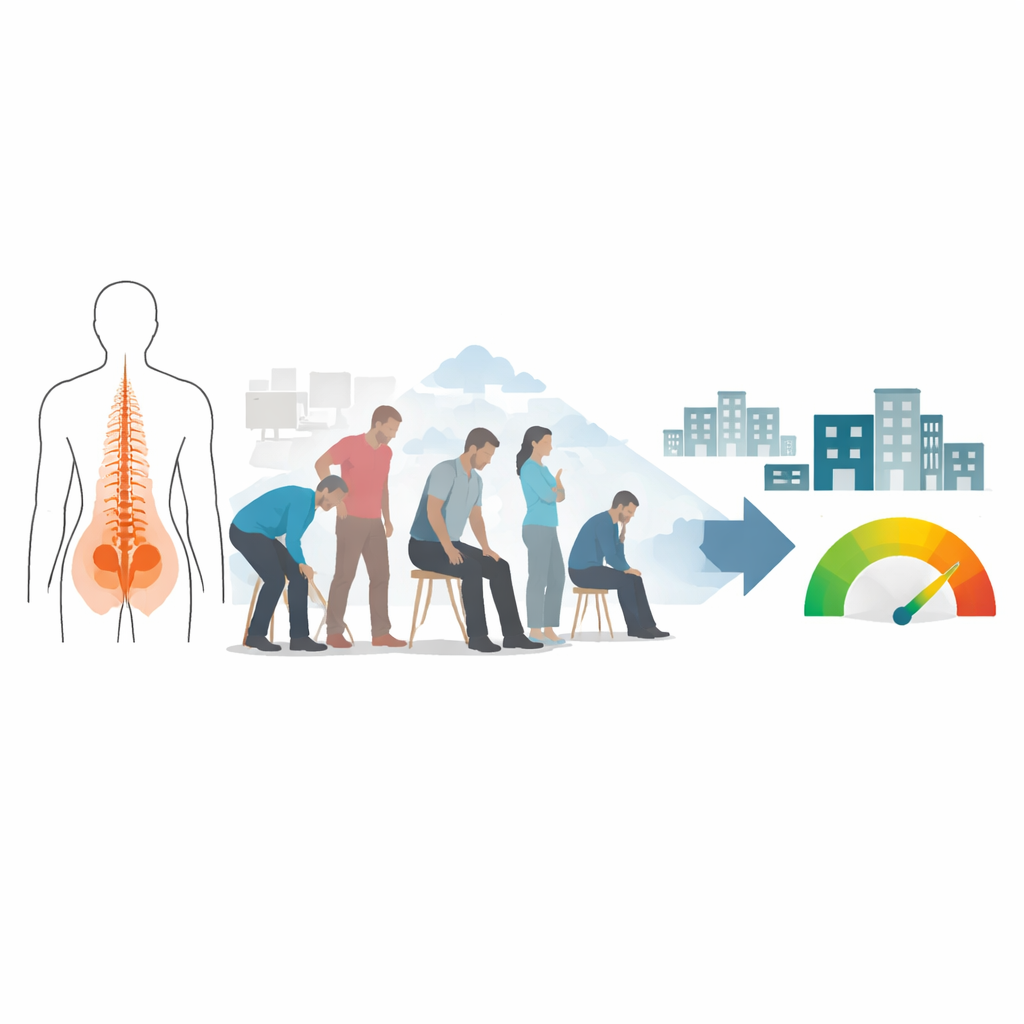
How active is the disease, and who is most affected?
To gauge how active the disease was, the researchers used a widely accepted composite score that blends patient‑reported symptoms with a blood marker of inflammation. Nearly four out of five patients had high or very high disease activity, meaning ongoing pain, stiffness, or inflammation despite treatment. Men were more likely than women to fall into the highest activity category, and patients who reported worse quality of life also tended to have more active disease. Interestingly, having inflammation in only a single joint was linked to lower disease activity, whereas having multiple joint problems signaled a heavier burden. These patterns highlight groups that may need particularly close monitoring and more intensive therapy.
A simple blood ratio as a potential warning sign
The research team also tested whether routine blood counts could help flag patients with especially active disease. They focused on the ratio between two types of white blood cells: neutrophils and lymphocytes. This neutrophil‑to‑lymphocyte ratio, or NLR, is easy to calculate from a standard blood test. In the full group of patients, higher values of this ratio were better at distinguishing very active disease than other simple blood measures, such as platelets or lymphocyte counts alone. Even among the many patients receiving powerful biologic drugs that block inflammatory signals, this ratio remained the single best of the tested markers, although its performance weakened somewhat under treatment. 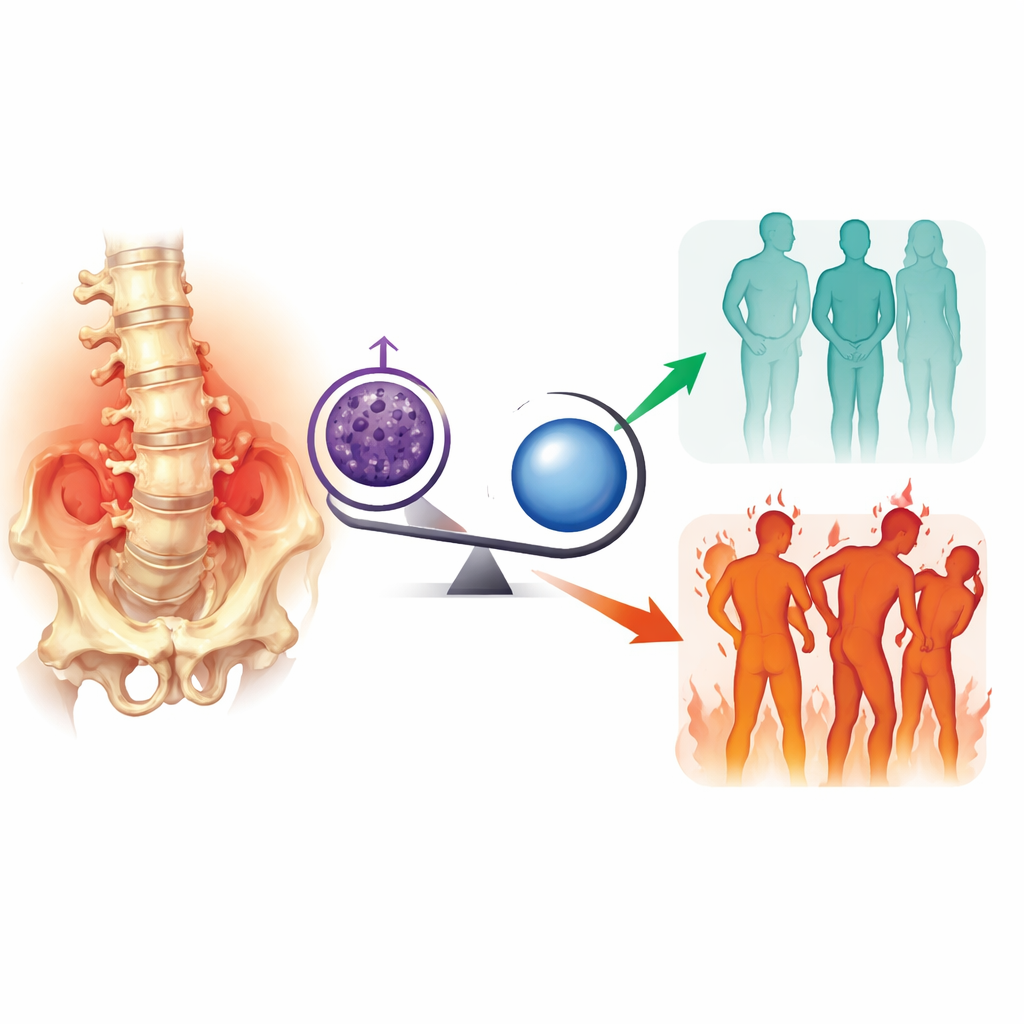
What this means for patients and care
For people living with chronic back pain in Jordan and similar regions, this study underscores that axial spondyloarthritis is not rare, harmless, or purely mechanical. Many patients wait years for a diagnosis, struggle to keep working, and face significant emotional distress. The findings support efforts to raise awareness among primary care doctors and the public so that young adults with persistent, inflammatory‑type back pain are referred earlier to specialists. They also suggest that a simple blood ratio, already available in most laboratories, may help clinicians spot those with the most active disease and tailor treatment more effectively. Ultimately, earlier recognition, better support for mental health and work participation, and improved tools for tracking disease activity could together lessen the long‑term burden of this disabling spine condition.
Citation: Alnaimat, F., Hamdan, O., Shaf’ei, M. et al. Clinical characteristics, disease activity and psychosocial burden of axial spondyloarthritis in Jordan: a multicenter cross-sectional study. Sci Rep 16, 13487 (2026). https://doi.org/10.1038/s41598-026-44346-2
Keywords: axial spondyloarthritis, ankylosing spondylitis, chronic back pain, Jordan rheumatology, inflammation biomarkers