Clear Sky Science · en
Improved muscle recovery after omega-3 supplementation is associated with increased oxylipin availability
Why This Matters for Everyday Exercise
Pushing yourself in a hard workout can leave your muscles feeling weak and sore for days. This study asked a simple but important question: can taking omega-3 fats from fish oil help your muscles bounce back faster after very demanding exercise? The researchers went a step further and looked at tiny fat-based molecules in the blood, called oxylipins, to see whether they might explain any benefits for recovery. Their findings hint that what you eat in the weeks before a tough training block could shape how well your muscles repair themselves afterward.
Hard Exercise and Tired Muscles
When we do unfamiliar or intense exercise, especially movements that make muscles lengthen while working (like walking downhill or lowering a heavy weight), the muscle tissue can be damaged. This “exercise-induced muscle damage” shows up as temporary loss of strength, stiffness, and soreness. For athletes and active people, repeated episodes of this damage can limit how often they can train and how quickly they improve. Because of this, scientists have been searching for nutrition strategies that can reduce the hit to muscle strength and speed up recovery without blocking the body’s natural adaptation to training.
The Role of Omega-3 Fats and Oxylipins
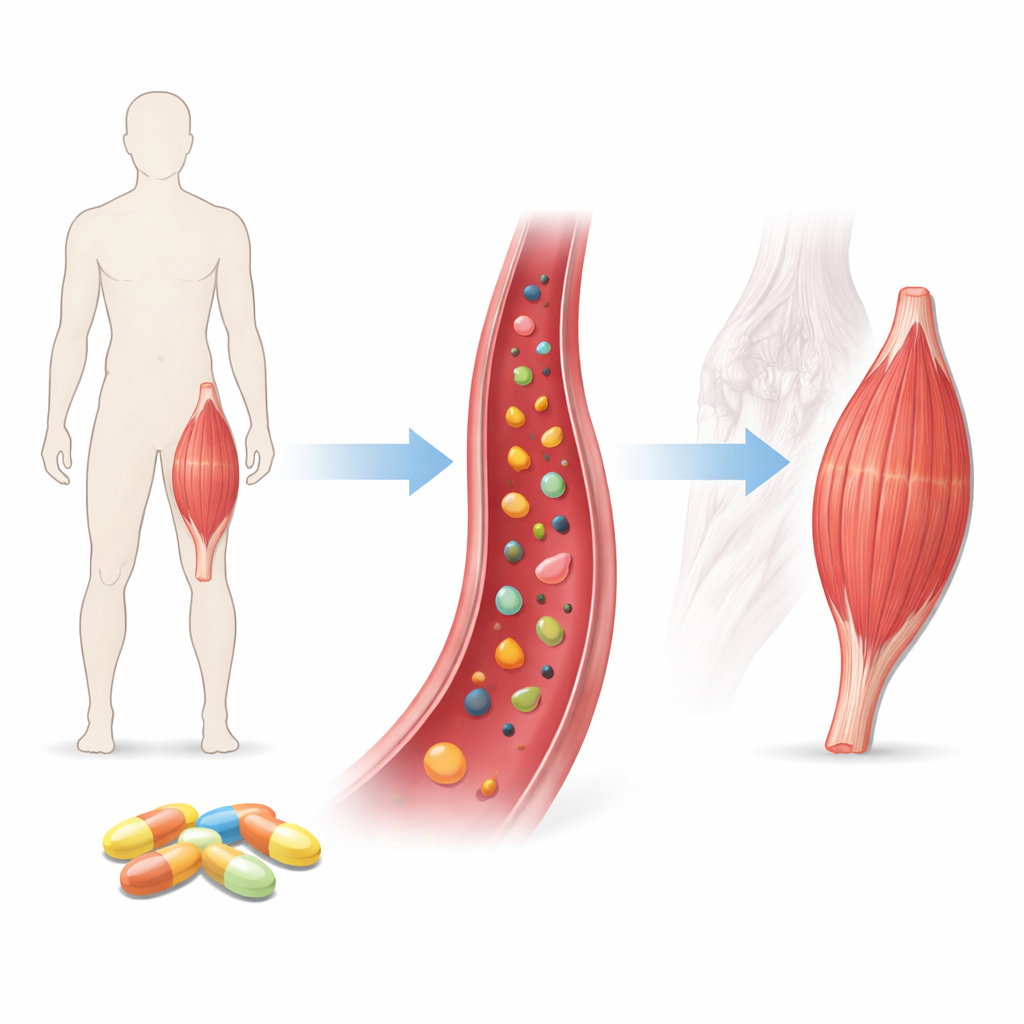
Omega-3 fats from fish oil, especially EPA and DHA, are known to influence inflammation and cell membranes. The body converts these fats into oxylipins, tiny signaling molecules that help start and resolve inflammation after an injury. Some oxylipins encourage early clean-up of damage, while others help switch the body into a healing and calming phase. The authors wondered whether giving people a high dose of omega-3s for long enough would shift their oxylipin profile toward a pattern that favors efficient repair of damaged muscle after a brutal exercise session.
How the Study Was Done
Eighteen healthy young men who were not doing regular heavy leg training were randomly assigned to take either fish oil capsules or a placebo for eight weeks. The fish oil group took a high dose rich in DHA (2.5 grams of DHA and 0.5 grams of EPA per day), while the placebo group took maltodextrin. Each participant performed a very demanding one-leg exercise made up of 100 strong lengthening contractions of the knee extensors once before the supplement period and once after it, using the opposite leg the second time. This design let the researchers compare how much strength was lost after the same type of muscle-damaging exercise, with and without omega-3 loading, while also including a placebo control.
What the Researchers Found
After eight weeks, the men taking fish oil had clearly higher levels of EPA and DHA in their red blood cells and much more omega-3-derived oxylipins circulating in their blood. When they repeated the muscle-damaging exercise with the other leg, they still lost strength, but the peak loss in maximum voluntary contraction was about 15 percent less than before supplementation. In contrast, the placebo group showed virtually no change in how much strength they lost between their first and second exercise bouts. Interestingly, soreness ratings did not differ between groups, suggesting that feeling sore and losing strength may be controlled by partly separate biological pathways.
Signals in the Blood Linked to Recovery
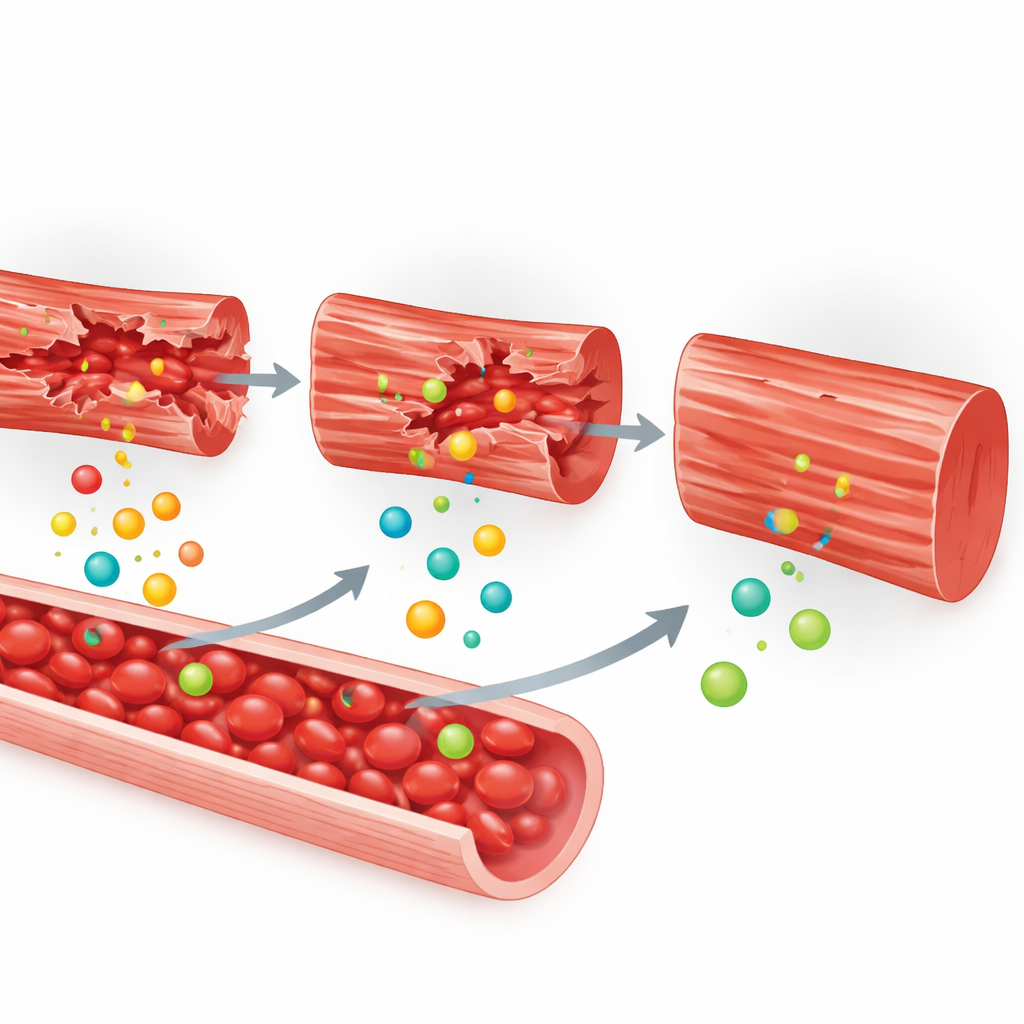
To dig deeper, the scientists used advanced statistics to examine dozens of oxylipins alongside personal traits such as body fat and fitness. They found that people who had certain combinations of omega-3- and omega-6-derived oxylipins, along with lower body fat, tended to experience less strength loss after the damaging exercise. Some of these molecules are thought to kick off early clean-up inflammation, while others help quiet that response and support repair. The pattern that emerged supports the idea that an orchestrated mix of “start” and “resolve” signals, rather than simply blocking inflammation, is important for healthy muscle recovery.
What This Means for Active People
Overall, the study suggests that taking a relatively high daily dose of omega-3s for at least eight weeks can make muscles more resilient to very strenuous exercise, most clearly by limiting how much strength is lost, rather than by changing how sore people feel. The rise in omega-3-derived oxylipins in the blood points to these molecules as possible messengers that help guide the muscle from damage toward repair. While more work is needed to fine-tune doses, durations, and the best balance of EPA and DHA, these results support omega-3 supplementation as a promising tool to help active individuals and athletes recover strength more effectively after hard training.
Citation: Miranda-Fuentes, C., Rehbein, C.O., Campos, C. et al. Improved muscle recovery after omega-3 supplementation is associated with increased oxylipin availability. Sci Rep 16, 13469 (2026). https://doi.org/10.1038/s41598-026-44339-1
Keywords: omega-3 supplementation, muscle recovery, exercise-induced muscle damage, oxylipins, fish oil