Clear Sky Science · en
Preparation of starch/PVA/Cu-NPs bio-nanocomposites in packing as preservation of UF soft cheese
Keeping Cheese Fresh for Longer
Soft, spreadable cheeses are delicious but spoil quickly, creating food waste and safety concerns. At the same time, most food packaging is made from plastics that persist in the environment for decades. This study explores a way to tackle both problems at once: using a biodegradable, germ-fighting coating made with tiny copper-based particles to keep ultrafiltration (UF) soft cheese fresh and safe for much longer in the refrigerator.
Tiny Particles from Friendly Microbes
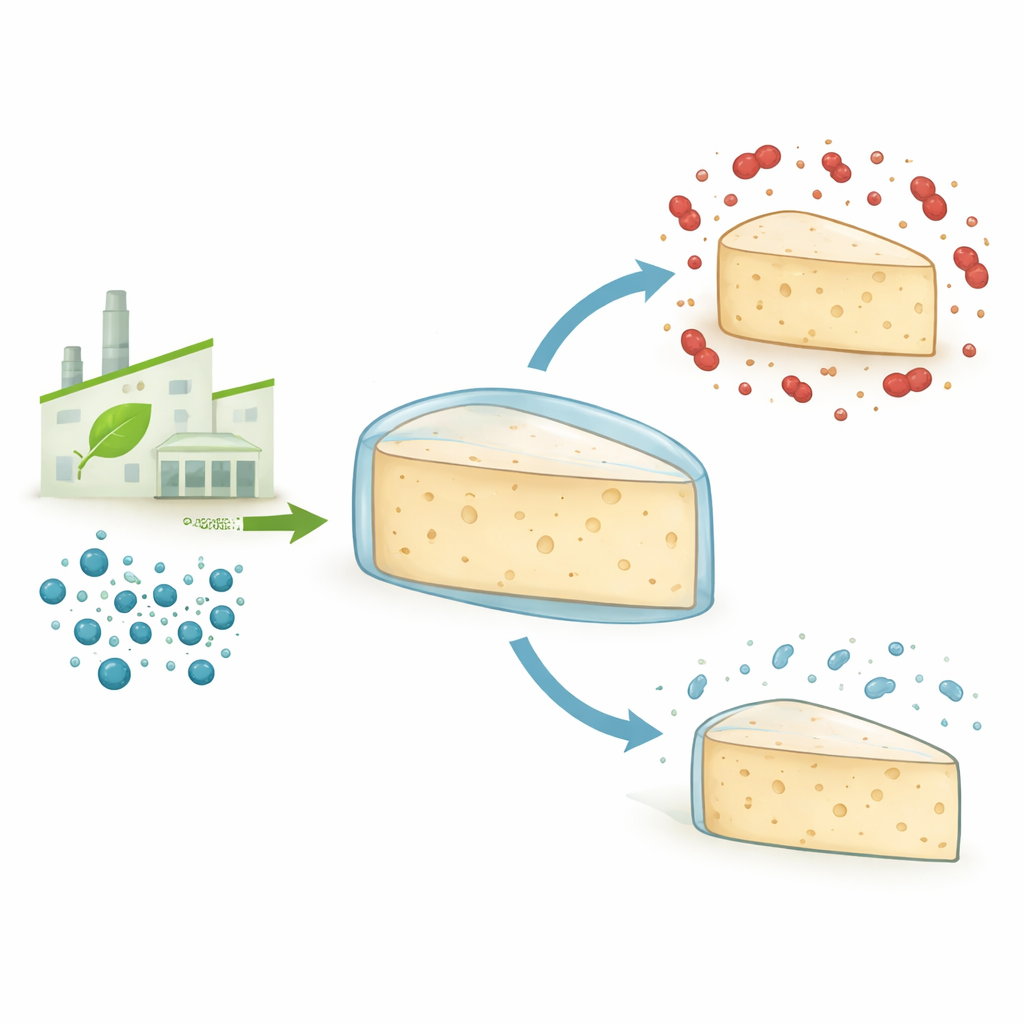
The researchers began by asking bacteria to do some of the chemistry normally carried out in industrial plants. They screened several bacterial strains and chose one, Bacillus safensis, that could transform dissolved copper salt into minute copper oxide particles only a few billionths of a meter across. This “green” process takes place in water, at modest temperatures, and relies on natural molecules released by the bacteria, avoiding harsh chemicals and high energy use that typically accompany nanoparticle production.
Building a Gentle Protective Jacket
Next, the team blended two film-forming ingredients to create an edible coating: starch derived from plants and polyvinyl alcohol, a synthetic but fully biodegradable polymer already approved for contact with food. They mixed these in a 4:1 ratio and added different amounts of the copper oxide nanoparticles, forming four types of thin films with increasing particle content. These films were cast, dried, and examined to see how the particles altered their structure, strength, and ability to block water vapor and oxygen, two key factors that influence how quickly cheese dries out or turns rancid.
Stronger Films with Built-In Shields
Microscope and X-ray analyses showed that the copper oxide particles were well distributed inside the film and formed a crystalline network within the otherwise soft, somewhat disordered starch–polymer matrix. At modest particle levels, the films became tougher and more stretchable, as the nanoparticles helped connect and reinforce the surrounding material without making it brittle. The path that water vapor must travel through the coating grew more winding, improving resistance to moisture loss, while oxygen movement was adjusted in a way that still suited cheese storage. When the copper content became too high, some particles clumped together and the films lost some strength, highlighting the importance of finding a sweet spot in composition.
Putting the Coating to the Test on Real Cheese
The real challenge was whether the new films could actually keep food fresher. The team produced batches of UF soft cheese and coated them with films containing no copper, or low, medium, and high nanoparticle levels. All cheeses were stored at refrigerator temperature for two months. Over time, uncoated cheese slowly lost moisture, its acidity changed, and populations of spoilage microbes—bacteria, molds, yeasts, and cold-loving species—rose sharply. In contrast, cheeses wrapped in films containing copper nanoparticles retained more moisture and showed a much slower rise in unwanted microbes. After 60 days, uncoated cheese had very high bacterial counts, while samples covered with medium and high copper coatings still had relatively low levels and only tiny amounts of mold and yeast.
How the Coating Fights Germs
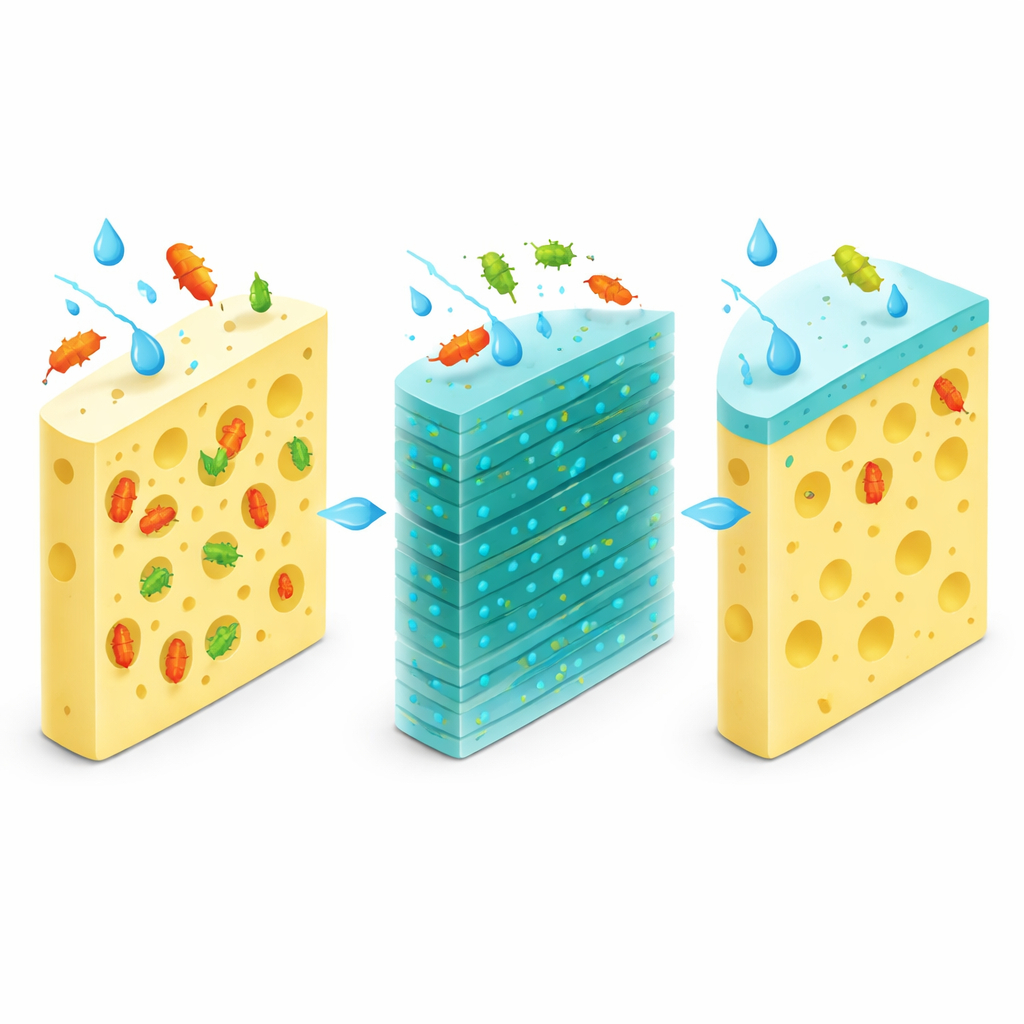
Laboratory tests against two common food-related bacteria confirmed that both the free copper nanoparticles and the complete films could inhibit microbial growth, with stronger effects at higher copper levels. The particles are thought to damage the outer surfaces of bacterial cells, disturb important molecules inside them, and promote reactive forms of oxygen that further stress the microbes. Embedding the particles inside the starch–polymer film appears to stabilize them and bring them into closer contact with microbes at the cheese surface, boosting their germ-fighting power while keeping them localized in the coating.
What This Means for Everyday Food
In simple terms, the study shows that an edible, largely plant-based film infused with tiny, biologically produced copper oxide particles can act like a protective jacket for soft cheese. It helps the cheese stay moist, slows down the growth of spoilage organisms, and extends shelf life in the fridge without relying on conventional plastic packaging. While questions remain about long-term safety, cost, and the movement of nanoparticles from packaging into food, this work points toward future wrappers and coatings that are kinder to both our food and the environment.
Citation: El-Refai, H.A., Gomaa, S.K., Zaki, R.A. et al. Preparation of starch/PVA/Cu-NPs bio-nanocomposites in packing as preservation of UF soft cheese. Sci Rep 16, 11608 (2026). https://doi.org/10.1038/s41598-026-44328-4
Keywords: edible food coating, soft cheese preservation, biodegradable packaging, copper oxide nanoparticles, antimicrobial films