Clear Sky Science · en
Modeling and optimization of performance and emissions in a gasoline-isopropanol SI engine: multi-model prediction and a PID-based search algorithm
Cleaner power for everyday engines
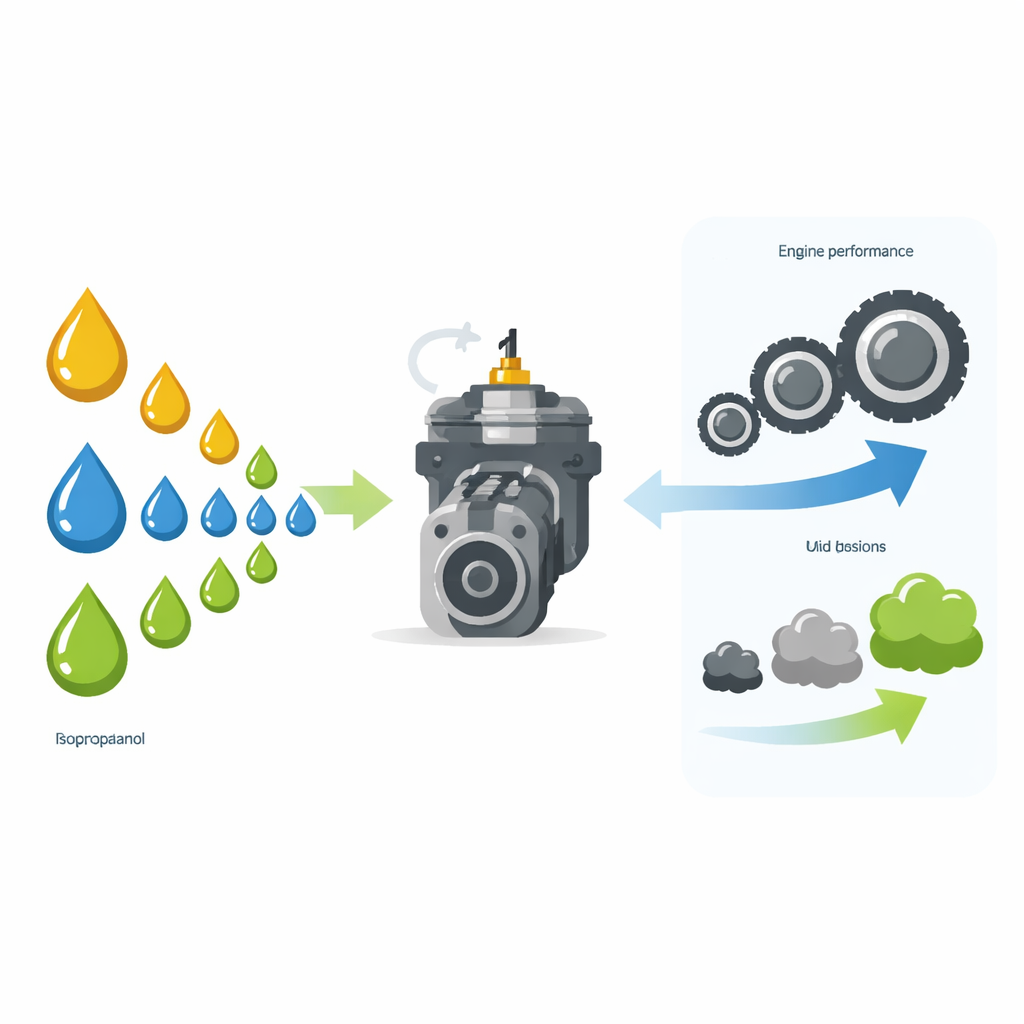
Most cars, generators, and small machines still rely on gasoline engines, which burn fossil fuel and release harmful exhaust gases. This study explores a practical way to make such engines both stronger and cleaner by blending regular gasoline with an alcohol called isopropanol. Instead of redesigning engines from scratch, the authors ask a simple question with big implications: can we tune the mix of fuels and engine speed so that drivers and equipment owners get more useful power while cutting pollution and fuel use?
Why mixing fuels can help the air
Gasoline engines are popular because they are cheap, easy to maintain, and relatively quiet, but their exhaust still contains substances that affect health and climate. Alcohols like ethanol and isopropanol offer an appealing twist: they can be made from renewable sources, burn more completely thanks to their built-in oxygen, and resist engine knock, allowing smoother operation at demanding conditions. Earlier work showed that adding alcohols can trim down pollutants such as carbon monoxide and unburned hydrocarbons. However, the exact fuel ratio that gives the best trade-off between power, fuel economy, and emissions is not obvious, especially for isopropanol, which has been less studied than ethanol or methanol.
Testing a real engine with blended fuels
The researchers used a small commercial single-cylinder gasoline engine similar to those found in lawn equipment or portable generators. They ran it under full load at nine different speeds between 2400 and 4000 revolutions per minute and with six fuel blends, from pure gasoline up to a 50–50 mix of gasoline and isopropanol. For each operating point, they measured how much twisting force (torque) the engine produced, how much fuel it consumed, and how much carbon monoxide, unburned hydrocarbons, and carbon dioxide came out of the exhaust. Careful calibration and uncertainty checks were performed to ensure that the measurements were reliable enough to serve as the basis for computer modeling and optimization.
Teaching equations to mimic the engine
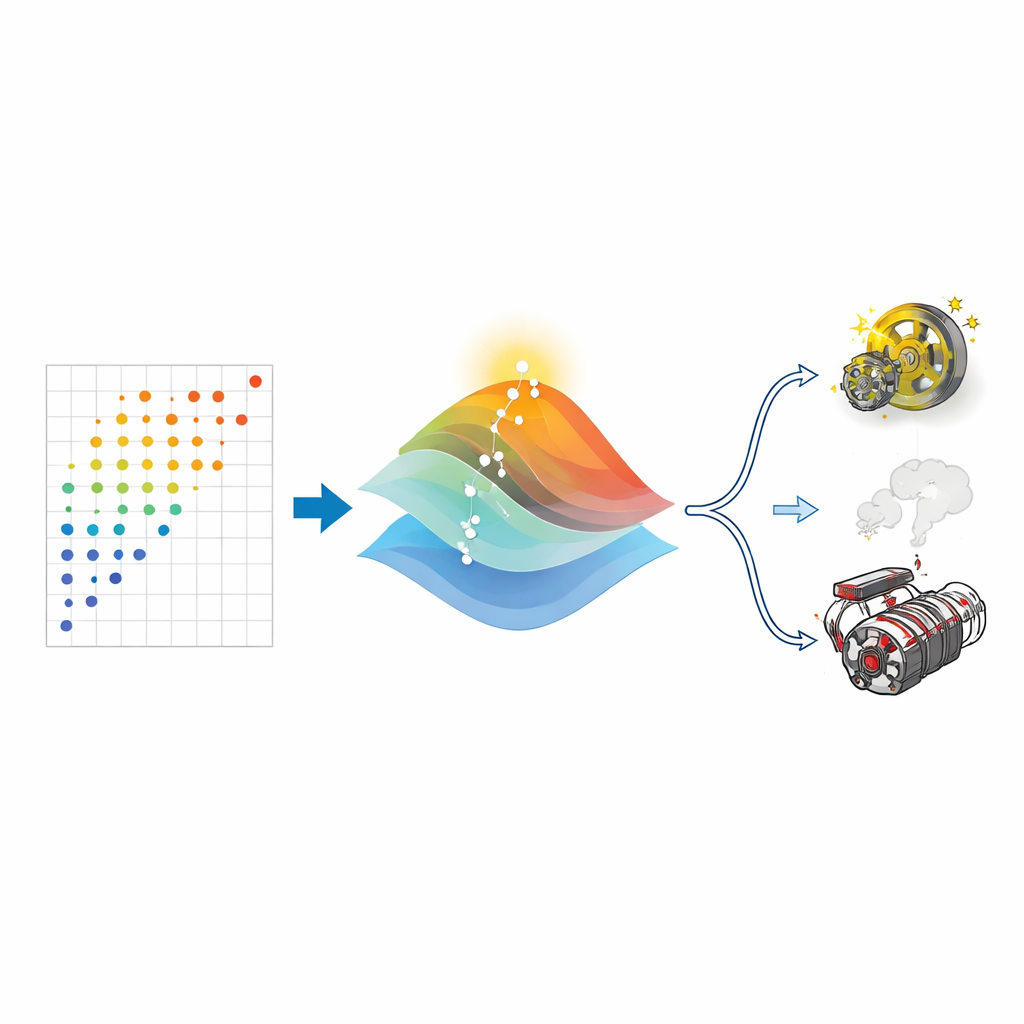
Rather than rely on a single, one-size-fits-all formula, the team tried seven types of polynomial equations to describe how torque, fuel use, and each emission changed with fuel blend and engine speed. They split their data into training and testing sets, fitting the equations on one part and judging accuracy on the other, much like validating a weather forecast. This multi-model approach let them pick, for each quantity of interest, the simplest equation that still predicted new data well, avoiding the trap of overfitting noise. From these fitted equations they built a combined score that rewards high torque, power, and thermal efficiency, while penalizing high fuel consumption and dirty exhaust.
Letting a search algorithm tune the knobs
To hunt for the best operating point, the authors used a modern search method inspired by how a feedback controller keeps a system on target. This algorithm treated the fuel blend and engine speed as adjustable knobs and repeatedly moved them in the direction that improved the combined score given by the models. Because the score was built from normalized and equally weighted quantities, the resulting solution represents a balanced compromise: it does not chase maximum power at any cost, nor does it focus only on the cleanest exhaust while ignoring performance.
What the best point looks like in practice
The optimization pointed to a clear sweet spot: a 50 percent isopropanol, 50 percent gasoline blend running at about 2783 revolutions per minute. At this setting, the modeled engine delivers strong torque and power for its size, while fuel consumption remains moderate and exhaust gases are noticeably cleaner than with pure gasoline. Carbon monoxide and unburned hydrocarbons drop thanks to more complete combustion, and carbon dioxide levels also decline, helped by the lower carbon content of isopropanol. Although the engine needs slightly more fuel by mass due to the alcohol’s lower energy content, the overall thermal efficiency improves, meaning more of the fuel’s energy turns into useful work. For readers, the key message is that careful blending of conventional gasoline with isopropanol, guided by smart modeling and search techniques, can turn familiar small engines into more efficient and environmentally friendly power sources without radical hardware changes.
Citation: Bogar, E., Arabaci, E., Halis, S. et al. Modeling and optimization of performance and emissions in a gasoline-isopropanol SI engine: multi-model prediction and a PID-based search algorithm. Sci Rep 16, 13568 (2026). https://doi.org/10.1038/s41598-026-44323-9
Keywords: gasoline isopropanol blends, spark ignition engine, engine emissions, alternative fuels, optimization modeling