Clear Sky Science · en
Thermo-environ-economic analysis and multi-criteria optimization with grey wolf optimizer for a biomass-fueled power, hydrogen, and desalinated water tri-generation plant
Turning Waste into Power, Fuel, and Fresh Water
Supplying enough electricity and clean water without overheating the planet is one of this century’s hardest puzzles. This study explores a promising way to tackle several problems at once: it turns everyday waste into electricity, carbon‑light hydrogen fuel, and drinkable water in a single tightly integrated plant. By squeezing as much useful work as possible out of each unit of biomass, the design aims to lower costs, cut greenhouse‑gas emissions, and make better use of resources that many cities already struggle to manage.
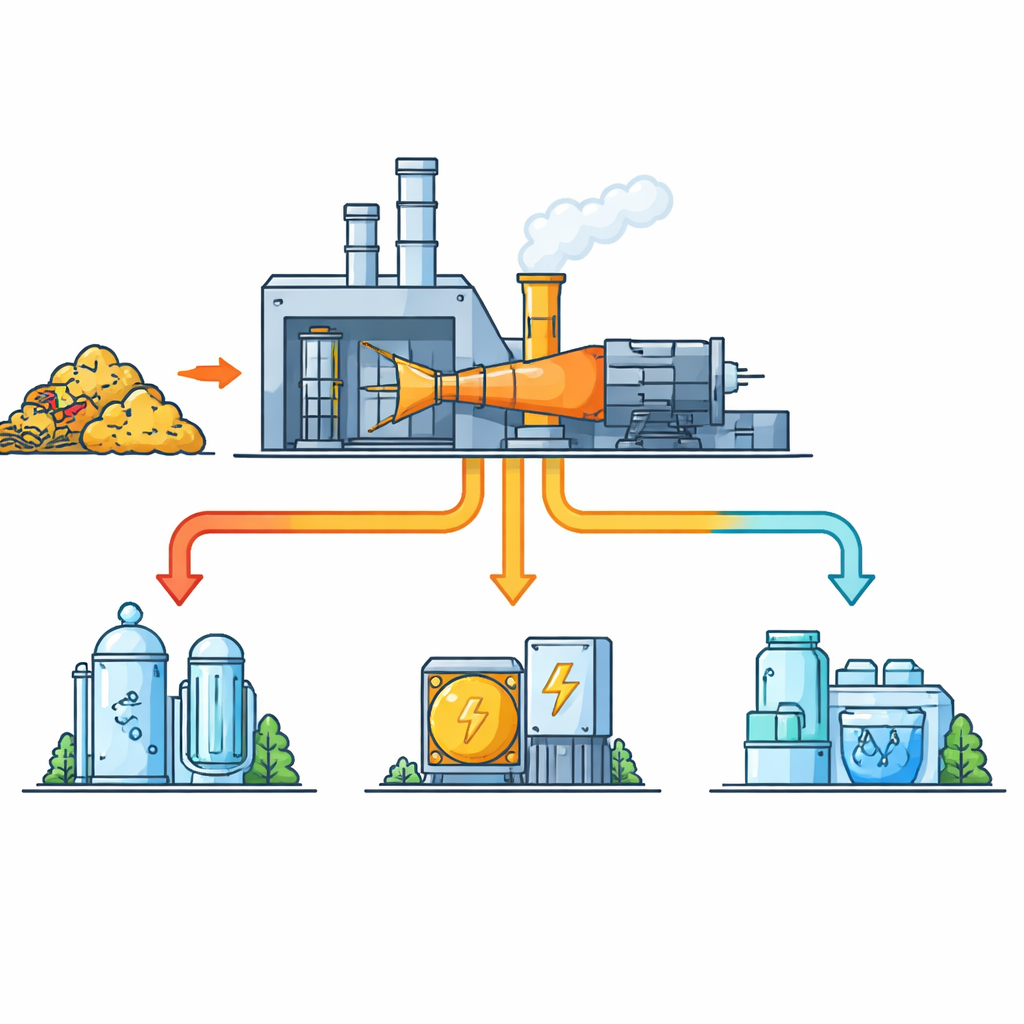
One Fuel, Three Valuable Products
The heart of the proposed system is a gas turbine powered by gas made from waste biomass, such as municipal solid waste. Instead of burning this material directly, it is first converted in a gasifier into a mix of gases that can drive a modern turbine efficiently. This turbine plays the role of a “top engine” in a cascade: it delivers electricity, but its hot exhaust is far from useless. The authors route that heat through three linked subsystems, each tuned to a different temperature level, so that nearly every bit of usable energy in the exhaust is captured before it is finally released to the environment.
How Heat Becomes Hydrogen and Fresh Water
The hottest part of the exhaust first feeds a vanadium‑chlorine water‑splitting loop that makes hydrogen without using large amounts of electricity. In this loop, water is broken into hydrogen and oxygen through a series of chemical reactions driven mainly by heat. As the exhaust cools, its remaining energy powers an organic Rankine cycle, a kind of secondary steam engine that uses an organic fluid to spin a small turbine and generate extra electricity. Finally, the lowest‑temperature heat drives a humidification–dehumidification unit that mimics the natural water cycle: warm, moist air picks up water from heated seawater and then is cooled so that fresh water condenses out, leaving salt behind.
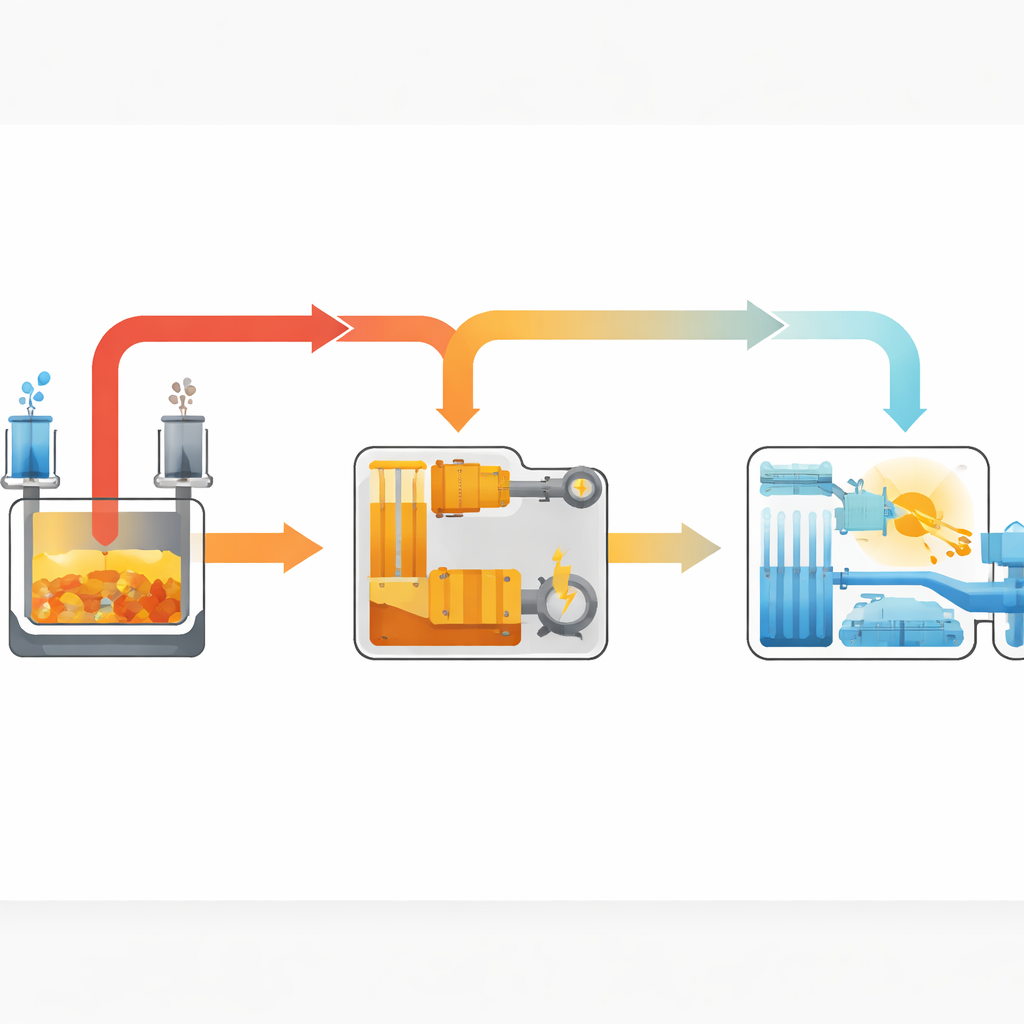
Measuring Efficiency, Cost, and Emissions Together
Designing such a plant involves juggling several competing goals. Higher temperatures and pressures can raise efficiency, but they also affect how much heat is left for hydrogen and water production and can drive up equipment costs. To sort through these trade‑offs, the authors built a detailed computer model of every major component and checked its predictions against lab and pilot‑scale data from earlier studies. They then trained an artificial neural network to act as a fast stand‑in for the full model, allowing a “grey wolf” search algorithm to explore thousands of design combinations. A decision‑making method called TOPSIS was used to pick a single balanced operating point from the many mathematically “best” solutions.
What the Optimized Plant Can Deliver
At the chosen operating point, the plant converts about half of the useful energy in the biomass into electricity, hydrogen, and fresh water combined—a noticeable improvement over a baseline design without advanced tuning. At the same time, the overall cost per unit of useful output drops by a little over six percent, and the carbon dioxide emitted per unit of energy falls by more than twelve percent. The study shows how key choices, such as the turbine pressure ratio, gasification temperature, and the pressure in the secondary power cycle, shift the balance between more power, more hydrogen, or more water, giving planners levers to tailor the plant to local needs and fuel supplies.
Why This Concept Matters
For non‑specialists, the main message is that careful system design can turn waste into three valuable products while cutting emissions and costs. Instead of relying on electricity‑hungry devices like conventional electrolysis for hydrogen or reverse osmosis for desalination, this plant uses the same fuel and its waste heat multiple times. While the work is based on simulations rather than a full‑scale demonstration, it suggests a clear path toward cleaner power stations that also provide green hydrogen and fresh water, especially in regions with abundant biomass and growing energy and water demands.
Citation: Hadj Lajimi, R., Kriaa, K., Alsayah, A.M. et al. Thermo-environ-economic analysis and multi-criteria optimization with grey wolf optimizer for a biomass-fueled power, hydrogen, and desalinated water tri-generation plant. Sci Rep 16, 13712 (2026). https://doi.org/10.1038/s41598-026-44289-8
Keywords: biomass energy, green hydrogen, desalination, waste heat recovery, multi-generation systems