Clear Sky Science · en
Autism spectrum disorder trios from consanguineous populations are enriched for rare homozygous variants, identifying 32 new candidate genes
Why this study matters to families
Autism touches families in every part of the world, but the reasons why one child is affected while another is not are still being pieced together. This study looks at families in Pakistan, Iran, and Saudi Arabia where marriage between relatives is more common, and asks a simple question with far reaching implications: can these family patterns help scientists spot hidden genetic changes that contribute to autism and sharpen genetic testing for affected children?
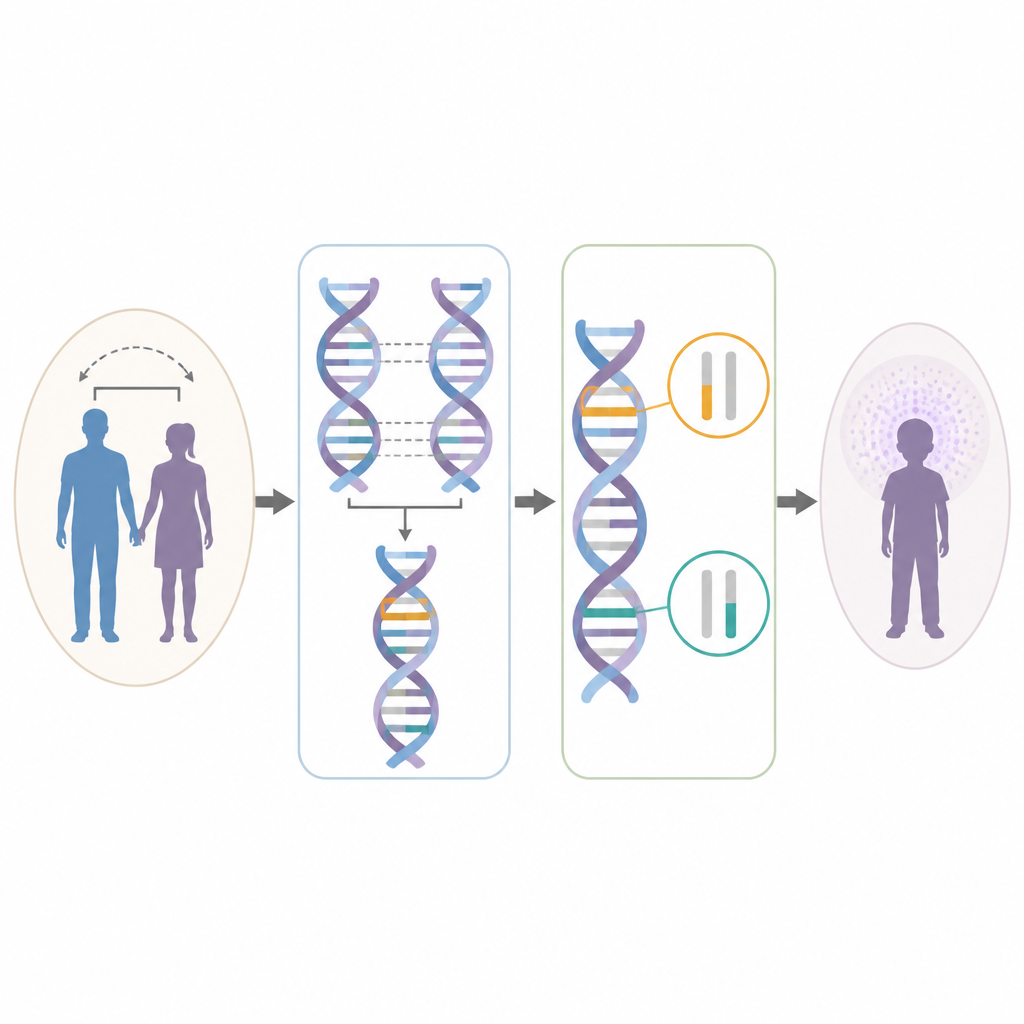
Looking closely at parents and children
The researchers focused on 115 "trios" each made up of a child with autism and both parents. They collected DNA from blood or saliva and used a powerful technique that reads nearly all protein coding genes at once. They also used genetic chips to measure long stretches of DNA that are identical on both copies of a child’s chromosomes, a hallmark of parents who are related. This allowed them to link how closely the parents are related with the pattern of genetic changes found in their children.
Hidden double hits in the DNA
In these families the team found 77 promising genetic changes in 55 trios. Strikingly, about two thirds were "homozygous" changes, meaning the child carried the same rare change on both copies of a gene, one inherited from each parent. Many of these double hits disrupted how a gene makes its protein, either by chopping it short or disturbing its instructions. Sixteen of the affected genes were already known to be involved in conditions affecting learning or development, while 32 genes had not previously been linked to autism in this way. Several of these new candidates affect how brain cells signal, manage energy, or build their structure.
Other kinds of genetic changes still matter
Even in families with related parents, the study showed that not all genetic risk comes in pairs. The researchers also uncovered single new mutations that appeared in the child but not in either parent, and rare changes on the X chromosome that were inherited from mothers. A few children carried small missing pieces of chromosomes that erased one or more genes. Some of these genes, including well known names in autism research, have been tied in previous work to seizures, movement problems, or other brain related conditions, reinforcing their role in development.
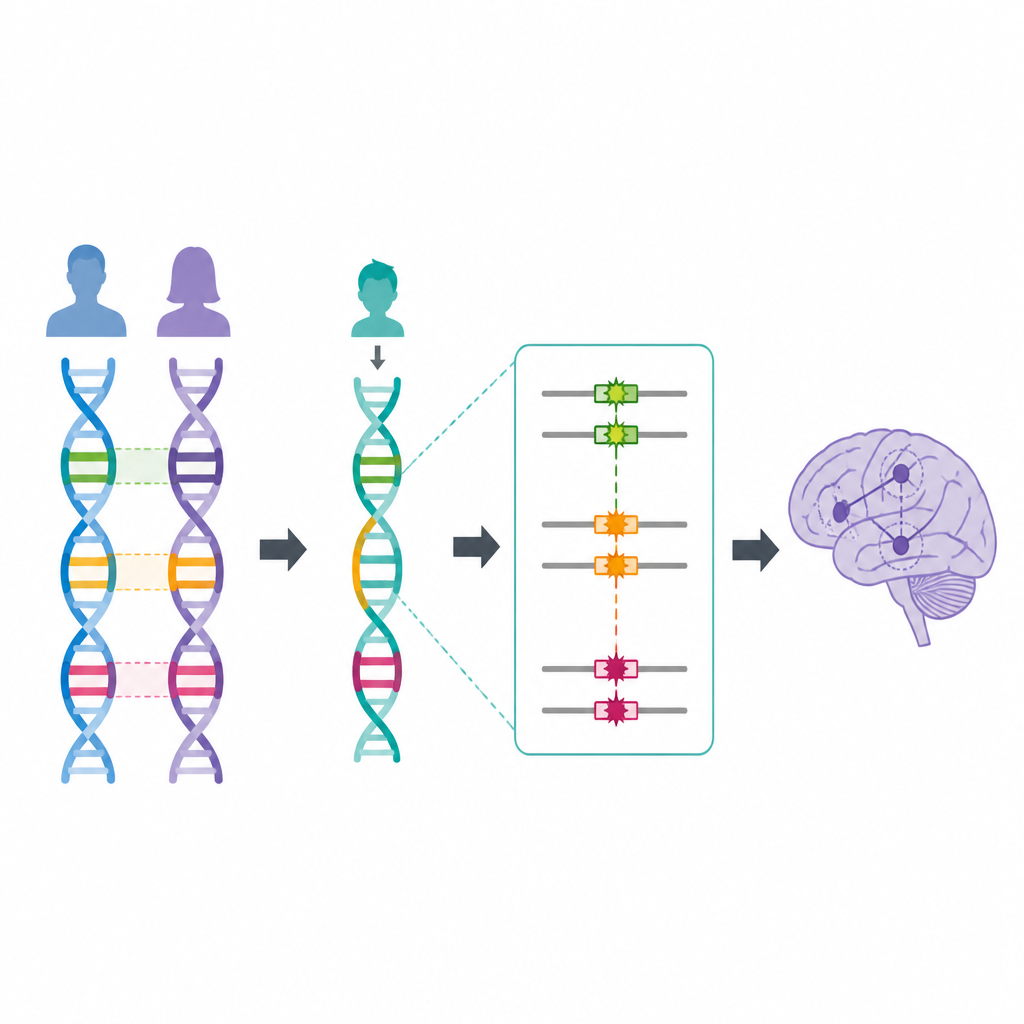
Consanguinity shapes the genetic picture
By comparing children with double hit changes to those with other types of mutations, the team found that homozygous variants clustered in children from families with the highest levels of parental relatedness. In simpler terms, when parents shared more ancestry, their autistic children were more likely to carry rare paired gene changes than new single mutations. This pattern supports the idea that the genetic landscape of autism in these populations differs from that in countries where marriages between relatives are uncommon. It also suggests that measuring how related parents are can guide doctors toward the most informative way to search a child’s genome.
What this means for diagnosis and care
For families, the immediate impact of this work is not a new treatment but a clearer roadmap. The study shows that in populations with frequent marriage between relatives, a substantial share of autism risk may come from rare double hit changes in specific genes, including several that are newly highlighted here. Recognizing this can improve genetic testing strategies, help some families receive a concrete explanation for a child’s diagnosis, and point researchers toward biological pathways that could be targets for future therapies.
Citation: Harripaul, R., Rabia, A., Vasli, N. et al. Autism spectrum disorder trios from consanguineous populations are enriched for rare homozygous variants, identifying 32 new candidate genes. Sci Rep 16, 14796 (2026). https://doi.org/10.1038/s41598-026-44288-9
Keywords: autism genetics, consanguinity, recessive variants, homozygous mutations, neurodevelopment