Clear Sky Science · en
Inter-area minimisation of reactive power flow for voltage improvement in large electric grids
Keeping the Lights Steady
Modern life depends on vast electric grids that quietly move power from distant plants to our homes and industries. Yet behind every flip of a switch lies a delicate balancing act: keeping voltages within safe limits so lights do not flicker, equipment is not damaged, and blackouts are avoided. This article explores a new way to ease stress on large power networks—especially in India’s northern grid—by better managing an often overlooked ingredient of electricity called reactive power.
Why Voltage Problems Build Up
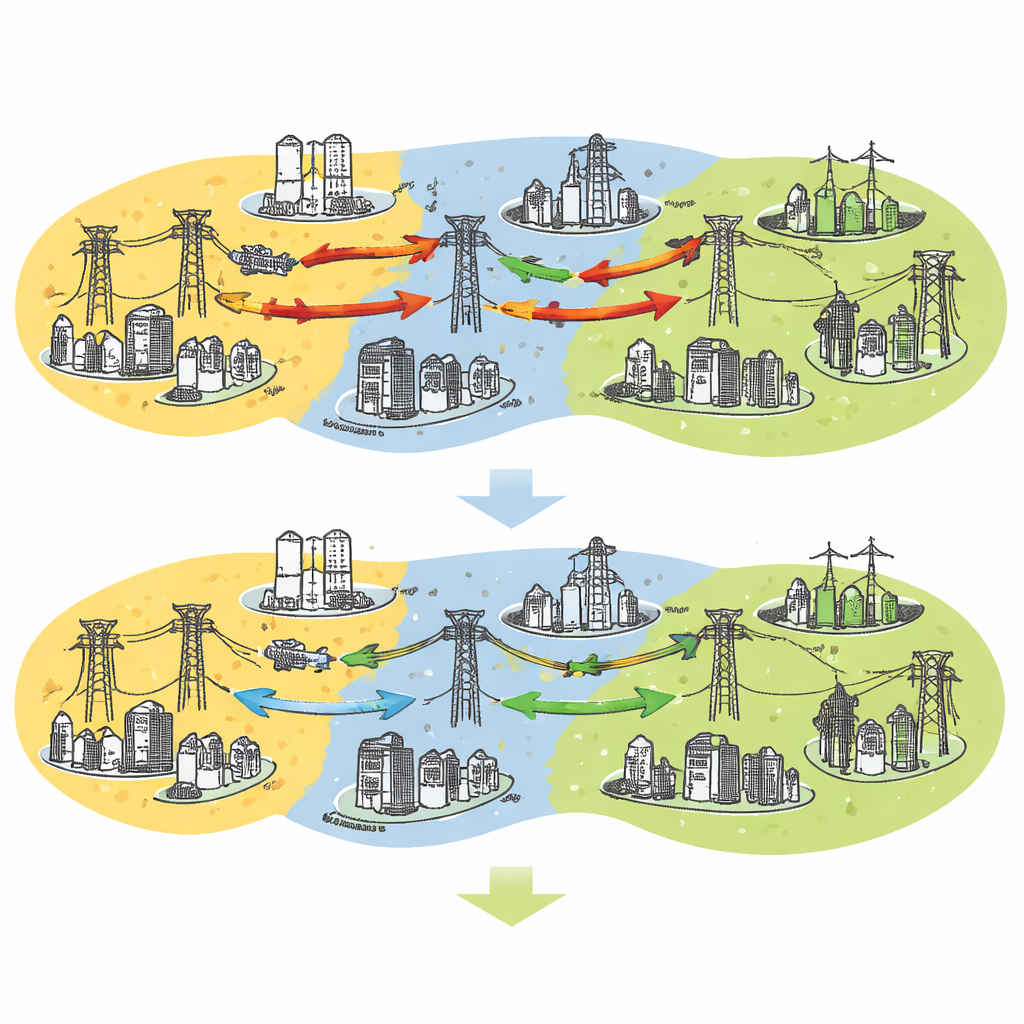
Large power systems are divided into regional networks that trade electricity with one another. While grid operators carefully schedule how much real power (the kind that does useful work) flows between regions, reactive power tends to wander wherever the voltage is low and the grid is electrically “weak.” Seasonal swings in demand, uneven investment in infrastructure, and different operating practices across regional utilities can create pockets of low voltage. In those weak areas, local equipment pulls extra reactive power from neighboring regions through tie lines, overloading transmission paths, wasting energy as heat, and inviting financial penalties from regulators.
Targeting Help Where It Matters Most
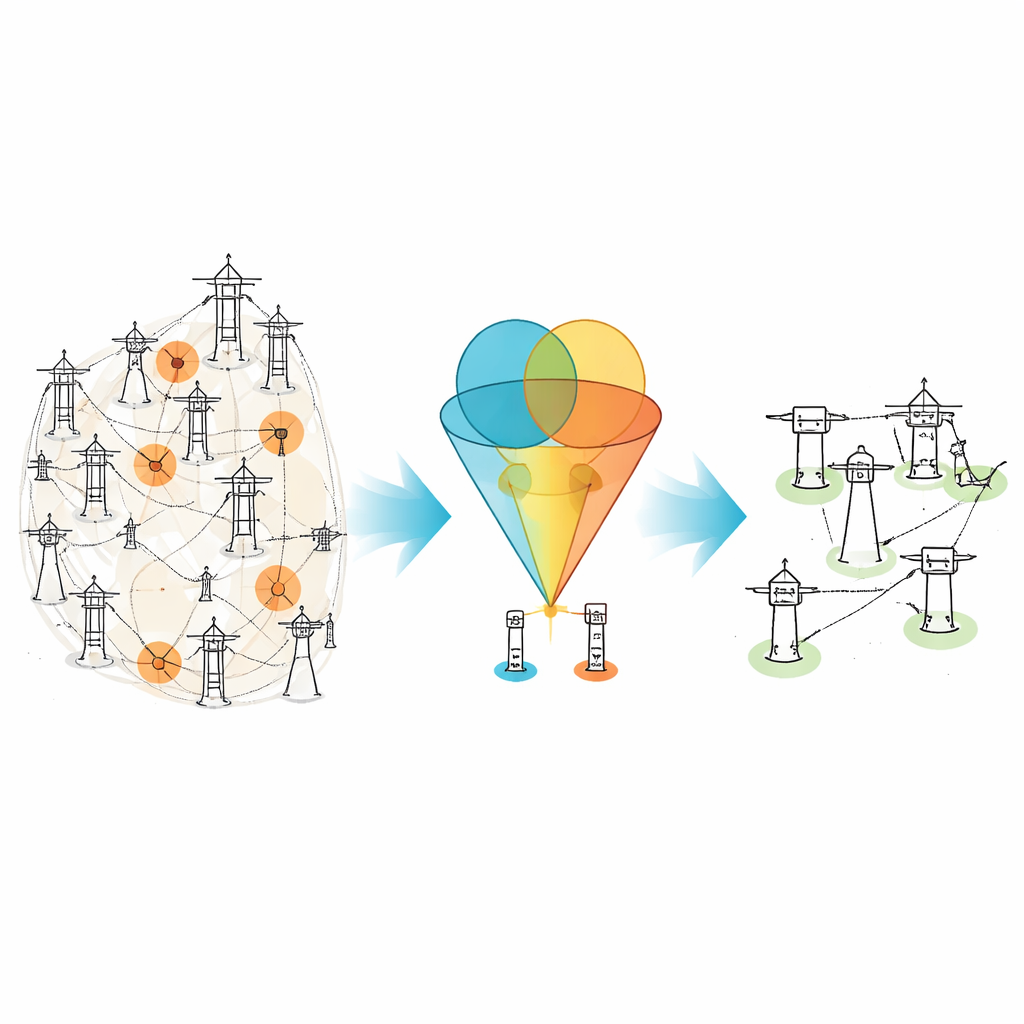
Utilities can fight these voltage problems by installing devices—such as capacitor banks or special power electronics—that locally inject reactive power. The catch is deciding where to put them. Earlier planning methods often flagged thousands of buses, or connection points, in a big grid as “sensitive,” suggesting that many substations should receive new equipment. In practice, that is too costly and difficult to build and maintain. The authors propose a smarter filter: a hybrid index that combines two ideas—how strongly a bus’s voltage responds when reactive power is added, and how robust that location is in terms of short-circuit strength, a measure of how well the surrounding grid can hold voltage steady during disturbances.
How the New Planning Method Works
The researchers first express the grid’s behavior with standard power flow equations and then cast reactive power management as a nonlinear optimization problem. The goal is not to change the planned transfers of real power, but to minimize the unscheduled reactive power flowing over inter- and intra-regional tie lines. Their objective function has three parts: reducing the change in reactive flow on tie lines, favoring buses whose voltages improve strongly when reactive power is injected, and preferring buses located in electrically weak parts of the grid where support is most needed. Buses that fail the sensitivity or strength criteria are penalized in the optimization, naturally steering the solution toward a smaller, more effective set of locations.
Testing on a Real Mega-Grid
To see how this approach performs in practice, the team applied it to the northern region of the Indian grid, which includes seven states, thousands of high- and medium-voltage buses, and a mix of low- and high-voltage areas. A conventional voltage-sensitivity method alone would have pointed to more than 40% of the 33 kV buses as candidates for compensation. By blending voltage sensitivity with grid-strength information, the hybrid index cut that list down to about 14% of those buses. The optimization then assigned how much reactive power to inject at each chosen site, representing a total of about 9,400 MVAr of new support devices at 33 kV substations and smaller amounts at higher voltage levels.
What the Grid Gains
Once these optimally placed devices are included in the simulations, the northern grid shows clear improvements. The average bus voltage at 33 kV edges closer to the ideal value, lifting many low-voltage pockets into a healthier range. Unwanted reactive power imports over inter-regional tie lines fall dramatically—from roughly 1,600 MVAr down to about 380 MVAr—amounting to a 76% reduction. Because tie lines are no longer artificially loaded with reactive currents, overall active power losses in the region drop by almost 8%, meaning more of the generated electricity reaches customers instead of being wasted as heat in wires and transformers.
Why This Approach Matters
In simple terms, the study shows that carefully choosing a few strategic points for voltage support can be far more effective than spreading equipment thinly across many substations. By focusing on locations that are both highly influential on voltage and structurally weak, the hybrid index helps utilities strengthen the grid while installing fewer devices and reducing penalties for reactive power exchange. Although the work is demonstrated on a conventional grid dominated by large generators, the method offers a blueprint for future systems as well, where growing shares of solar and wind power will make smart voltage and reactive power planning even more critical.
Citation: Singh, M., Negi, W. & Jadoun, V.K. Inter-area minimisation of reactive power flow for voltage improvement in large electric grids. Sci Rep 16, 14048 (2026). https://doi.org/10.1038/s41598-026-44284-z
Keywords: voltage stability, reactive power control, electric power grid, transmission losses, grid planning