Clear Sky Science · en
Unlocking the potential of marine natural product fragments for rational anticancer drug design: a computational approach
Why the Ocean Matters for Cancer Treatment
The search for new cancer drugs often begins in surprising places, and the ocean is one of the richest. This study explores how tiny molecular pieces from marine organisms can be turned into starting points for future anticancer medicines using advanced computer modeling, offering a way to fight drug resistance and support more sustainable use of marine life.
Breaking Complex Molecules into Useful Pieces
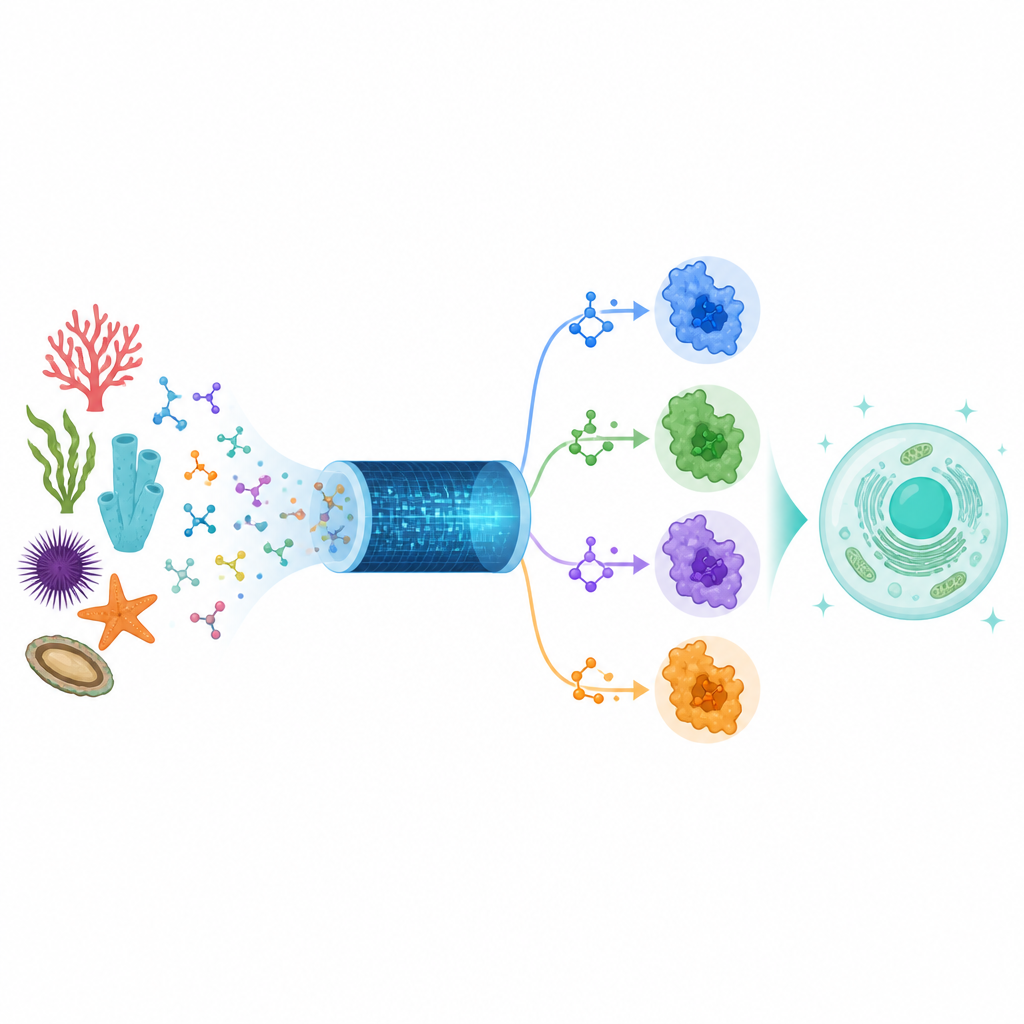
Instead of testing whole natural compounds one by one, the researchers built a library of small molecular fragments from a large marine chemical database. They cleaned and standardized tens of thousands of known ocean-derived molecules, then used rules from medicinal chemistry to chop larger structures into smaller, drug-like pieces. After filtering and removing duplicates, they created a curated collection of 4,643 fragments, called Marine-FL, designed to be the molecular building blocks for future medicines.
Mapping the Shape and Variety of Ocean Chemistry
To understand how rich this fragment library really is, the team compared Marine-FL to its parent marine database using statistical maps of chemical structure. These maps showed that the fragments cover a wide, sparsely clustered chemical landscape instead of clumping into a few repetitive types. Many fragments share familiar ring structures like benzene and indole, but almost half have rare, unusual ring systems found mostly in marine organisms. Analyses of fragment “skeletons” and predicted ease of synthesis revealed a balance between pieces that chemists can make relatively easily and more complex, novel ones that could inspire innovative drug designs.
Targeting Cancer’s Survival Tricks
The study focused on four proteins tied to treatment failure: secreted clusterin, which helps cancer cells resist chemotherapy, and three immune checkpoint proteins, PD-1, PD-L1, and CTLA-4, which tumors use to hide from the immune system. Using computer docking, the team virtually “fit” marine fragments into the pockets of these proteins and rescored the best matches with a neural network model. They then used an artificial intelligence tool to grow the most promising fragments into larger, more drug-like molecules, still rooted in marine chemistry. The best-grown candidates were tested again across all four proteins to look for molecules that could potentially act on multiple targets at once.
Following a Standout Marine Scaffold
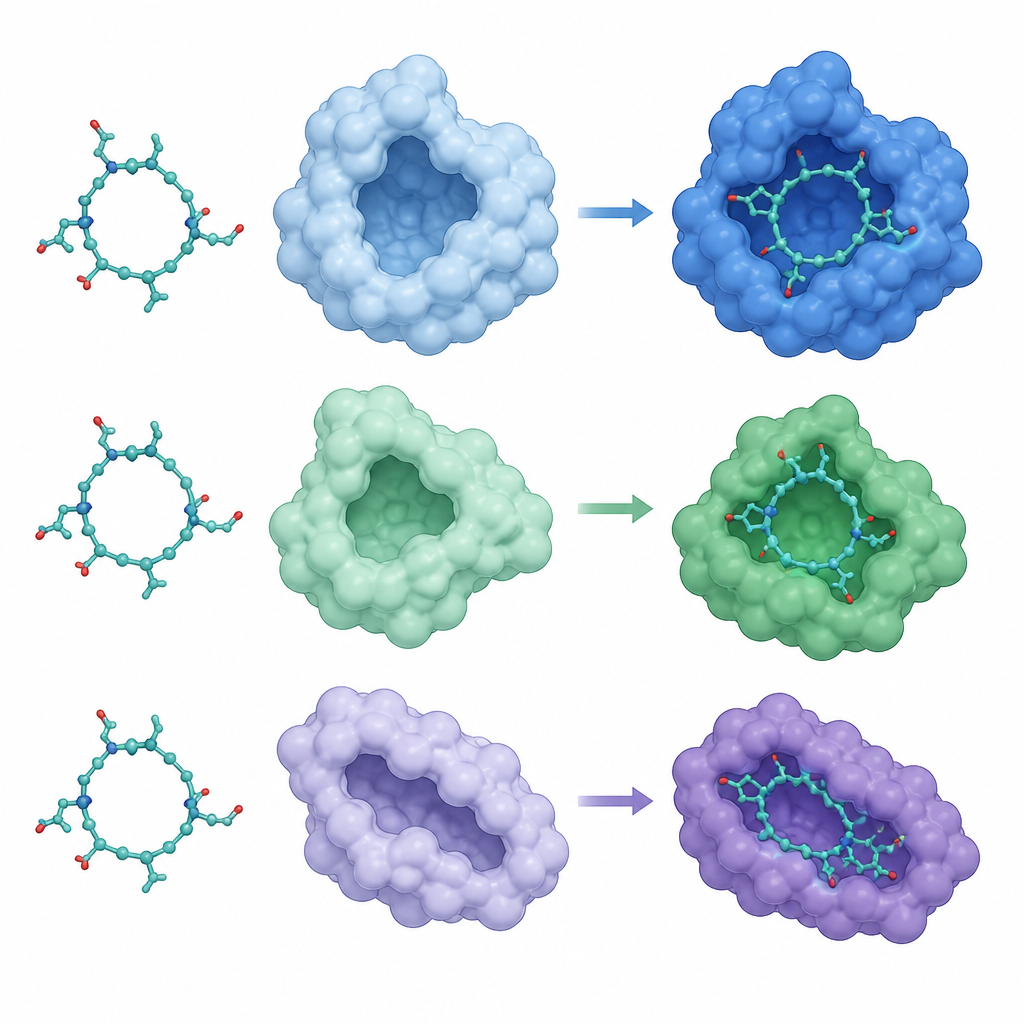
Among thousands of fragments, one recurring multi-ring structure, related to known marine alkaloids called lamellarins, repeatedly ranked near the top for both the chemoresistance protein and PD-L1. When this fragment was built into a larger molecule named Ligand 10, it showed favorable predicted interactions with all four proteins. The researchers ran long, detailed molecular dynamics simulations in water to see whether Ligand 10 would stay bound over time, rather than slipping away. For PD-L1 in particular, triplicate runs of 200 nanoseconds each showed stable binding behavior, and energy calculations suggested stronger interactions than a control molecule that is not known to affect PD-L1.
What This Means for Future Cancer Drugs
This work does not test any real drugs in cells or patients; instead, it provides a roadmap. By turning the chemical diversity of marine life into a carefully designed fragment library and running it through a full virtual drug-design pipeline, the study highlights specific marine-based shapes that look especially promising for hitting both immune escape and chemoresistance pathways. In plain terms, the ocean’s chemistry is being converted into a modular toolkit of small pieces that can be combined and refined into future anticancer candidates, guiding lab experiments toward the most promising leads while encouraging sustainable, knowledge-driven use of marine resources.
Citation: Gomez, M.C., Rajendran, K. & Tayo, L.L. Unlocking the potential of marine natural product fragments for rational anticancer drug design: a computational approach. Sci Rep 16, 15299 (2026). https://doi.org/10.1038/s41598-026-44280-3
Keywords: marine natural products, fragment-based drug discovery, cancer drug resistance, immune checkpoint proteins, computational docking