Clear Sky Science · en
Serum metabolomics identifies gut-derived uremic toxins and bile acid dysregulation associated with chronic kidney disease severity
Why Kidney Health Needs a New Kind of Blood Test
Chronic kidney disease often creeps in silently, with few early symptoms, yet it affects hundreds of millions of people worldwide and can ultimately require dialysis or a transplant. Doctors usually track kidney function using routine lab tests such as creatinine, but these only change after substantial damage has already occurred. This study asks a simple but powerful question: if we look more deeply at the thousands of tiny chemicals circulating in the blood, can we spot kidney trouble earlier and understand better why the disease gets worse, especially in under-studied populations like Egyptian patients?
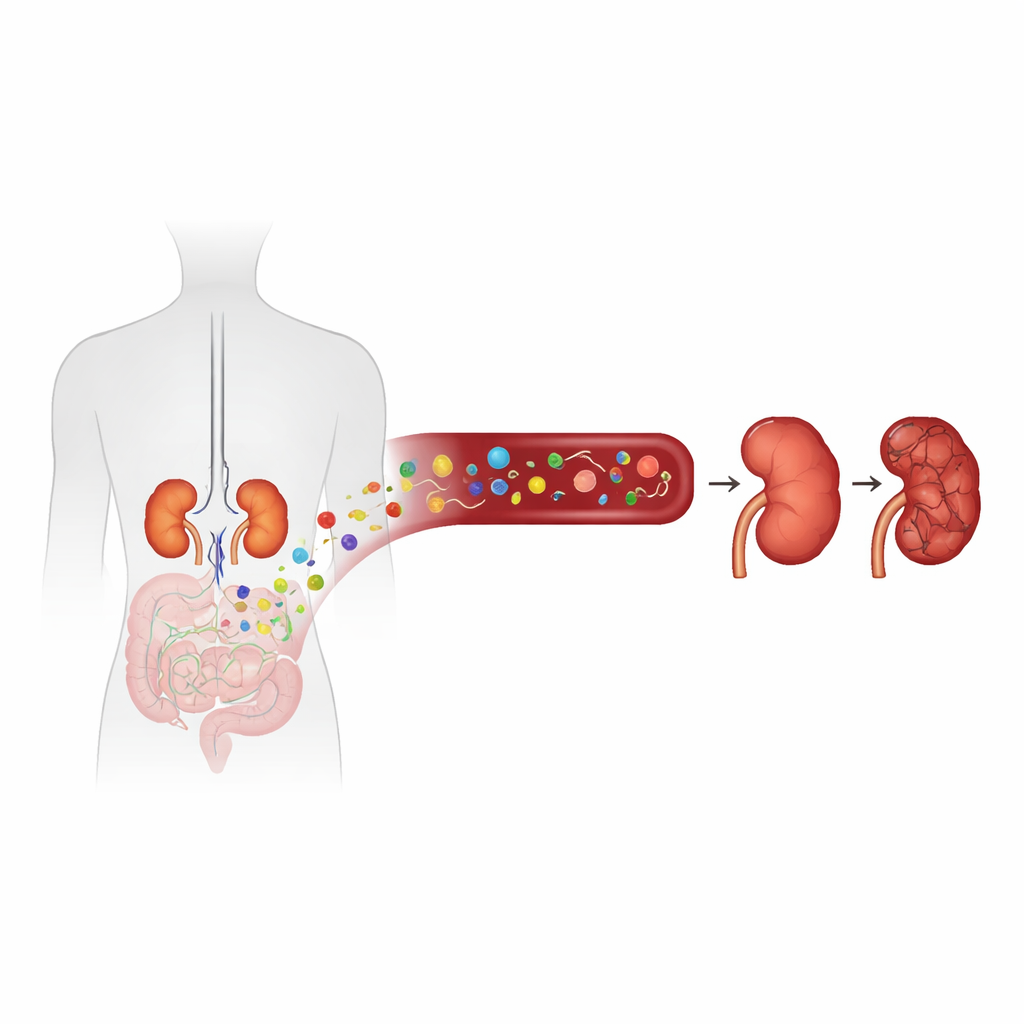
Looking Closely at the Chemical Fingerprints in Blood
The researchers used a technique called metabolomics, which scans blood for a wide range of small molecules produced by our bodies, our food, and the microbes living in our gut. They collected fasting blood samples from people with healthy kidneys, from patients with earlier kidney disease, and from those with end-stage kidney failure who are close to or already on dialysis. In the first phase, they cast a wide net, measuring over a thousand different chemical signals. In the second phase, they zeroed in on a handful of the most promising molecules and carefully re-measured them in a separate group of patients to check that the results held up.
Signals from the Gut and the Liver
When they compared these chemical fingerprints across groups, clear patterns emerged. People with more severe kidney disease had higher levels of several compounds that are made by gut bacteria and normally removed by the kidneys. These so-called uremic toxins, including molecules such as indoxyl sulfate and trimethylamine N-oxide, accumulated as kidney function declined. At the same time, certain bile-related substances, which are usually handled jointly by the liver, gut, and kidneys, were also disturbed. One bile-linked molecule, glycochenodeoxycholate, rose sharply in patients with end-stage disease, pointing to a broader disruption in how the body processes fats and bile acids when the kidneys fail.
Tracing the Pathways of Disease Progression
By mapping these molecules onto known biological pathways, the team saw that kidney disease reshapes many core processes, particularly those involving amino acids, energy use, and the breakdown of dietary components. Substances derived from the amino acid tryptophan, such as xanthurenic acid, were especially elevated in advanced disease and tracked closely with worsening kidney filtration rates. The study also found that early and late stages of kidney disease do not look chemically the same: some compounds rise in early stages and then fall later, hinting at initial protective responses that eventually fail as damage accumulates. Together, these patterns point to a complex interplay between the kidneys, the gut microbiome, and the liver as the disease progresses.
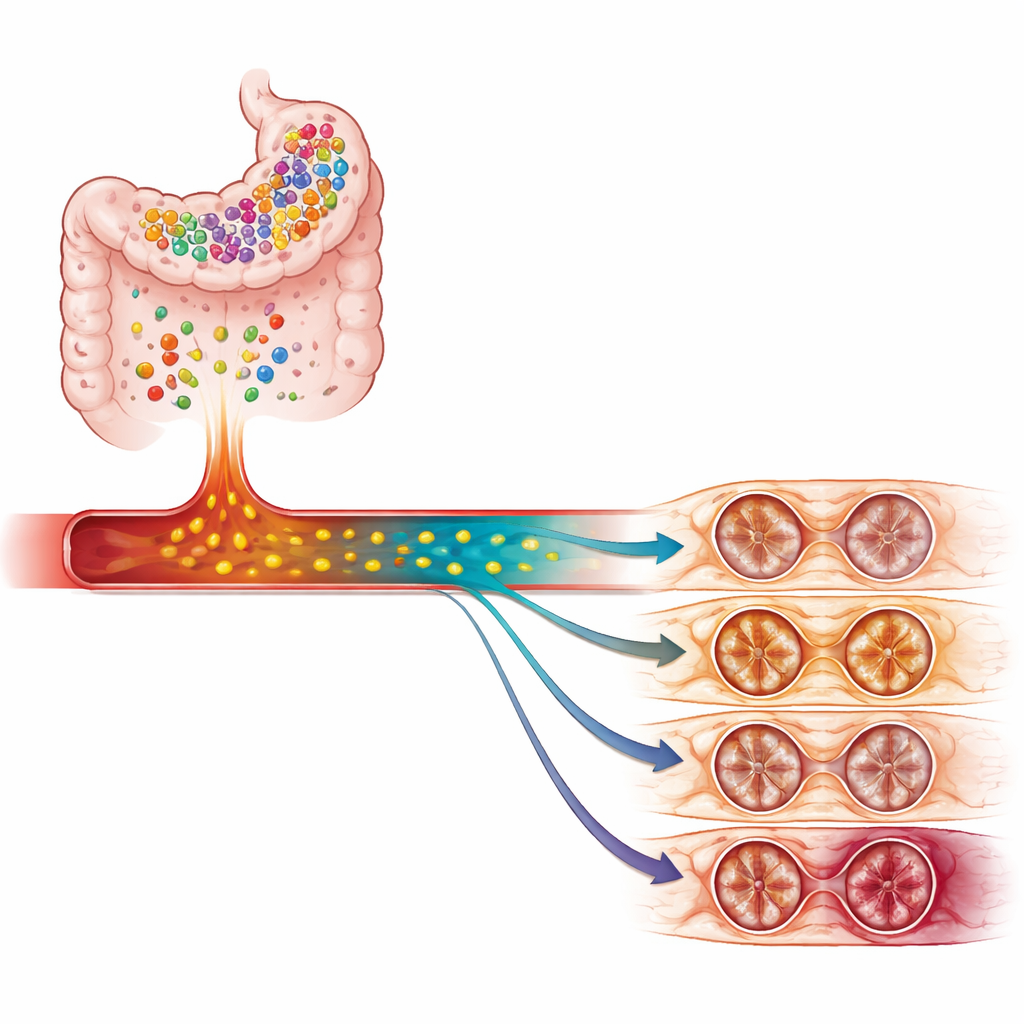
A New Panel of Blood Markers Beats Creatinine Alone
To test whether these findings might help doctors in practice, the researchers built a small panel of just five metabolites that best distinguished early-stage from end-stage kidney disease. This panel combined two strong gut-derived toxins, two tryptophan-related products, and one bile-linked molecule. In a validation group of Egyptian patients, this five-marker panel was clearly better at telling early and late disease apart than creatinine, the standard lab test. Even the two strongest markers on their own, indoxyl sulfate and p-hydroxyphenyllactic acid, outperformed creatinine in separating early from advanced disease.
What This Means for Patients and Future Care
For lay readers, the main message is that kidney disease is not just about one number on a lab report. As the kidneys fail, a web of gut- and liver-derived chemicals builds up in the blood, many of which may actively harm blood vessels, fuel inflammation, and hasten further kidney damage. This study, the first of its kind in Egyptian patients, shows that a small set of these molecules can reveal disease severity more clearly than today’s routine tests. While these findings still need to be confirmed in larger and longer-term studies, they point toward future blood tests that could detect trouble earlier, track progression more precisely, and perhaps guide treatments that target the gut and metabolism as well as the kidneys themselves.
Citation: Mansour, N.Y., Ismail, M.F., Sayed, N.H. et al. Serum metabolomics identifies gut-derived uremic toxins and bile acid dysregulation associated with chronic kidney disease severity. Sci Rep 16, 12375 (2026). https://doi.org/10.1038/s41598-026-44271-4
Keywords: chronic kidney disease, metabolomics, gut microbiome, uremic toxins, bile acids