Clear Sky Science · en
The MIME-seq technique allows to monitor the interaction of small non-coding RNAs with Argonaute proteins and their transfer to other cells
How Cells Send Tiny Messages
Our cells are constantly talking to each other using molecular "messages." Among the smallest and most powerful of these messengers are short strands of RNA that help switch genes on or off. Scientists know that these tiny RNAs travel inside cells and can even be shipped from one cell to another in microscopic bubbles, but tracking exactly which RNAs move where has been very difficult. This study presents an improved tracking method, called MIME‑seq2.0, that lets researchers follow these messages in living cells with high precision.
Small Messages with Big Impact
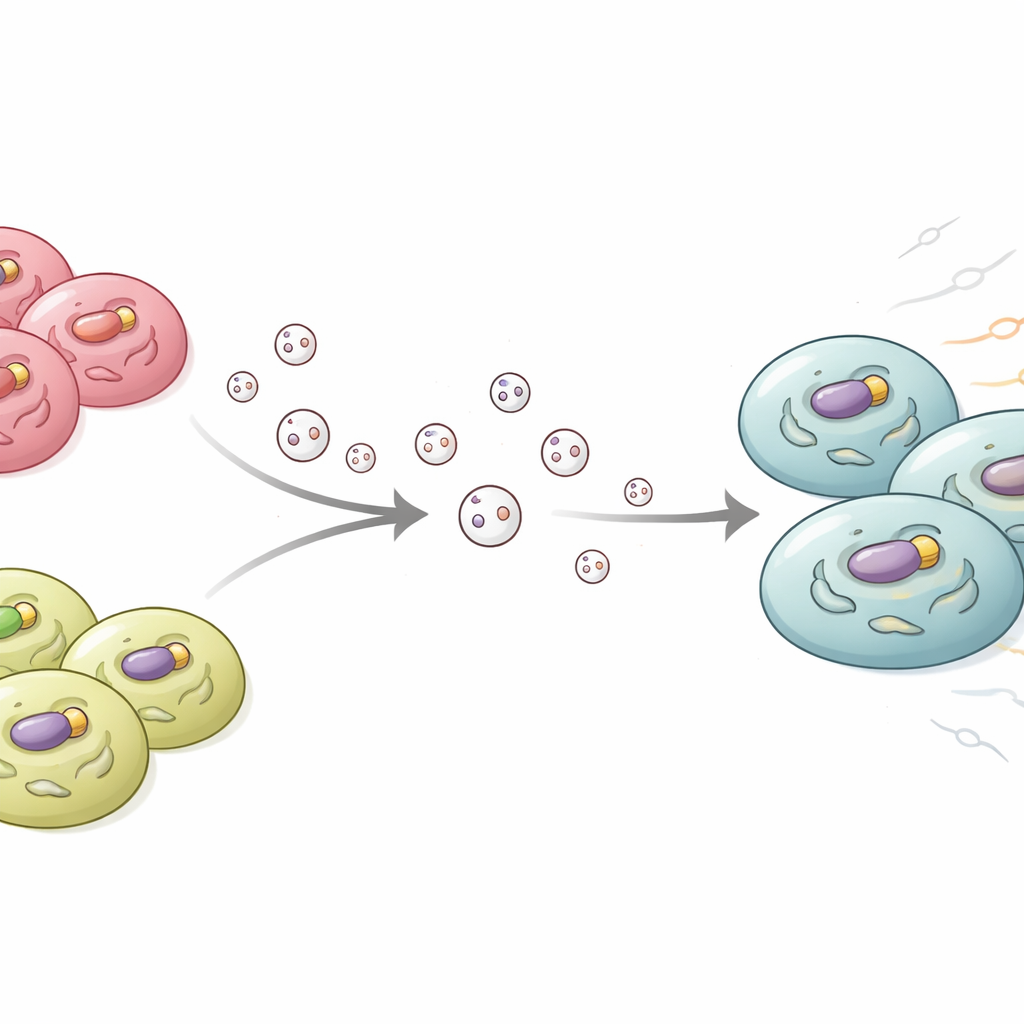
Only a small fraction of our DNA encodes proteins, yet cells produce a huge variety of RNA molecules that never become proteins. Many of these short RNAs help control which genes are active. The best known are microRNAs, which are loaded onto helper proteins called Argonautes to form a gene‑silencing machine. Other small RNAs, cut from larger molecules such as transfer RNAs and Y‑RNAs, may also join these protein complexes, but their roles are less clear. On top of this, cells can package small RNAs into tiny sacs known as extracellular vesicles and send them to other cells, where they may influence behavior and even disease. To understand this hidden communication network, researchers need tools that can reveal exactly which small RNAs are bound to Argonautes and which ones are exchanged between cells.
A Chemical Highlight for Chosen RNAs
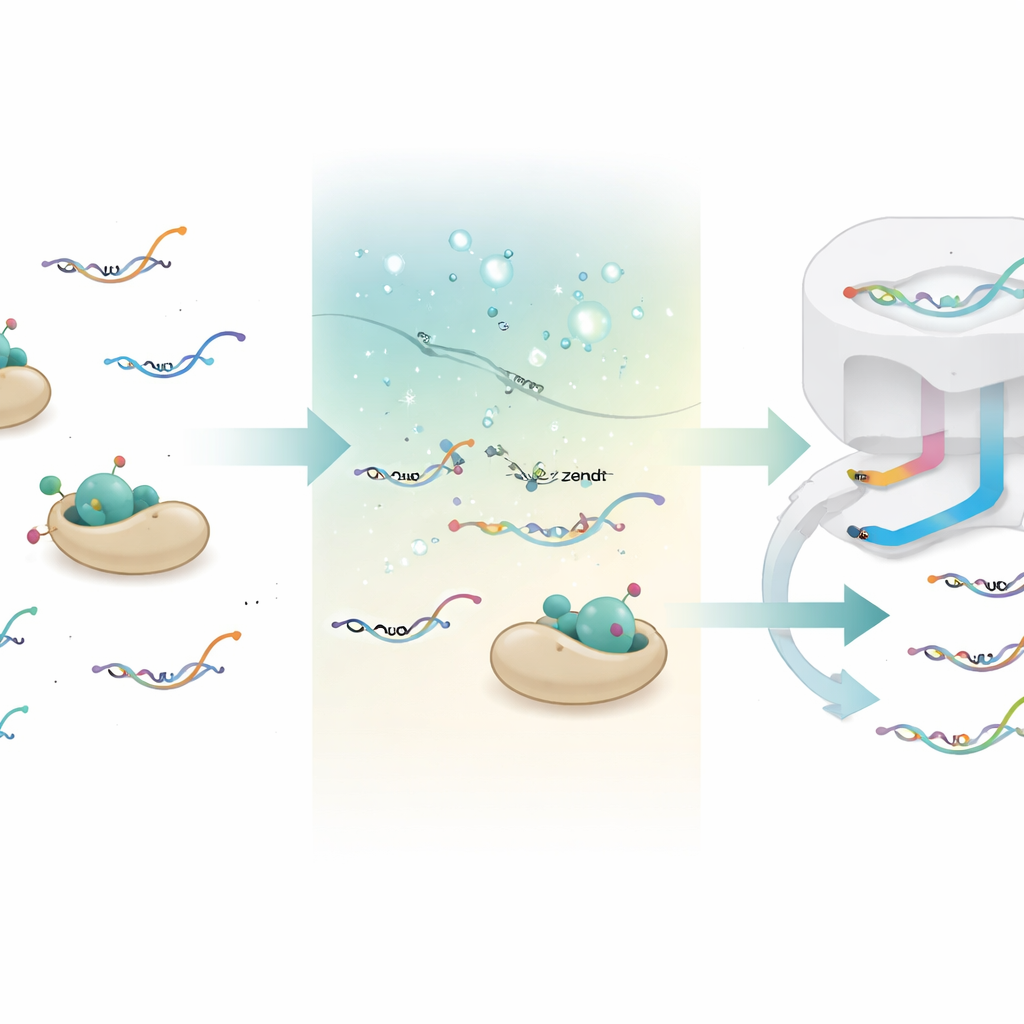
The MIME‑seq2.0 method gives certain small RNAs a chemical “highlight” that protects them from a damaging treatment. The team used a specially engineered enzyme that latches onto Argonaute proteins and adds a small chemical mark to the tail end of any RNA bound there. When all RNAs in the cell are then exposed to an oxidizing chemical, the unmarked molecules are damaged in a way that blocks normal laboratory steps like ligation, polyadenylation, and sequencing. In contrast, the marked RNAs survive these steps and can be readily read out by standard sequencing and quantitative PCR methods. By comparing oxidized and non‑oxidized samples from cells with or without the engineered enzyme, the researchers can see which RNAs were truly bound to Argonautes inside living cells.
Discovering New Partners for Argonaute
Applying this strategy in insulin‑secreting mouse beta cells, the authors confirmed that many microRNAs are efficiently protected by the engineered enzyme, while a control small RNA that does not bind Argonaute is not. Sequencing data showed that most microRNAs survived the oxidation step only when the enzyme was present, proving that these RNAs depend on Argonaute‑linked methylation for protection. Some other RNA types behaved differently: many piRNAs were already naturally protected in cells, reflecting their own built‑in chemical marks, and were unaffected by the engineered enzyme. Strikingly, the method also revealed partial protection of fragments from Y‑RNAs and transfer RNAs, suggesting that at least some of these lesser‑known small RNAs associate with Argonaute complexes in living cells. Independent pull‑down experiments using tagged Argonaute proteins confirmed that these fragments truly bind to Argonaute, not just appearing by chance.
Following Messages Between Distant Cells
The researchers then turned MIME‑seq2.0 into a tracking system for RNA exchange between different cell types. They first made human immune‑like T cells or mouse muscle cells express the engineered enzyme, so that any small RNAs loaded onto their Argonautes would be chemically marked. These donor cells released extracellular vesicles containing small RNAs, which were then added to mouse insulin‑secreting cells. Without oxidation, the receiving cells merely showed higher levels of several microRNAs, which could have come either from incoming vesicles or from boosted local production. After oxidation, however, only the microRNAs that had originated in the enzyme‑expressing donor cells remained detectable; matching microRNAs made naturally by the recipient cells disappeared. This showed that MIME‑seq2.0 can cleanly distinguish imported messages from those produced locally, even when the sequences are very similar.
Promise and Limits of the New Tool
The study shows that MIME‑seq2.0 is a powerful way to chart which small RNAs ride on Argonaute proteins and to trace their movement between cells. It does not prove that every Argonaute‑bound fragment acts as a classic gene‑silencing microRNA, and it cannot follow RNA types that are not chemically marked by the engineered enzyme or that are present only in tiny amounts compared with the cell’s own RNAs. Even so, the technique offers a sensitive, selective view of a previously hard‑to‑see communication system. By helping scientists map when and where small RNA messages are sent, received, and bound to their protein partners, MIME‑seq2.0 opens new avenues for understanding how cells coordinate their behavior in health and disease.
Citation: Perrard, J., Guay, C., Zanou, N. et al. The MIME-seq technique allows to monitor the interaction of small non-coding RNAs with Argonaute proteins and their transfer to other cells. Sci Rep 16, 13827 (2026). https://doi.org/10.1038/s41598-026-44270-5
Keywords: microRNA, extracellular vesicles, RNA tracking, Argonaute proteins, cell communication