Clear Sky Science · en
Integrated UPLC, bioinformatics, and in vitro analyses reveal Yiqihuoxue decoction (GSC) alleviates vascular aging by promoting autophagy
Why keeping blood vessels young matters
As people live longer, more of us will face heart attacks, strokes, and memory problems that are closely tied to the gradual aging of our blood vessels. When the inner lining of arteries grows stiff and damaged, it sets the stage for many age‑related diseases. This study explores a traditional Chinese herbal mixture called Yiqihuoxue decoction (also known as GSC) and asks a modern question: can this multi‑herb recipe help aging blood vessels clean themselves up and stay healthier for longer?
An old remedy under a modern lens
GSC is made from three well‑known medicinal plants: ginseng, notoginseng, and Ligusticum chuanxiong. Doctors in China have long used it to ease heart and circulation problems in older patients, but exactly how it works has been unclear. The researchers combined advanced chemical analysis, computer‑based target prediction, and cell experiments to unpack what is inside GSC and what it does inside the body. Using ultra‑performance liquid chromatography, they identified 130 different components and narrowed these down to 39 key molecules likely to be active in the body. Computer tools then matched these plant molecules to hundreds of human proteins linked to vascular aging, revealing that GSC acts not on a single "silver bullet" target, but on a network of pathways involved in stress, inflammation, and cell survival. 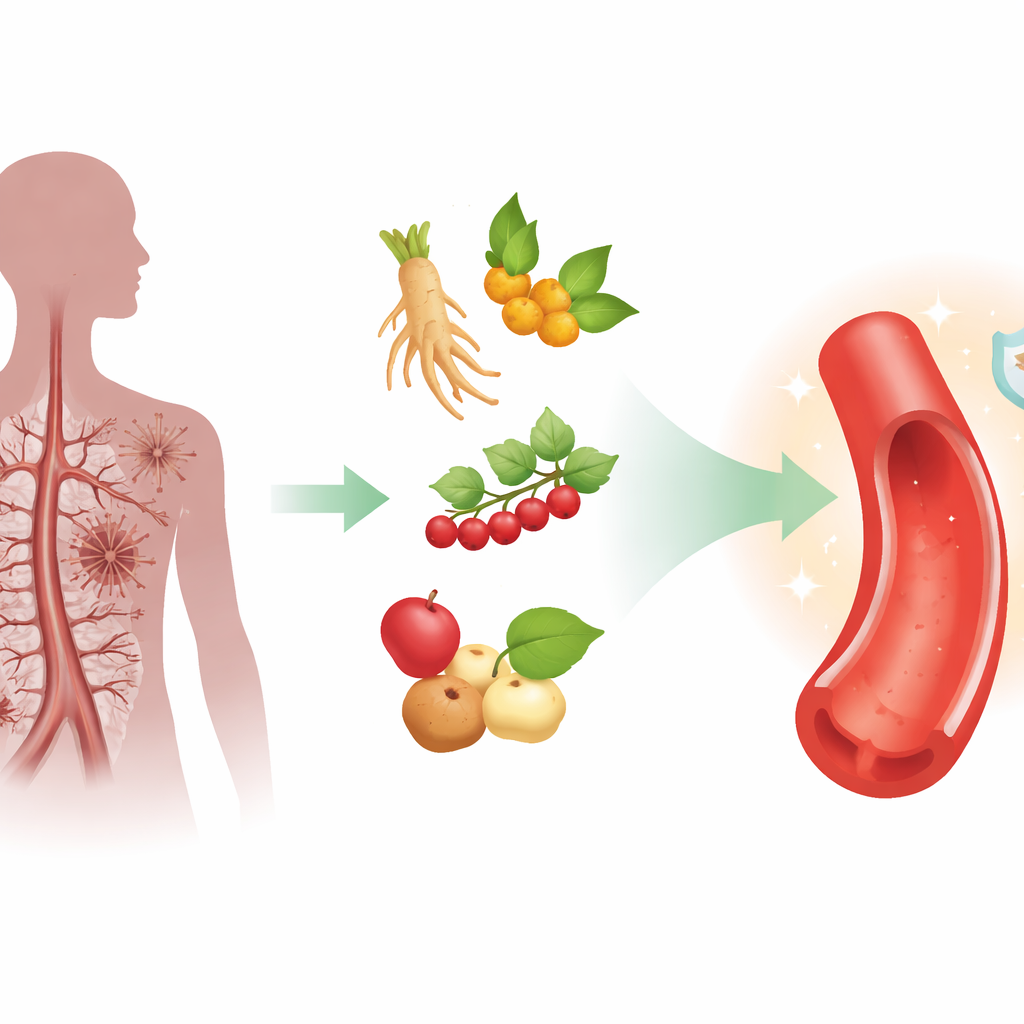
How the herbal mix affects aging vessel cells
To see whether these predictions held up in living cells, the team studied human umbilical vein endothelial cells, a standard model for the inner lining of blood vessels. They compared young cells with older, repeatedly divided cells that mimic natural aging. In the aged cells, growth slowed, shapes became distorted, and a classic marker of senescence, called SA‑β‑gal activity, shot up. After treatment with GSC, the cells looked more like their youthful counterparts: they adhered better, showed fewer vacuoles and granules, and their senescence marker decreased in a dose‑dependent fashion. GSC also helped cells move out of a growth arrest phase in the cell cycle, hinting that it could partially reverse the “retirement” status that aging cells often enter.
Relieving stress and restoring cellular cleanup
The study found that aging vessel cells were burdened by faulty mitochondria and excess reactive oxygen species—highly reactive molecules that damage proteins, fats, and DNA. GSC improved mitochondrial membrane potential, a sign that these energy factories were working more normally, and boosted levels of MnSOD, a key enzyme that neutralizes harmful oxygen radicals. At the same time, it reduced levels of p‑p66, a protein that typically drives oxidative damage. A central focus of the work was autophagy, the cell’s internal cleanup and recycling system. Under electron microscopes and fluorescent probes, GSC‑treated cells showed more of the tiny sacs that engulf and digest worn‑out components, and importantly, evidence that this cleanup process ran to completion rather than stalling halfway. 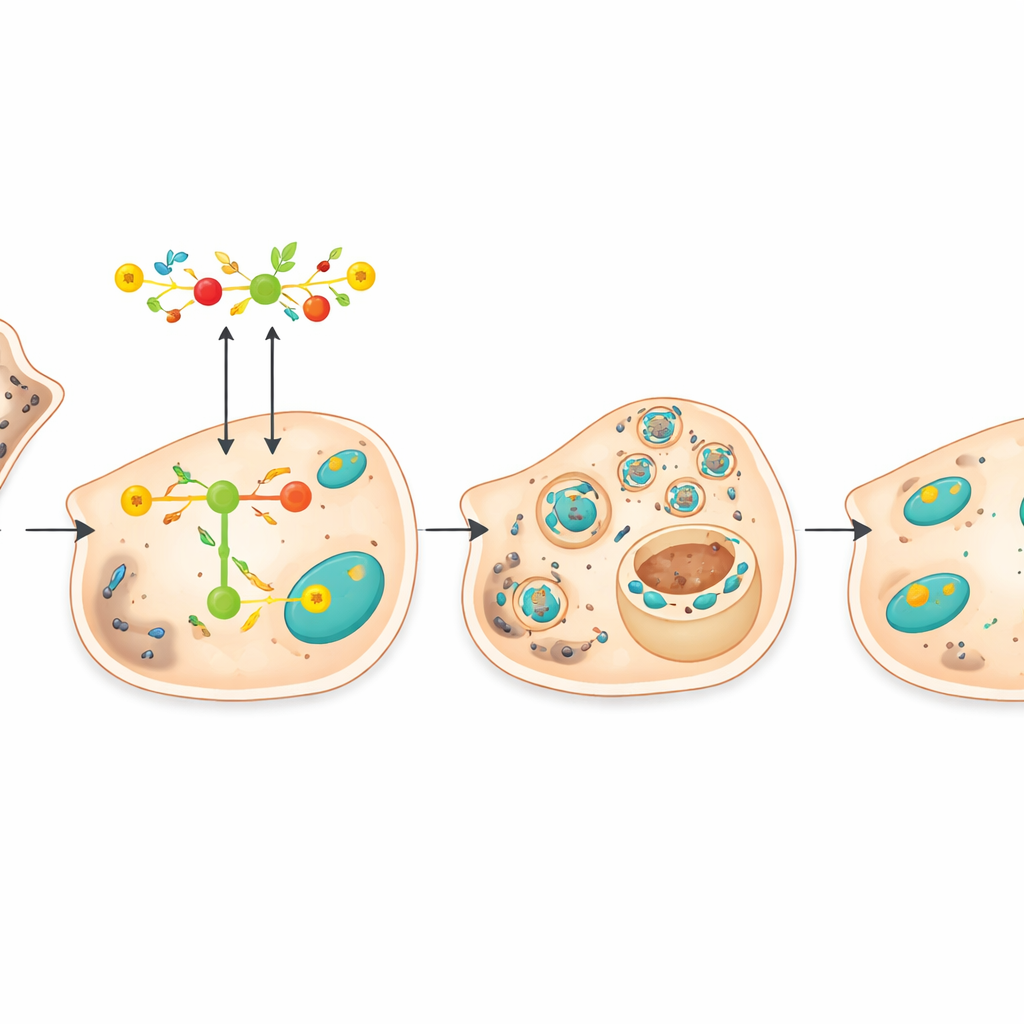
Key control switches inside the cells
Diving deeper, the researchers linked GSC’s effects to two major control hubs. One is SIRT1, a protein often associated with longevity and healthy aging. In aged vessel cells, SIRT1 levels were low, but GSC restored them; when the team added a SIRT1‑blocking drug, the benefits of GSC on autophagy and cell aging largely disappeared, indicating that SIRT1 is a crucial mediator. The second hub is the PI3K/Akt pathway, a signaling route that normally promotes cell survival but can become overactive and harmful in chronically stressed, inflamed tissues. In the senescent cells, this pathway was abnormally switched on. GSC dialed down the activated forms of PI3K and Akt, and this suppression, especially when combined with a known PI3K inhibitor, was linked to lower levels of p16, a protein that enforces cellular old age.
What this could mean for future therapies
Taken together, the results paint GSC as a multi‑ingredient, multi‑target blend that helps aging blood vessel cells in two coordinated ways: it reduces damaging oxidative stress and it restores the cell’s own garbage‑disposal system, autophagy, largely through boosting SIRT1 and calming an overactive PI3K/Akt pathway. While the work so far is limited to cell culture and needs confirmation in other aging models and eventually in people, it provides a scientific framework for how a traditional herbal formula might slow vascular aging. For the lay reader, the core message is that supporting the body’s built‑in cleanup and repair systems may be a promising strategy to keep arteries younger for longer and to lower the risk of age‑related heart and brain disease.
Citation: Liu, Y., Liu, Y., Xiu, C. et al. Integrated UPLC, bioinformatics, and in vitro analyses reveal Yiqihuoxue decoction (GSC) alleviates vascular aging by promoting autophagy. Sci Rep 16, 13338 (2026). https://doi.org/10.1038/s41598-026-44263-4
Keywords: vascular aging, autophagy, traditional Chinese medicine, endothelial cells, SIRT1