Clear Sky Science · en
Social determinants of postpartum depression among refugees and internally displaced women in Lebanon: a cross-sectional study
Why this study matters for mothers on the move
Becoming a mother is challenging under the best of circumstances. For women who are refugees or forced to flee their homes inside their own country, pregnancy and early motherhood unfold amid war, poverty, and uncertainty. This study looks closely at how such harsh living conditions in Lebanon shape the emotional well‑being of displaced women after childbirth, focusing on postpartum depression – a common but often hidden condition that can affect both mother and baby.
A closer look at mothers living in displacement
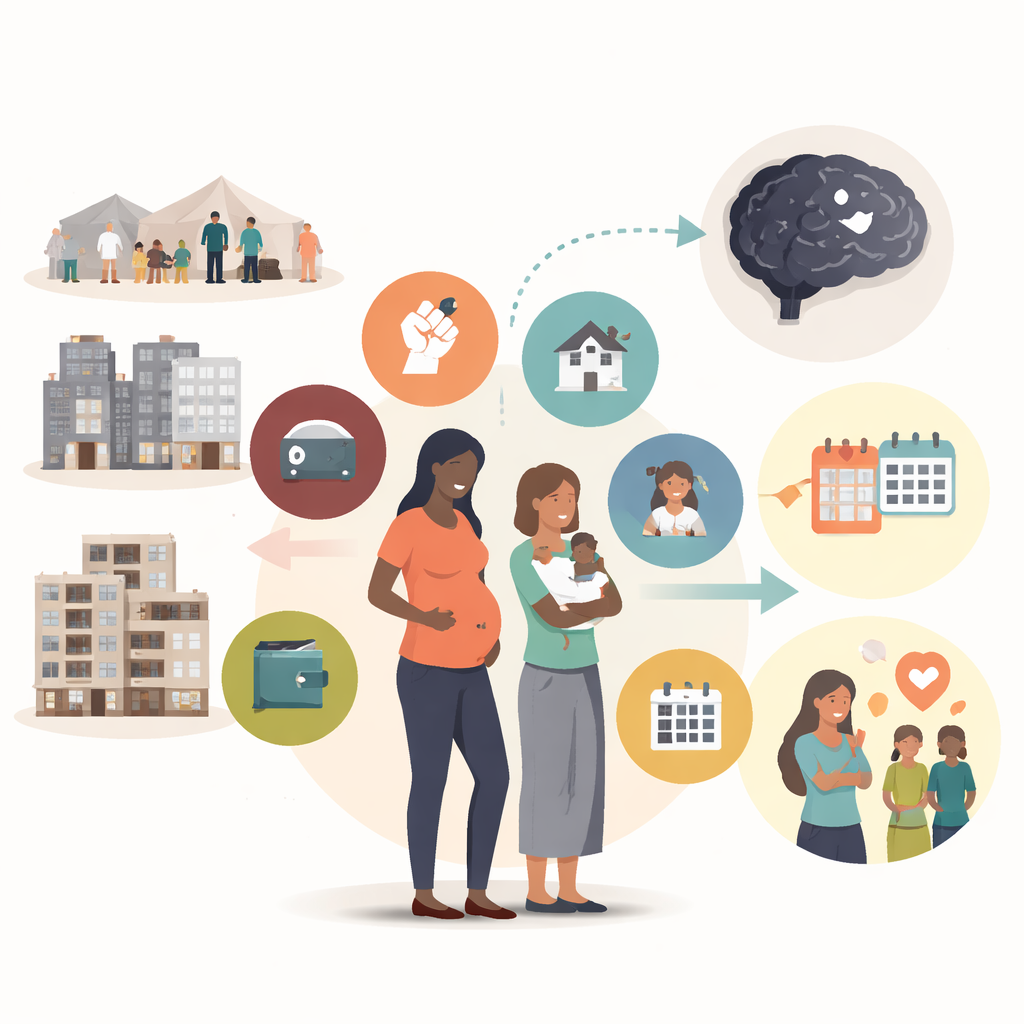
The researchers surveyed 368 refugee and internally displaced women in Lebanon, most of them Syrian and either pregnant or within a year after giving birth. Women were recruited in a large public hospital in Beirut and in shelters and camps across the country. The team used standard questionnaires in Arabic to ask about mood, sense of belonging, financial strain, housing conditions, and experiences of verbal or physical abuse. They also measured how easily women felt they could bounce back from stress, a quality often called resilience. This broad approach allowed them to place mental health in the wider context of daily life in displacement.
How common sadness becomes a serious health problem
The results were striking: about two in five participants had scores suggesting a high likelihood of postpartum depression, much higher than previous estimates for Lebanese women in general. Many of these mothers described feeling lonely, struggling to pay for medicine and basic bills, and living in cramped or unhealthy housing. Large numbers reported a weak sense of belonging in their communities and difficulty accessing or making full use of prenatal care. These findings confirm that emotional distress after childbirth is not simply an individual issue; it is tightly linked to the social and material hardships surrounding displaced families.
The heavy weight of unsafe homes and relationships
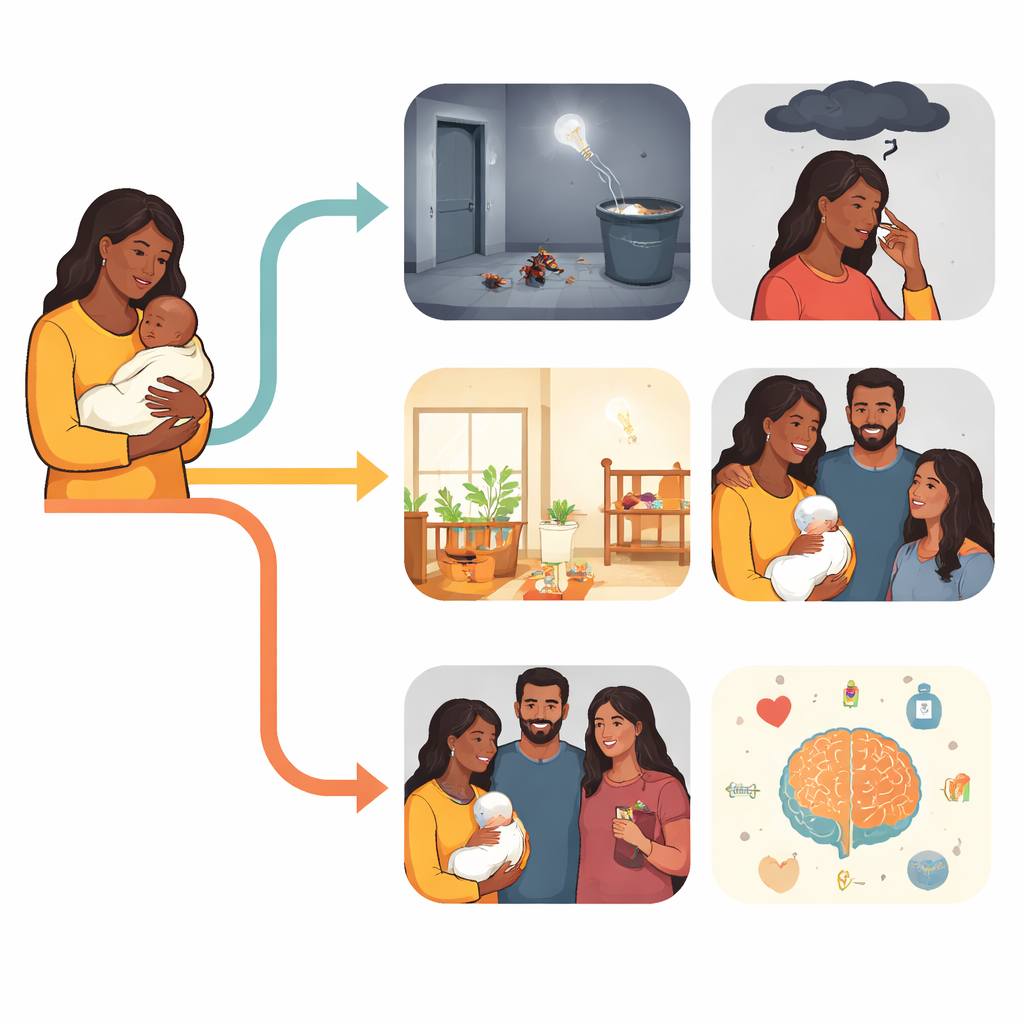
To untangle which problems mattered most, the researchers used statistical models that considered many factors at once. After this more rigorous analysis, several social and environmental conditions clearly stood out. Women who reported serious interpersonal violence – being shouted at, threatened, or physically hurt – had nearly ten times higher odds of postpartum depression. Those living in homes infested with bugs, ants, or mice had almost five times higher odds, and those without proper heating had more than double the odds. Even marital relationships that women described as neither clearly good nor clearly bad were linked to much higher risk. Together, these findings highlight that both emotional safety and basic physical comfort at home are central to a mother’s mental health.
When planning and support make a difference
Not all findings were bleak. One of the strongest protective factors was having a planned pregnancy. Women who said their pregnancy was planned had far lower odds of depressive symptoms, even after accounting for other challenges. Planning likely reflects greater emotional readiness, more stable relationships, and better chances of organizing financial and family support before the baby is born. Interestingly, personal resilience – the ability to “bounce back” – was often low in this group but did not independently protect against depression once severe housing problems and violence were taken into account. This suggests that no amount of inner strength can fully offset unsafe or degrading conditions.
What these findings mean for care and policy
The study concludes that displaced women in Lebanon face a particularly high burden of postpartum depression, driven less by individual shortcomings and more by dangerous relationships and poor housing. For health services, the authors argue that midwives and community health workers are in a key position to ask about mood, safety at home, and basic living conditions during pregnancy and after birth, and to guide women toward mental health, social, and protection services. For policymakers and aid organizations, the message is equally clear: reducing violence against women, improving the safety and warmth of shelters, and supporting women to plan pregnancies and access prenatal care are not luxuries. They are essential steps to protect the mental health of mothers and, by extension, the well‑being of their children.
Citation: Doumiati, J.L., Bakri, H., Yared, G. et al. Social determinants of postpartum depression among refugees and internally displaced women in Lebanon: a cross-sectional study. Sci Rep 16, 13843 (2026). https://doi.org/10.1038/s41598-026-44252-7
Keywords: postpartum depression, refugee women, Lebanon, displacement, maternal mental health